 Midnight Oil Profile
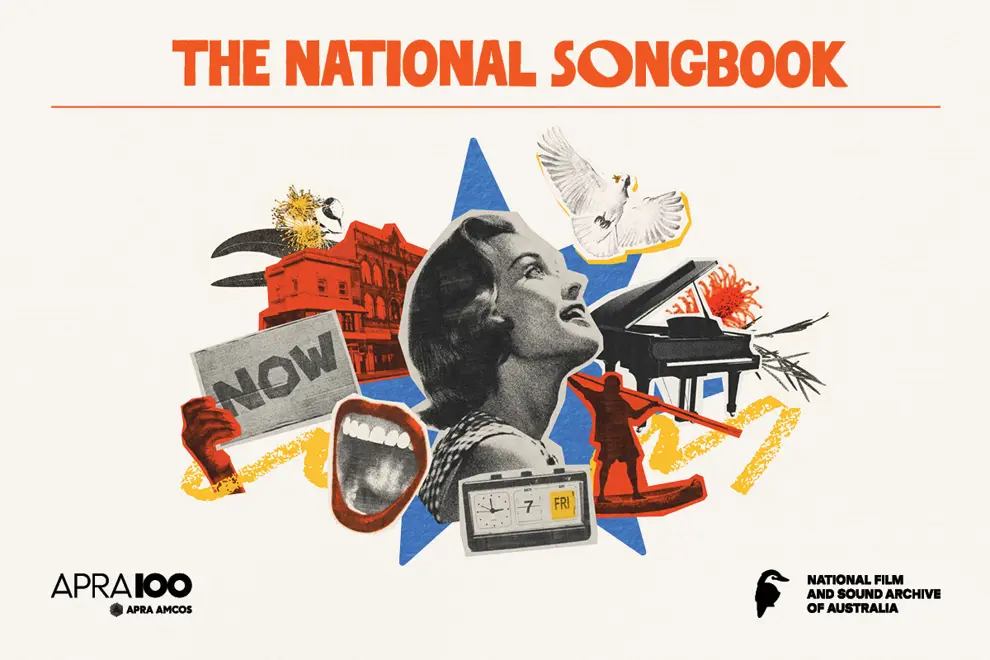
The first ten songs to be inducted into the newly launched The National Songbook have been announced, spanning from Waltzing Matilda to My People.
Celebrating and preserving the songs that have helped shape Australia’s cultural identity, the initiative, introduced by APRA AMCOS and the National Film and Sound Archive of Australia, honours the songs, their songwriters, and composers who have presented the voices of Australia’s stories.
An expert panel, chaired by APRA Chair Jenny Morris MNZM OAM and NFSA Chair Annette Shun Wah, selected the songs alongside members in songwriting, music, media, and academia. They’ve selected songs from over a century ago to more recent works, focusing on storytelling, creativity, and cultural expression from right here at home.
The National Songbook will become a permanent digital archive, preserving the songs loved by Australians for future generations.
Beds Are Burning, released by Midnight Oil in 1987, is one of the selected tracks. Combining a driving rock ‘n’ roll beat with trumpets and calling for Aboriginal land rights, Beds Are Burning has become one of Australia’s finest protest songs and an international anthem.
Ruby Hunter’s Down City Streets was released in 1990 and made waves in two versions: Hunter’s husband, Archie Roach, recorded the song first, and she released her own rendition years later. Littered with sparse acoustic guitars and resonant themes, it’s a beautiful song.
The National Songbook selections continue with Peter Sculthorpe’s Earth Cry (1990). In it, he composed a song meant to capture the vastness of the Australian landscape. He combined European and First Nations traditions to create a distinctly Australian sound that’s complex and moving.
In 1966, Harry Vanda and George Young wrote a career-affirming song for their band, The Easybeats, with Friday on My Mind. It’s rock and roll perfection. Recorded in the period of Beatlemania, the song has become a classic – its impact sending it global.
Helen Reddy and Ray Burton wrote I Am Woman in 1971, penning a defiant call to arms for women in a protest song that also offers hope. It became an anthem for the women’s liberation movement, and its impact still resonates today.
My Island Home is stunning in either version: Warumpi Band's 1987 track or Christine Anu’s 1995 take. It’s a nostalgic song that speaks to the pull of Country and home.
The most recent song to be inducted is My People, released by The Presets in 2007. Its hard-hitting, abrasive melody and sound, plus Julian Hamilton’s engaging vocals, make it a dancefloor hit with political edge, as the group addresses how Australia treats asylum seekers in a defiant, catchy tune.
The Necks unveiled their unsettling score for The Boys in 1998, accompanying the film's darkness with sparse instrumentation and off-kilter rhythms that create a constant sense of anxiety.
Of course, no songbook could exist without Waltzing Matilda. With lyrics by Andrew “Banjo” Paterson and the melody by Christina Macpherson, the bush ballad, which has existed since 1927, remains one of Australia’s most enduring works of art.
Last but not least, Yothu Yindi’s anthemic Treaty has been inducted into The National Songbook. Released in 1991, the band reignited the conversation about treaty with First Nations Australians after Prime Minister Bob Hawke's unfulfilled promise.
The band co-wrote the song with Paul Kelly and Peter Garrett. Urgent in nature, the protest track is also a dancefloor classic, thanks to Filthy Lucre’s 1991 remix. Today, Treaty is still played at marches and remains the heartbeat of the land rights movement.
For more information about The National Songbook, head to the National Film and Sound Archive of Australia website.
“No 10 songs could ever tell the whole story of Australia, but together these inaugural inductees help us understand, as a nation, where we've come from, who we are and the values we've carried through generations,” said Dean Ormston, CEO of APRA AMCOS.
He continued, “As APRA celebrates 100 years of championing songwriters, composers and music publishers, we welcome these debut entries into The National Songbook as songs that have helped become part of our shared cultural story, reflecting the extraordinary breadth, diversity and richness of Australian songwriting and composing.”
Meagan Loader, Chief Curator of the NFSA, added, “The National Songbook reflects the remarkable breadth of Australian songwriting and composition, from songs of protest, belonging and identity to works that have become woven into our national story and our DNA.
“As Australia’s audiovisual archive, the NFSA will ensure these songs and stories are preserved in our national collection of works of significant cultural heritage, heft and heart, providing a new way for Australians now and into the future to engage with the songs and songwriters who have shaped us.”