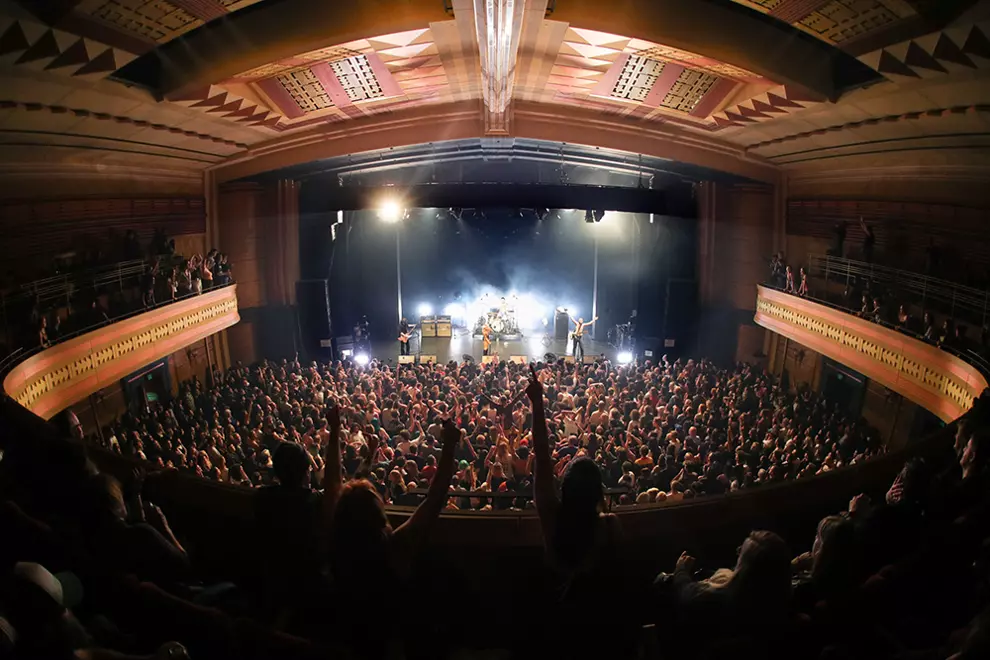
From one-time basket case to a dynamic inclusive night-time economy worth $110 billion in 2025, it is clear that NSW’s after-dark sector is well on its way to successfully redefining its culture and image.
The first State Of The Night report from The Office of the 24-Hour Economy Commissioner highlights the substantial scale of keeping the lights on between 6pm to 6am.
The NSW Night-Time Economy (NTE) sector now has 168,000 businesses. It employs 1.3 million workers, nearly three out of ten in NSW’s workforce. More than that, Sydney has taken giant strides towards recapturing its reputation as a great 24-hour global city.
24-Hour Economy Commissioner Michael Rodrigues says, “The NSW Government has committed to unlocking the potential of our night-time economy, and it’s appropriate that we monitor the impact of our work.
“While we track progress quarterly through our Data After Dark reports, this annual format allows us to summarise how the sector is evolving over time.”
Rodrigues is excited by the sector’s growth rate. Since FY (full year) 23, the NTE has increased in value by 0.1% of $120 million, with 11,000 extra jobs (up 0.9%) and 2,400 new businesses (+1.5%) coming on board.
State Of The Night notes that despite cost of living concerns, people across NSW spent $15.5 billion in-person in the last financial year. This was almost one in every five dollars of daily spending
A further $22.9 billion was spent online.
Interestingly, since FY23, in-person spending was down by $1 billion (-6.0%), while online night-time spending grew by $3.5 billion (+17.8%).
NSW residents made 149.2 million public transport trips at night, accounting for around one in five daily journeys. Opal tap-offs at night increased by 28.5 million trips (+23.6%) since FY23.
Some years ago, when the new State Government invited the live music industry to sit down with the hospitality, security, police, health and tourism sectors, music executives already had definite ideas on changing the narrative.
It had to tackle some unhealthy ingrained attitudes about entertainment after dark. The worst was that it had to be centered around the consumption of alcohol.
The new NTE had to reach out to wider age groups and be more family friendly. It was using the knowledge of how the NTE builds communities, teaches people to share public space, and be mindful of safety. It indirectly fuels advances in transportation, retail and tourism, making it vital to a city’s economic health.
For creatives, it was a way for them to reach wider audiences and redefine totally what their sector was about to the best of their imagination and vision.
Global Cities
Global cities have given great examples of this. Paris, for instance, has some interesting and exceptional fun spaces to keep the momentum going while ensuring the drinks and food offered are the best.
Take in some examples. Lavomatic is a speakeasy in a launderette where punters enter through a washing machine with the press of a button which leads via a staircase to a high-volume pumping bar.
Ravers at The Chez Bouboule bar have a sandy bowling ground on which to play pétanque. Maison Souquet lives up to its past as a 19th century brothel both in look and cocktails named after the city’s best known courtesans.
Other nightspots offer everything from leftist exhibitions and poetry to Swap Parties to ecological fairs to wine tasting from local wineries. Germain & Club Paradisio is a cinema which turns into a nightclub where actors, celebs and the high society mix on the dancefloor.
According to the Night Time Industries Association, the UK’s NTE generates £62.4 billion (AU$121 billion) annually, making it fifth-largest industry in the country and supporting over 1.3 million jobs.
Faced with declining number of clubs in London, its Lord Mayor, Sadiq Khan, set up a taskforce which he filled with young clubland creatives which came up with a report published in January which recommended London turn into a truly 24-hour city by extending transport, venue hours and food provisions, and “urging that nightlife must be recognised as a distinct form of culture.”
The report also dismissed outdated police thinking, something to be adopted by NSW and Australian NTE advocates. One is the Met’s belief that extending venue hours leads to more crime. The report’s research found most crime was committed in the early afternoons.
It also argued against police belief that nightspots catering for specific black urban music and predominantly black patrons, didn’t hold up.
Amsterdam, one of the most thriving nightlife cities in Europe, also dismisses police presence as essential for safety.
Rather, it uses mediators and on-the-ground facilitators who help late night revellers navigate the city and its 500 night time establishments step in quickly to calm things down if disputes flare up.
When these trained mediators were first introduced in a trial, nuisance complaints dropped by 40% and alcohol related incidents by 20%. Amsterdam’s night time executives argue mediators – along with good lighting and design, accessible transport, active public spaces – are what makes it successful, not enforcement.
Following initiatives as Breakfast Clubs and 40-hour weekenders, the City is mooting more 24-hour permits and funding for businesses. Amsterdam’s NTE supports 5,000 jobs and draws in 1.5 million tourists a year, and injects €1.25 billion (AU$2.10 billion) into the city’s economy.
New York City had 64+ million visitors in 2024 and 68.1 million in 2025. They are an essential part of its NTE contributing US$35 billion (AU$49.9 billion) annually and supporting 300,000 jobs. International visitors represented about one-fifth.
In 2019, Australians were the sixth highest international visitors to New York, after the UK, Canada, Brazil, France, and Germany.
They come not just for the tremendous music, food and comedy, but museums, art exhibitions and Broadway shows, and landmarks such as the Empire State Building, Statue of Liberty, Central Park, and Times Square.
Its Office of Nightlife association is advanced in offering mental health resources and harm reduction programmes for the 196,000 who work in the sector.
Around the world, more than 80 cities have appointed night mayors or established night-time offices and the global night-time tourism market is projected to nearly triple in value by 2035.
NSW’s Diversity
NSW is also looking after its NTE workforce.
According to Michael Rodrigues, “We’re focusing on improving worker safety and wellbeing through our Night Worker Action Plan launched in 2025, which proposes practical interventions such as greater access to services for night workers.”
Figures from State Of The Night show how effective the strategy to diversity has been.
Visits to cinema and screen were up 37.2%, museums and heritage activities grew by 18.2%, and sports and recreation up 5.9%. An audience unable to attend during business hours is being tapped, and new income streams created.
Also significant was that aside from growth of food, drink and entertainment businesses in Central Sydney (6.4%) – which includes Parramatta, Bankstown, Burwood, and Hurstville – and 4.2% in Western Sydney, spending was also significantly up elsewhere.
These included Illawarra–Shoalhaven (+2.7%), Lower Hunter and Newcastle (+2.1%) and the Central Coast (+0.8%).
By using a wide sector of data and insights, State Of The Night tracks emerging trends, identifies new opportunities, and better understands how people across NSW participate in the night-time economy.
It looks at challenges facing NTE’s long-term growth in the future. These include the rising operational costs for businesses, worker safety and wellbeing, affordability, and patchy late-night public transport options.
It covers how the Government keeps investing in infrastructure and cultural projects, and regulatory reform, and initiatives as wider cultural and recreation initiatives, safety and wellbeing for workers through the NSW Night Worker Action Plan, and those which will spark activity in regional areas including equipping regional businesses with tools on expanding their day economies to night ones.
“We’re also working on safety campaigns developed in partnership with industry,” Rodrigues reveals.
“Looking ahead, there is good reason for optimism as more communities embrace the Vibrancy Reforms, additional Special Entertainment Precincts are established, and we continue delivering on the state’s 24-Hour Economy Strategy.”
The most recent Government moves are the lifting of the final remnants of the dreaded lockout laws and more funding for councils wanting to introduce Special Entertainment Precincts.
The end of the lockout rules, he said, meant, “We’re starting with a clean slate. After 12 years, we’ve closed that chapter in our story and can fully turn our attention to building the future this state deserves.”
The nightclub segment of Sydney/NSW’s NTE has a specific challenge.
Global club operators believe that the scene renews itself in cycles. Every four years is the common number. That’s when the most hedonistic clubbers pare back their lifestyles, and a new generation of clubbers take over.
These emerging clubbers have their own rules. How drastic will these changes be? How effectively Sydney’s club operators and, indeed, wider night businesses cater for them, will depend on whether Sydney night life will keep pace with the rest of the world.
View the full State Of The Night report here.
This piece of content has been assisted by the Australian Government through Music Australia and Creative Australia, its arts funding and advisory body