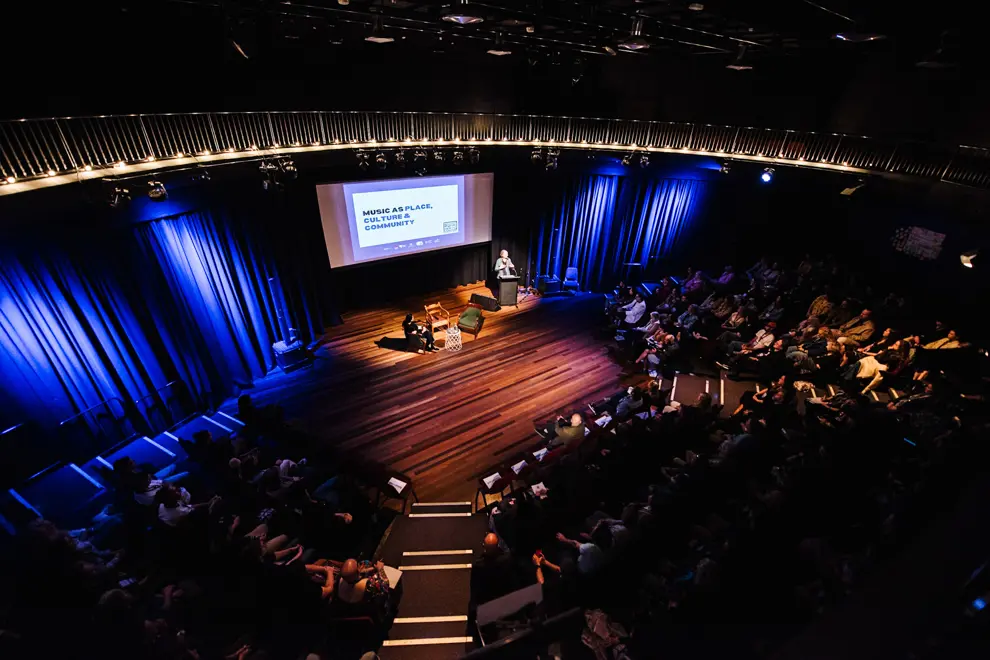
From 28 - 30 October, the Regional & Remote Music Summit held its third annual event at Berrin / Mount Gambier, a six-hour drive from the Adelaide CBD. The summit aims to unite artists, industry professionals, community leaders, and policymakers in a nationwide dialogue about the future of music in regional communities.
After two successful years, the summit has established itself as an essential event for anyone who works in or alongside regional and remote areas. The inaugural summit was held in Darwin in 2024, hosted by MusicNT; then in Byron Bay in 2025, hosted by MusicNSW; and this year’s event was hosted by MusicSA.
The Music made the journey to Mount Gambier - making sure to stop for the fabled Keith fried chicken along the way - and has condensed the three days of industry expert panels, presentations and live music showcases into nine key takeaways.
1. Being regional is a superpower
What would regional and remote music system look like by 2035? The future of regional and remote music was explored throughout the summit, and the consensus was that the coming decade is filled with opportunity.
As Australia’s population grows, there are opportunities to build resilience and intergenerational leadership as more people move to regional and remote areas and share ideas, relationships and knowledge. Upskilling and involving the people in the community to form this creative and cultural leadership outside of the capitals is essential. If community members do leave for cities, they need to ensure they return and share this knowledge.
MusicSA CEO Christine Schloithe summarised the panel discussions succinctly as she noted there were commonalities - described as the regional “superpower” - between each speaker, as it was discovered they share the same drive to create with what they have at their fingertips and invest in the relationships within their community with care, love and respect to elevate the art in their vicinity.
2. The Australian Music Touring Network is a game changer for regional touring
One of the biggest announcements across the summit was the official launch of the Australian Music Touring Network.
The Australian Music Touring Network is a free online platform bringing Australia’s original live music venues together in one living, map-based directory.
As Australian Music Industry Network Acting General Manager, Emily Tulloch shared the platform on the screen, there were audible gasps and triumphant cheers from the audience as they saw the platform solve many of their long-term challenges and administrative headaches.
The network provides everything from practical venue information, including capacity, technical specifications, accessibility, booking contacts, preferred genres, performance schedules and local knowledge.
The shared national map - imagine a super comprehensive venue-focused Google Maps - will help artists and the industry plan smarter routes, identify opportunities and strengthen the connection between metropolitan, regional and remote communities.
3. Regional and remote artists are better at music
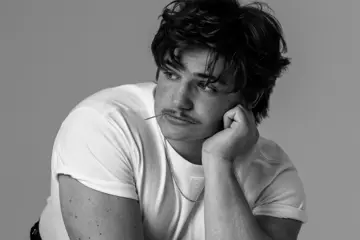
A self-described “hot take” from artist/producer Sophie Edwards was that when she’s in a bigger city, she tells everyone that “regional and remote artists are often significantly better at music, better at management, better at everything.”
The reasoning being that they’ve had to do it all themselves to try and be noticed for so long. When she moved to bigger cities from Canberra, she thought she would be behind everyone else. But it’s the opposite; some people she met didn’t know how to send an invoice.
Many of the speakers on these panels are the walking embodiment of DIY. In regional and remote areas, creating an opportunity or event that doesn’t already exist is often the first stepping stone in their career.
Signing off the panel, ‘Staying, Leaving, Returning: The Artist Reality’, Edwards reflected on her own experience of moving from Canberra to New York, back to Canberra and then to Melbourne, where she lives now.
“Recognising the power that comes from being from a smaller community and taking that with you if you do choose to move is really valuable and don’t forget about that.”
4. Mount Gambier’s Sexy As Shit
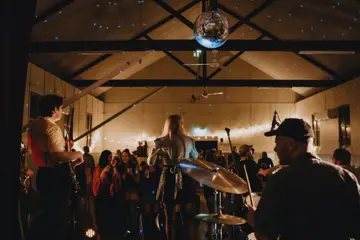
Rock Lock Record’s local showcase curated by label owner Jack Lane took over the Woolstore Brewery on the Wednesday night to christen the beginning of the summit. The lineup featured excellent performances from the powerful voice of Alison Newman and her band The Tassels, the alchemic trio fusing garage, surf and R&B Stokes, and the three-piece Aussie alt-rock outfit Gernz, who feel like they’d be perfectly placed on a support spot under Bad//Dreems and West Thebarton.
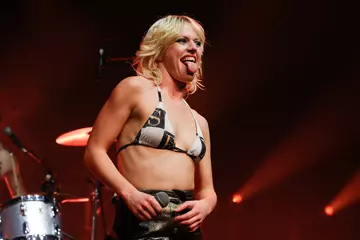
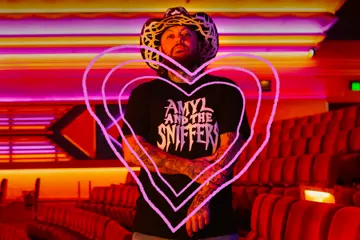
However, the summit could not stop talking about Sexy As Shit. Judging by the name, this performance could have gone either way. However, as “Cowboy” Collins took to the stage in his ‘80s windbreaker and retro bug-eye lenses, it was clear this was going to be silly fun.
Sexy As Shit blends the instrumentals of ‘80s synth pop anthems with the early 2000s boom of parody hip-hop as Collins raps to the crowd. “Is it hot in here?” Collins asks as he removes his ‘80s windbreaker to reveal another brightly coloured windbreaker underneath.
Between dance moves which are in the category of so bad they’re good, he launches his tear-away pants into the crowd with the confidence of a veteran musician headlining an arena, not a 25-minute showcase artist performing second on a four-band bill. In the final song, he jumps into the audience and pushes through to the back to make sure everyone has caught a glimpse of him.
Expect to hear the name Sexy As Shit in the future.
5. A 36-hour commute
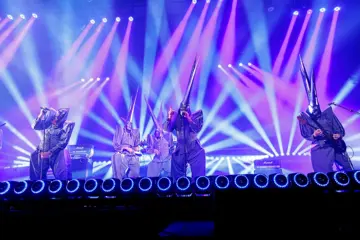
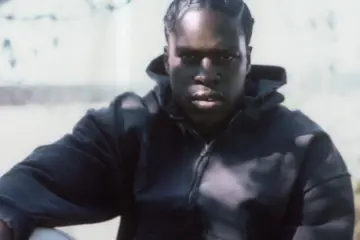
“When we first started out we had to drive 36 hours to Adelaide and back,” DEM MOB’s PAYDAE aka Elisha James Umuhuri casually states in the panel ‘Staying, Leaving, Returning: The Artist Reality’. DEM MOB are from the APY Lands in the remote desert of South Australia, proudly holding the title of the most remote hip hop band on the planet. Now that they live in Adelaide, it’s much easier to get to gigs, but the constant travel is something that regional artists always have to deal with.
“Oh, 2000 km? I’ll be there,” shares Adelaide-based Western Arrernte singer-songwriter Rob Edwards, who is now based an hour and a half outside of Adelaide on the Fleurieu Peninsula.
“I will get in a van and drive an hour and a half just to go play one song at an event and then go home.” A level of resilience is built through having to go that extra step to be able to perform.
6. South Australian music is thriving
Outside of the Rock Lock Record’s local showcase, a number of South Australian artists made the journey to perform at showcases in front of an audience of industry delegates.
Highlights include the captivating folk charm of singer-songwriter My Chérie at the Adelaide University Alumni showcase. The experimental groove of Live Slug Reaction’s combo of jazz-funk and rock and the high-impact, 10-minute hip-hop set from BOUSTA, an Arrernte man from Mparntwe/Alice Springs, at the Carclew x Wildlive showcase. And the troubadour journeyman stylings of Ned Baulderstone’s alt-country at the General Admission Entertainment showcase.
However, DEM MOB drew the biggest crowd and the highest energy set across the three days. Perhaps the large turnout was due to the interstate audience hearing the story of the band who were spotted at WOMADelaide by festival bookers and went on to perform at Primavera Sound in Barcelona, or the fact that they're the first group to rap in Pitjantjatjara. Whatever the reason, no one left their set disappointed - apart from the fact that it was too short.
7. Creating pathways for the next generation
A concurrent theme of the summit was creating pathways for future generations. Many regional artists never find success or come to light due to visibility. They may not know how to take the step from bedroom musician to performing on stage for the first time with the opportunities around them.
One of the artists creating visible pathways for their remote community is DEM MOB. The three members of DEM MOB, Basso, Gully and PAYDAE, were featured across three different panels as speakers during the summit, so the attendees learned a lot about the band’s story through these discussions and received a full picture of how they’re a success story for creating regional pathways.
DEM MOB considers themselves more to be educators than artists. They feel they have a responsibility to create a pathway for kids from the APY Lands to get into music development and have the opportunities that DEM MOB has been afforded.
PAYDAE shares that when they’re not in Adelaide, they’re returning home and putting on music development workshops for the kids in their communities and surroundings to give them a platform to “be able to express how they see this world they live.”
“So, when they move into the future, they can be working on bigger and better ambitions for their next of kin.”
8. Early learning leads to future participation
Dr Christen Cornell from Creative Australia and Music Australia Director Millie Millgate presented an update on ongoing music and broader research projects, offering insights into national trends and priorities.
The most interesting findings came from the National Arts Participation Survey that showed the importance of getting music education and opportunities into regional areas. These statistics showed the strong link between learning an art form in school years and arts participation later in life. Australians who were taught an art form during their school-age years are significantly more likely than those who were not to:
Attend arts events and festivals (80% compared to 58%)
Listen to recorded music (96% compared to 86%)
Create art themselves (50% compared to 22%)
Read books (75% compared to 53%)
Engage with the arts online (63% compared to 33%).
As well as these statistics, a general pulse check showed that in 2025, 10.5 million Australians (51% of the population) attended music events or festivals, an increase from 47% of the population in 2022. That’s 873,000 more Australians who are attending live music gigs.
However, Australians are increasingly citing cost as a barrier to arts attendance (60% up from 55% in 2022). More than half of Australians say there were events they wanted to attend but did not because of the cost (55%), half are delaying ticket purchases (47%) and two in five are saving up for events they want to attend (37%).
All of these are impacting regional and remote music experiences, not just metropolitan.
9. The 2027 summit will be held in Queensland
Kristy Ellis, QMusic CEO, made a special appearance on stage on the final day to say she was thrilled to accept the handover from MusicSA for the next Regional & Remote Music Summit. No further details were announced, but it is now known which state to head to in 2027.
This is just a short snapshot of the breadth of the discussions that happened at the summit. For the full experience, you’ll have to make the journey yourself. Stay tuned for a full announcement for the Regional & Remote Music Summit in 2027.