In a significant move, the Northern Territory Government has set up the first advisory committee to advise the Arts Minister Jinson Charls on issues and opportunities.
The first meeting of the Ministerial Advisory Committee for the Arts (MACA) took place last week (November 19) at Parliament House.
MACA and the Minister worked through the Government’s Arts Strategy 2034 and set the blueprint for MACA’s input over the next few years.
The Minister called the session “productive” and thanked its members “for generously sharing their experience and insights.”
He added, “I look forward to working together to support a strong, vibrant and sustainable arts sector that continues to enrich our communities and showcase Territory creativity.”
MACA member Mark Smith, long time Executive Director of Music NT told The Music, “It’s vital to have this ability to talk directly to the Minister and advocate for the sector. The challenge now is to make the most of this opportunity.”
Representing a range of artforms, MACA is led by Darwin Symphony Orchestra Chair Claire Kilgariff and Darwin Festival Chief Executive Officer James Gough, as inaugural Chair and Deputy Chair respectively.
John Glenn is CEO of Darwin’s 1,000-capacity music venue AANT Centre. Singer songwriter Warren H. Williams is a Western Arrarnta elder from Ntaria (Hermannsburg). Liz Rogers of Regional Arts Australia is an independent producer of contemporary music, musicals, children’s shows and dance.
Puppetry and visual theatre exponent Tania Lieman has a reputation for opening doors for creatives with disabilities. Phillip Watkins is CEO of Desart, a not-for-profit association which represents 39 independently governed First Nation art and craft centres.
Petrit Abazi is Director of the Northern Centre for Contemporary Art (NCCA). Choreographer Lynne Hanton OAM is a Director at the Australian Dance Academy. Lyndee Severin runs the 27-room Curtin Springs Station and tapped for her tourism input.
Voice
Smith is pleased that “music has a voice in these discussions and can advocate for a great focus on the economic and social benefits of a thriving music sector.
“The other hope is that a united arts sector has the potential to be a much stronger voice to Government to affect positive outcomes.”
2026 marks Music NT’s 30 years in operation. It has encouraged the music’s strong regional connection and the powerful relationship between music and place.
Its initiatives include music rangers, the NT Music awards, national First Nation NIMA awards, workshops, outback soundtracks, Sista Sounds, and the venues All Good Project.
Recent studies cover music women, annual gender equity analyses, and NT live music gig survey for economic impact study in partnership with RMIT in Melbourne and Massey University in Wellington.
NT’s creative industry is valued at $735 million. Contemporary music contributes $74 million, with a workforce of 171 full timers.
Government data states Contemporary Music drew the second highest revenue and attendance. Of that music festivals generated the most revenue (30%) while multi-category festivals drew the most attendance (29%).
It is expected MACA will provide input into Government’s targets including turning the NT into a festival hub, funding venue upgrades to make them more accessible, increase tourism and events, and industry-led traineeships to create more jobs in a sector facing a skills shortage.
The challenges to be addressed are diverse.
Lia Finocchiaro’s CLP (Country Liberal Party) Government’s target to increase the NT’s share of national revenue and attendance (0.5%) to be above its share of population (1%), and further expand its presence nationally and internationally, is not helped by present economic realities.
The Territory is particularly vulnerable to national increasing cost of flights, freight, equipment hire and accommodation.
Promoters and venues say a drop in visits by interstate and international acts works against NT talent.
In Culture King’s Australian Concert Touring Database the number of international concerts in NSW reached 10,207 and Victoria 10,207. NT was at the bottom of the national ladder with 64.
It’s not helped by NT’s small population. In an August 2026 report by the ABC Darwin venue Mayberry’s General Manager Russell Temple, a veteran promoter of 30 years, admitted, "I'm not aware of any live music tours being profitable in Darwin.”
There’s a lack of metro venues to play in. Going on the road to source audiences is daunting.
“There are long distances to cover by road, there's risks with travel, and with [the cost of] insurance it's pretty daunting to plan a big tour without some funding behind you,” explained Leisa Howlett of punk trio TANG.
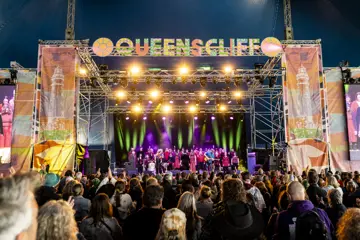
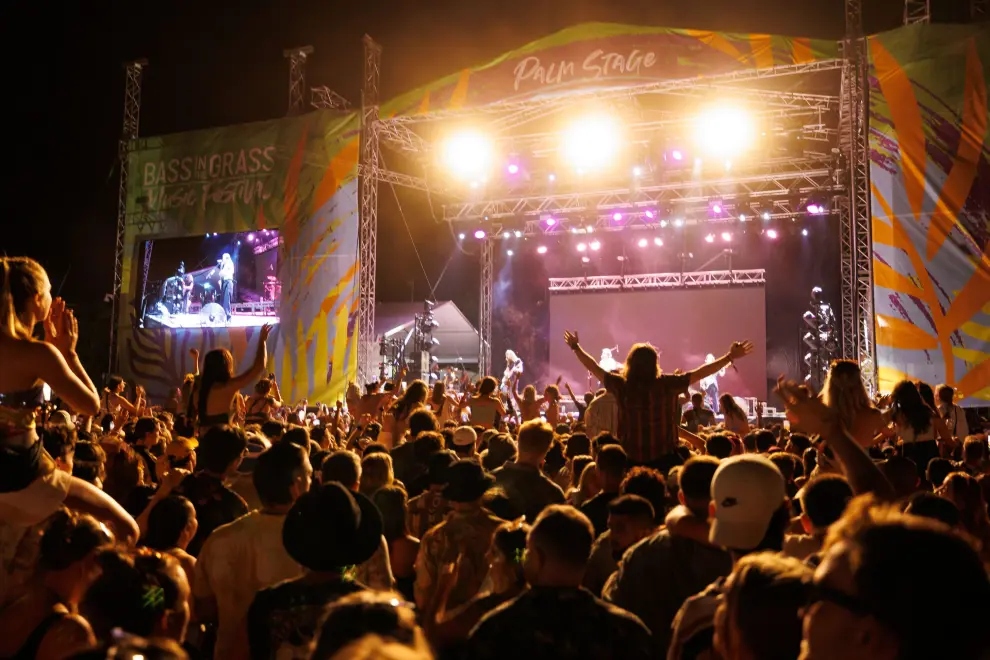
If local acts are lucky, they land a slot on the bill of Darwin Festival (150,000, of which a quarter are from outside the NT) or BASSINTHEGRASS (16,000, of which 50% are tourists).
TANG played BASS this year. Howlett told the ABC, "That was fantastic just to be able to say, 'Hey, we're a local Darwin act, this is what we're doing,' and build those connections.”
The NT Government estimates it invests $80 million a year in arts and cultural activities. Its “core arts domains are visual arts and crafts, performing arts, literature and writing.”
It continues to support local creativity through the 2025-26 NT Arts Grants Program, which has awarded $7.676 million to 84 artists, 16 arts workers, and 97 arts organisations.
It has also expressed interest in artists and arts organisations increasing access to cross-portfolio funding like health/well being, education, regional development and tourism.
Budget
But the Australian Live Music Business Council (ALMBC)’s analysis of recent Territory budgets found “total NT government arts spending dropped 14%, or $5.2 million, to $32.3 million in 2023–24. The biggest falls were in multi-arts festivals (down $6.9 million) and arts administration (down $4.7 million).
“This is the budget envelope that covers arts bodies, grants programs, and sector development work — and the trajectory is heading in the wrong direction.”
Its appraisal continued: “The NT’s two most recent budgets, handed down in May 2025 (2025–26) and May 2026 (2026–27), present a mixed picture for the music and live music sector.
“Events and tourism infrastructure have received some attention and headline festivals like BASSINTHEGRASS continue to be supported.
“But dedicated arts and music-specific funding has been trimmed, and neither budget contains anything new specifically for the music industry.”
Two years ago, Live Performance Australia stressed the importance of the NT developing ways for First Nations arts leaders.
It stated, “LPA agrees that First Nations people should lead First Nations arts and development.
To promote and strengthen First Nations leadership in the arts, LPA recommends a focus on development pathways, mentorships and cross-organisational roles for First Nations Leaders.
“This approach will allow organisations to identify and support the next generation of young First Nations leaders.
“The adoption of cross-organisational roles for First Nations leaders in the arts will also allow individuals to have employment year-round. This can help to address the transient nature of workers in the arts resulting from short-term employment contracts.”
It went on: “Additionally, the Government should invest in First Nations businesses (which) can then engage with the arts directly.”
Minister Charls said MACA would play an important role in guiding the future of the Territory's arts and creative industries.
"The Territory is home to talented artists, creators and storytellers whose work enriches our communities and helps define who we are.
"Claire Kilgariff and James Gough are highly respected leaders who will provide strong leadership for the Committee.
"Together with members, they'll bring valuable experience and insight from across the arts and creative industries as we continue to restore the Territory lifestyle, strengthen our world-class arts sector and promote Territory talent to audiences around the world."
“MACA will support delivery of the NT Arts Strategy and Action Plan and help ensure government policies, programs and investment continue to reflect the needs and aspirations of the arts sector.”
This piece of content has been assisted by the Australian Government through Music Australia and Creative Australia, its arts funding and advisory body