 Kylie Minogue Profile
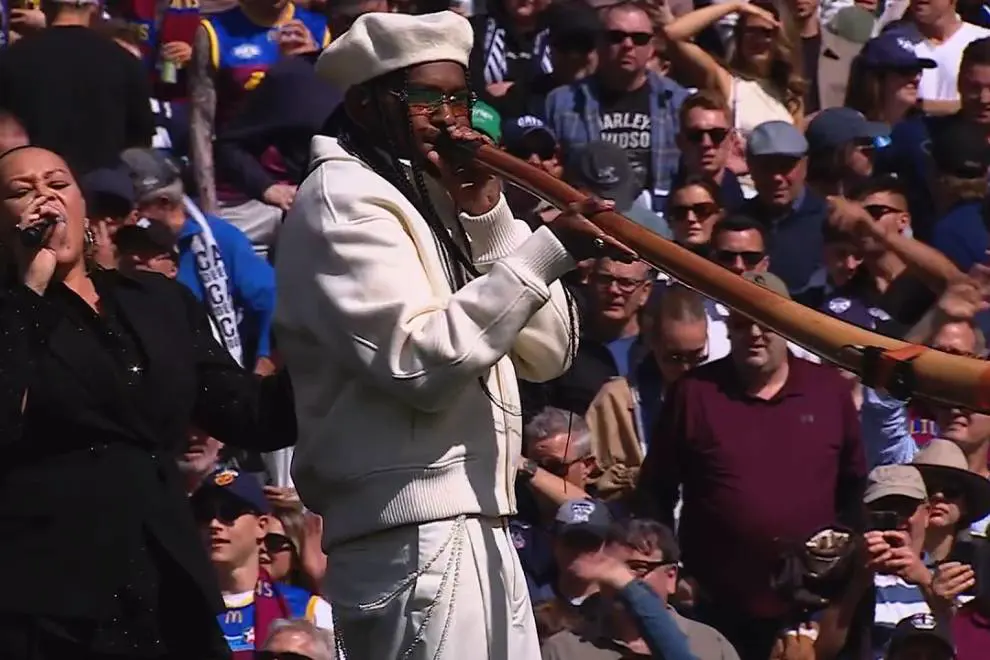
Up to 45% of Australians want more live music and entertainment at sport matches – and not just at big scale Grand Finals either.
They believe a greater crossover – new buzz word alert: sportainment – increases their experience, loyalty and value-add communal and cultural experiences.
It’s not just music at pre-game and halftime. Some want songs blaring out after each goal or strike. This trend reflects that it’s not just music audiences that are changing their behaviour and, with it, the game.
According to the newly released Ticketmaster State Of Play Sports 2026 report, 54% of sports fans also attend live music events. 26% believe live music can attract new audiences to sport. 24% would travel abroad for a match if it featured an artist they like.
Ticketmaster sampled 15,000 sports fans from the US, Australia, the UK, Germany, Spain, Mexico, Ireland, the UAE, Qatar, and Saudi Arabia.
In an eye-raising number from the US, 29% consider that the Super Bowl half-time show is the actual highlight of the event.
Chris Gratton, Managing Director of Ticketmaster Sport said the push for more live music was particularly prevalent among younger sports fans.
“Sport has become one of the most powerful forms of live entertainment, and fans increasingly want the full event experience,” he pointed out.
“From music performances to stadium production and cultural moments that live beyond the game itself, audiences are engaging with sport in a much broader way.
“What we’re seeing, especially among younger fans, is a desire for live events that feel bigger, more shareable and emotionally memorable.”
The addition of music is part of an overall entertainment in sports to keep the excitement level up before, during and after the game.
It includes pre-buzzing on social media about the gathering of the tribes, the self-identifying through merchandising apparel, team branding on big screens, and various rituals.
Clearly, it’s not just Australian concert-goers who have gone from being passive spectators to making major decisions on the atmosphere.
Speculate
This week Melbourne Fox FM’s breakfast show speculated that Macy Gray’s tour in September could extend to the NFL season opener at the MCG between the Los Angeles Rams and the San Francisco 49ers on the 11th.
Meanwhile Sports radio SEN is urging the NRL to go for Olivia Dean for its October 4 Grand Final at Accor Stadium
The right choice of acts could also be a tourism bonanza.
The multi-million paycheck for Kylie Minogue’s performance at the AFL Grand Final is partly to ensure a repeat of the $480 million spent in Melbourne’s restaurants, bars, retail and accommodation businesses last year around the event.
Tourism and Events Northern Territory reported that its marketing together of the May 16 BASSINTHEGRASS music festival and the AFL clash between the Gold Coast Suns and Port Adelaide at TIO Stadium held in Darwin on the same weekend – including appearances by players and musicians at each others’ events – proved a smart move.
Strong figures were the result. The festival drew 12,000 and the match 11,900.
The association reported the weekend “delivered a strong boost to local tourism, with Darwin’s hotel forward occupancy rate sitting around 70%, up 10 points on the same period last year.”
Benefits To Music
Figures from the music industry that The Music spoke to suggested greater interaction with sports would be a heightened lesson for the music industry in four ways.
Firstly, it is the focus on developing and investing in the grassroots level, whether through mentorship and competitions, or the extent of private donations raised to top up government funding at entry level which is considerably more than in music.
Secondly it’s important that the emerging talent pipeline is central. Thirdly, codes like the AFL and NRL are more effective in using technology and data collecting to widen their supporter base.
There’s also a total focus on mental well-being and psychology. The music industry has taken this more seriously of late, but sport is far advanced in its sense of responsibility.
The music executives also suggest that any greater integration would make most sense to the two fastest growing games in Australia – basketball and pickleball. The diversity of the players and spectators gives a great opportunity for music discovery and growth.
According to Ausplay, basketball ranks as the second-highest team participation game with 1.3 million players (leaping across different cultures), with 350,000 in the 5-14 age group.
The local national boom of pickleball – which combines elements of tennis, badminton, and table tennis – reflects its rapid take-up in North America and internationally.
Ticketmaster points out: “For venues, teams, and leagues, this unlocks new growth strategies. Expanding international events and reaching fans across borders is now essential.”
Gen Z Experience
The sportainment idea would also work because the respective fans share a common idea of what live experiences are.
Both are starting to travel longer distances. They want premium seating and drinks and food delivered to their seats. There’s a growing demand for VIP experiences and immersive options like 360-degree stadium views and tech improvements as mobile ticketing and entry.
The growing dominance of Gen Z has made significant changes to the rules.
Both now see the match/concert as larger than just the event. In the report, it’s Gen Z that is pushing most for music integration: 45% insist music makes sports more exciting and 33% want more entertainment options at matches.
“Live music has a unique power to bring people together,” agrees Kristy Rosser, Senior Vice President, Head of Media and Sponsorship at Live Nation Australia & New Zealand. “Fans aren’t just attending a concert. They’re part of something bigger.”
Last year music video network Vevo’s Fandom = Cultural Currency report had already outlined how Gen Z Australians were changing things. It found 50% of 18 to 24-year-olds identifying with music fandoms, while 31% of sport followers saw themselves as superfans who can spend thousands of dollars to display their devotion.
“This shift is significant in a stereotypically sports-obsessed nation,” Tim O’Connor, Vevo’s General Manager Sales, APAC told Mediaweek at that time.
“For Aussie Gen Z, music is more than a soundtrack, it’s how they connect, discover and make sense of culture. And crucially, it’s where brands need to show up.”
For instance, the Ticketmaster report found that 41% of sports fans thought premium seating enhanced the live event, while 40% want in-seat food & drink ordering.
The Evolving The Event Experience Report study of Australian live music fans and stadiums by UK/Australian industry consultants Gemba reported that up to 68% want food and drinks at their seats.
The music fans also revealed the extent of the experience. 86% for the atmosphere and to enjoy something they don’t get at home. Three in five (58 per cent) would stay on at the venue after the main event if bars and food spaces remained open and music was provided.
Vevo’s O’Connor summed up it was important for powers-that-be to take note of what music and sports fans wanted.
“Fandom isn’t just a marketing buzzword anymore,” he said. “It’s the new cultural currency, and the way brands engage with it will define how they stay relevant to the next generation of Australians.”
This piece of content has been assisted by the Australian Government through Music Australia and Creative Australia, its arts funding and advisory body