Threats and opportunities of Artificial Intelligence (AI), Australia’s ranking at #3 globally in both EDM and country music, more genre blurring, Gen Z driving the live sector, the pilot light seemed to have gone out on local acts elbowing their way into the ARIA charts, the grassroots scene still soft-timing although they’re kicking up fresh blood, and music TV battles not finding long-term household names.
Those were some of the highs and lows of 2025. Here we look at 26 forecasts for the year 2026.
1. Buoyant Touring Schedule Already Kicking In
After the dust-kicking race-out of international tours hitting Australia after pandemic restrictions were lifted a few years ago, promoters and stadium operators were by last year quietly wondering to The Music if it would taper off.
Would the cost of living finally hit spending on top-of-the-town entertainment? Would major acts come off the road to go into the recording studio and whip up a fresh brew?
But the first half of 2026, at least, will be as busy as 2025 was. In fact, Legends Global regional head Harvey Lister expects a “phenomenal” run through 2026 and into 2027.
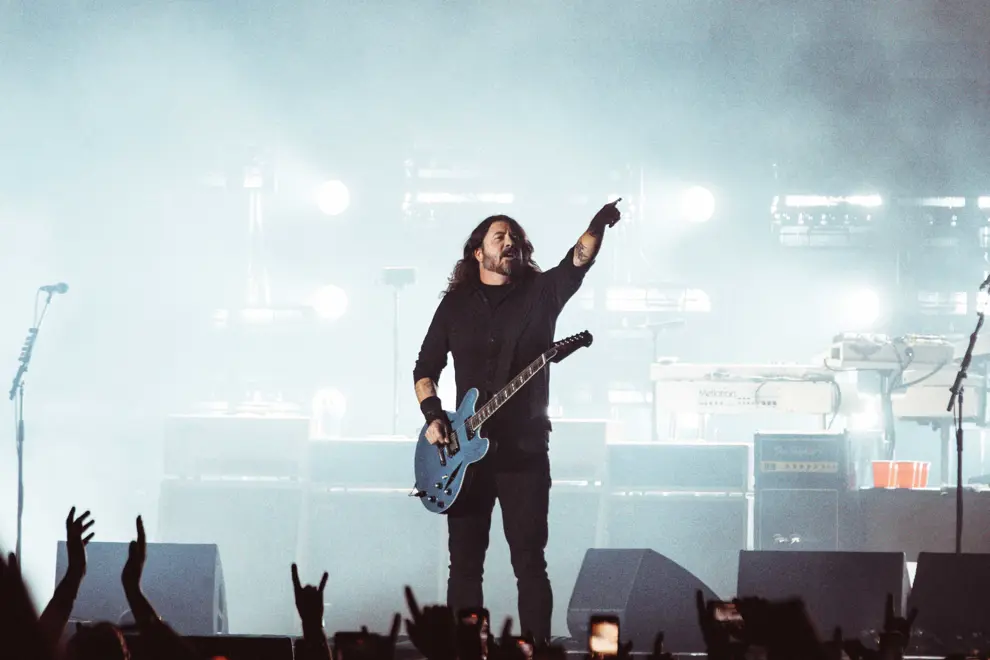
Foo Fighters and Ariana Grande are ready to announce, given their recent upshot in their profiles, one with the Tasmanian one-off and the other with Wicked.
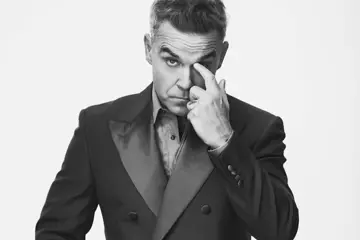
Rumoured: Bruce Springsteen (we’re hearing electric versions of Nebraska) and Robbie Williams have let slip they're returning. Also on the scuttlebutt list: Eminem, Iron Maiden, Foreigner with original singer Lou Gramm, Florence + The Machine, Cardi B, and a guitarist heaven team-up of Joe Satriani & Steve Vai.
2. Hyperpop & Afrofuturism Pressing More Buttons
It’s promising to be an even more exciting musical year than 2025 was.
Expect a wider pickup of Hyperpop, already embraced by Gen Z and the LGBTQI+ community, and Afrofuturism, a meeting of black music and futuristic vibes. We can’t wait for the fashions and movies that stem from the latter.
Spotify predicts that “emotional art of alternate pop will continue.” The 2026 version of retro will tap into 1958 vocals and ‘90s/’00s R&B vocals.
3. More Data On Australian Music Retail
Given the importance of brick-and-mortar record stores as places of discovery and community, it’s essential to stay ahead of fan behaviour to make sure they survive.
Part 2 of the Victorian Music Development Office-commissioned For The Record is due this year, focussing on artist direct-to-consumer and show sales.
Part 1, from late last year, showed Melbourne had 119 indie record stores, making it record store capital of the world with 5.9 stores per 100,000 residents, and their stocking of 25% to 50% local artists, compared to the 8.4% of Australian tracks on streaming charts.
Will Australian physical record stores follow those in the United States? There, online stores outperformed them threefold, with $685,000 to $210,000. Last year the top 200 stores dropped 4% in revenue, 6% in headcount.
The trend in 2026 is for the brick-and-mortars to consolidate with their onliners, providing greater customer service digitally by using AI to provide greater personalised service.
Guitar Center in Los Angeles, the largest musical instrument retailer in the U.S., was the first to launch Rig Advisor, an AI-powered shopping assistant directly onto the store floor
4. First AI Tour By Aussie Digital Act Prepped
With 38% of Gen Z believing that AI, VR and holograms were an exhilarating way to engage with an artist, overseas AI shows are multi-million dollar trump cards.
Australian creators of AI acts, some with tracks and videos glowing online, have been in talks with booking agents about concerts and tours. The shows might not necessarily be staged in Australia given these acts’ global appeal.
5. Insure And Be Damned!
With premiums leaping from $10,000 to $40,000 and insurers taking less risks, both the insurance and live music sectors are determined to get the Federal Government to intervene in the soaring public liability premiums and help find a solution to the not-so-risky business.
A push is for a government-backed insurance scheme for smaller festivals and venues, to continue without being bogged down by huge costs, or encourage them to start.
6. Insurance Reform After 25 Years?
Will it happen this year? Last spring’s Insurance Council of Australia report called for, among those pertaining to venues:
(a) capping legal fees and banning opportunistic “no win, no fee” deals.
(b) reduce the number of late claims so venues can respond quicker and ensure evidence is maintained.
(c) issue clear warnings to punters about risks that may lessen liability of venues and festivals.
The latter is an interesting dilemma. Promoters complain to The Music that they put up signs on their sites for boots to be worn especially in muddy and stony areas. But in the spirit of laid back vibes, bare feet and open sandals are tolerated.
7. More Fans Turning Collaborators
Serenade and Community were among platforms which brought creators together with fans.
Initially they were paid requests for birthday greetings and personalised songs. On the other hand, artists highlight fan memorabilia or cover songs by fans of their songs.
These sometimes extended into friendships, this year expected to expand into collaborations with artwork and songwriting as the norm, or helping to curate vanity festivals and special concerts.
8. New Sounds And Revivals In EDM
Australian clubs are expecting ISOxo to take over trap, a more jazzified dubstep, and kettama (that throwback to house, techno, and UK garage) and speed garage to go mainstream.
Also tipped to find global success is EDM’s collaboration with Bollywood. It began in 2024 with Norway’s Alan Walker and Bollywood maestro Pritam, and Martin Garrix & Arijit Singh.
On their way out (and don’t slam the door): melodic techno and sustain bass.
9. Guitar Market Heading For $9.46B
The global guitar market is forecast to hit US$9.46 billion (AU$14.30) in 2026, after reaching $6.47 billion (AU$9.78 billion) in 2025.
The market will grow to $13.83 billion in 2027 (AU$20.91 billion), and $289.24 (AU$437.38) in 2035.
Driving the growth are online adoption (55%), beginners’ preference for acoustic (48%), interest in electric/smart models (36%) and preference for sustainability preference (33%).
The largest market is the Asia-Pacific which of course includes Australia at 32%, North America at 28%, Europe (25%), and Middle East & Africa (15%).
10. Foo Fighters To Set Launceston Airport Record
Launceston Airport is set for its busiest day ever on Friday ,January 23rd – when 6,700 passengers thunder through a day before the Foo Fighters’ exclusive show at the UTAs Stadium.
Qantas and Jetstar have added 3,000 seats via more flights and larger aircraft, and Virgin has 1,700 seats confirmed, from January 23rd and 26th to cater for fans.
11. Video Game Soundtracks Going Mainstream
Since 2023, when the Grammys introduced the Best Score Soundtrack For Video Games And Other Interactive Media category, the music has steadily gained popular recognition,
To explain this kind of exposure, last year’s Grammys drew 15.4 million on US TV alone and 102.2 million social media interactions.
But this year’s February 1st show is set to tip into household territory. That’s because the 2026 nominees are the sort of heavy hitters which naturally whip up mainstream coverage and publicity.
They include PlayStation’s Helldivers 2, Ubisoft’s double-hit Avatar: Frontiers Of Pandora – Secrets Of The Spire and Star Wars Outlaws: Wild Card & A Pirate’s Fortune, Xbox’s Indiana Jones And The Great Circle, and the indie Sword Of The Sea with music by Austin Wintory.
12. New Australian Audio Awards To Debut
After trade body Commercial Radio + Audio put a bullet through the long-running Australian Commercial Radio Awards, the Australian Audio Awards makes its debut at Carriageworks in Sydney, on Thursday May 28th.
Covering both radio and podcast talent in the commercial and community sectors, it is organised by Radioinfo and Mumbrella.
13. Fate Of Höfner Bass Decided By Autumn
The fate of the legendary German Höfner guitar and bass maker will be decided by autumn. They filed for bankruptcy last month – they scowl it’s due to Trump’s tariffs – and were given three months to sort out debts.
The 70-year company’s most famous client is Paul McCartney who used a Violin Bass ever since he got one in 1962, and had five in his collection. One of these was swiped from the back of a van in 1972, and found five decades later in an attic in a house in Suffolk, England.
14. K-Pop Remains Caught In Middle Of Japan-Korea Cold War
The wider cultural and political cold war between China and Japan has caught K-Pop right in the middle, and don’t expect things to thaw in 2026.
In recent weeks, a meet-and-greet by Le Sserafim in Shanghai was cancelled without reason but two of five members are Japanese.
A fan meet by Close Your Eyes in Hangzhou, China was minus Japanese member Kenshin.
More than 70,000 people signed a petition calling for the axing of K-pop girl group Aespa's performance from Japan's year-end music show over the inclusion of its Chinese member, Ningning, over comments he made in 2022.
15. Doing The Monster Mashups
Mashups weren’t exactly dead. There was too much excitement and artistry for that. But new tools such as AI and TikTok, a boom in the acceptance of genre fusion, and a rediscovery of the original mashup merchants as artists.
Mashups 2026 will be regarded as (more of) an artform and AI will allow it to be a formidable force in concerts, where stars evoke the images and voices of the heroes whom they’re sampling.
16. Support Act’s Road Overload
Growing to be an essential initiative by the music industry charity Support Act is its backstage in-person support on major stressful tours.
Introduced late 2025 via a partnership with Live Nation, for all Metallica, Oasis, Lady Gaga, and Kendrick Lamar dates Down Under, its Crisis Relief Team Leader Angela Doolan, with psychologist Dr Ash King, psychotherapist and clinical counsellor Amber Rules and social worker Steve Hossack kept a calm room for the entourage, crew and production staff to “talk through work pressures, personal concerns, or simply pause and decompress amid the intensity of touring life.”
During the 22 days of Metallica’s tour, there were between 250 and 300 interactions.
It returns in 2026, hopefully widening with other promoters and festivals. Opera Australia also signed for Support Act services to its employees.
17. Elvis’ Latest Flame
Elvis Presley’s celebrity makes a clapback, with Baz Luhrmann’s concert film EPiC: Elvis Presley in Concert – of recently discovered video of his famous 1970 Las Vegas residency and 1972 North American tour – heading for cinemas, and Sofia Coppola's 2023 feature Priscilla, about his wife, starting on Netflix on January 1st, 2026.
There are 400,000 Elvis impersonators out there in the world, according to Guinness World Records. But will 2026 be the year where female EP impersonators get to shine?
Can it start at the Parkes Elvis Festival in NSW this month (7th to 11th)? The Sydney Morning Herald, in a profile on Australian EPs, noted, “Since the inaugural event in 2007, no woman has taken home the $US20,000 first place cash prize, nor has any been named a top 10 finalist.”
18. YouTube Out Of U.S. Billboard Chart
As of January 16, YouTube has pulled its data out of the influential U.S. Billboard chart. YouTube explained it considers Billboard’s formulas “an outdated“ one “that weights subscription-supported streams higher than ad-supported. This doesn't reflect how fans engage with music today.”
This is going to affect newer boost-ups as Peso Pluma, Baby Shark, and NBA YoungBoy whose fans interact more on YouTube than radio.
It also means “success” is defined in more different ways, like performances on subs-only, revenue generated, a track’s global action, its touring demand, social media activity and brand conversion. And who estimates this?
19. MJ Starts 2026 Music Biopic Tidal Wave
After the billion-dollar box office roller of Queen’s Bohemian Rhapsody in 2018, official listings for music titles saw a 325% jump 2020–2024.
Bomb-status for Robbie Williams, ‘Weird Al’ Yankovic, and Amy Winehouse in 2025 showed biopics were not automatic nickel makers but had to justify their existence.
Coming in April is Michael, the Michael Jackson project which stars the phenomenon’s nephew Jaafar Jackson as lead, and has been in development since November 2019.
Its initial four-hour run led to speculation Michael would be split into two movies. But at this stage it’s a single flick running for 3.5 hours. That’s a Iot of popcorn, hombre. It will address the sexual abuse allegations that almost overshone the talent.
Poison singer Bret Michaels’ autobiography will reach screens, as will a cradle-to-grave look at Irish singer songwriter/activist Sinead O’Connor. The one on the Bee Gees is looking at 2026.
Cameron Crowe is working on a Joni Mitchell flick with Meryl Streep in the lead in her late days. Madonna is moving forward with her “series” project after shifting to Netflix last spring. Sam Mendes continues to juggle the four Beatles movies for an April 2029 drop.
Also on the list but without definite release dates are big screeners about Air Supply, Snoop Dogg, Anthony Kiedis, Who drummer Keith Moon, Billy Joel, Queen Latifah, the Mick Jagger & Marianne Faithfull love affair in the 1960s, KISS, Diana Ross, Roy Orbison, George Clinton, Linda Ronstadt, and German metal merchants The Scorpions.
Also getting the treatment are early music pioneers Robert Johnson, Nat King Cole, Ronnie Spector, Otis and Zelma Redding, Josephine Baker, Ronnie Milsap, and Rosetta Tharpe.
20. More Fan Engagement Models Set To Come
As streaming income starts to slow, artists and record labels are turning to more and newer platforms to enhance fans’ passion for their music heroes and their willingness to find new ways they can spend their money.
The new licensing partnership between Warner Music Group and artificial intelligence platform Suno taps into how superfans can get involved in the artist’s creativity.
Another new licensing pact, between Warner Music Group and immersive gaming and creation platform Roblox also has next-gen superfans in mind as part of the process.
More platforms will offer ways to get involved in musicians’ creative journeys. One is the venture capital model for investors to fund early businesses or projects in return for musicians to give up a percentage of their business.
Early experiments with fans crowd-funding albums or tours for a share of profits didn’t work as fans were hesitant that business dealings were uncool.
It’s a different story now. Fans accept it’s a way to move careers forward via popularity of web3, tokenised rights and superfan equity models.
2026 will see more tiers in superfan platforms, from levels of obsessives to casuals, and levels of commitment to rewards and community work.
Con Raso, Managing Director of Victoria-based international company Tuned Global, sees alternative payment models which reward actual listening behaviour will continue to evolve, and creating new opportunities for interaction.
Tuned Global’s innovative Social Radio platform is an interactive, fan-driven broadcasting layer for DSPs by which listeners enter virtual rooms to chat with musicians, creators and other fans and give/get feedback on new work.
Last June, it introduced real-time tipping, for fans to support artists, DJs, and creators, “ushering in the fan-driven DSP era.” More models will follow in 2026. “The platforms that move first will define the standard for what streaming looks like in the fan-driven era," Rasso reckons.
It’ll be interesting for fans with more listening parties, small events, community-builds and greater levels of collaborations. Passive participation is out. It’ll be a change where western streaming services catch up with Asian ones in terms of monetising.
21. More Genre-Melting Recommendations
Streaming service algorithms will reflect the rapid growth of non-English language music fans, and English-speaking Gen Zers accessing music and films in different languages. Watch the rise of algorithms recommending more diverse genres than ever, and see the result of a splendid explosion of fusion music.
22) Country Songwriters Heading For Milestone
With the $1 billion Australian country music scene still riding on the Up Escalator, expect local surges in employment, number of country music festivals and venues, and greater branding deals.
Earnings by country songwriters and publishers could hit $100 million this year. According to the Country Music Association of Australia, the figure was $75.2 million in 2024, a 33% growth from $56 million in 2019.
With Australia the #3 biggest country music market in the world, Nashville will continue to look to see what artists are emerging. But some execs have warned, they are not interested in those with strong Strine accents as they are difficult to cross over.
23. Aussie Acts May Face UK Visa Issues
Aussie acts, like others from the rest of the world, will face challenges with the UK’s visa rules. The new Electronic Travel Authorisation (ETA) system introduced last April insists artists can only apply three months before, when tour contracts are often negotiated 9-12 months out.
The UK live industry, led by Live Nation and trade organisation LIVE have protested this waste of good red tape and suggested short-term creative visits be exempt from ETAs, a fast-track route for all cultural/music visitors, and capping the high application fees at £244.
24. Pubs To Push To Get Gen Z Males Back
Pubs and music venues, already facing the problem of Gen Z not drinking as much in their establishments, now face another dilemma.
An Australian National University study Gambling Participation In Australia 2025 found that 49% of the Gen Z males surveyed (18 to 24 year olds) get their social networks from online gambling more expensive pubs/ music venues.
Females on the other hand were less interested in online gambling, as are those with higher education and came from culturally and linguistically diverse (CALD) groups.
Can we see pubs and music venues work actively to get the males back?
This would include making their décor more social-media friendly as in sofas and antiques, and a wider range of entertainment like karaoke, trivia tests and open mic to draw a more diverse social network the males find in gambling.
Queue-jumping VIP features, signature food dishes and cocktails and high-tech communications are also suggested. Brand your venue around a certain lifestyle and attitude.
25. Slowing Tiks On TikTok?
Last month when the social media ban for under-16s went live, Roy Morgan Research found the biggest platforms among 624,000 Australian children aged 14 and 15 were YouTube (95%), Snapchat (87%), Facebook (81%), Instagram (78%) and Reddit (70%), Reddit (70%), TikTok (59%) and X/ Twitter (41%), with Twitch (12%), and Threads (9%).
There was a surge in downloads for lesser-known apps which could see in 2026 the start of an inter-generational shift.
These included private friends-only Yope with private chats and photo sharing. Lifestyle focussed Lemon8 was set up by TikTok parent ByteDance as content sharer blending TikTok, Instagram and Pinterest.
Chinese platform RedNote with short-form video content, also a mix of TikTok, Instagram and Pinterest and became popular in the United States when there was talk of closing TikTok. It has 350 million active monthly users globally.
Funimate is a highly creative video content with clip editing effects. KWAI combines short videos with dance, comedy, magic and pranks, striking a chord with emerging music markets.
Likee is a much admired mix of original short form videos and live streaming. Coverstar is a safe TikTok alternative for early teens heavy on music and dance.
The free, easy-to-use and popular MuStar combines features music and lip synch battles with more songs than TikTok. Short form video and AI native employee app Flip is based around product reviews and sales.
TikTok’s US deal is set to be finalised on January 22nd. A consortium of investors including Trump-friendly Oracle, Silver Lake and MGX will hold 15% each, a further 30.1% will be held by affiliates of existing ByteDance investors and 19.9% retained by China-based ByteDance.
Will this corporate tinge see a consumer backlash? More important, will the paranoia that the Chinese Government was spying on America through TikTok also extend to Australia in the current political climate demanding censorship?
26. Debate Continuing On Collective Ownership Of Music Venues
As grassroots venues continue to struggle, the debate by venue operators and the wider live music industry will endure through 2026.
One idea is councils and state governments, as they do in the high-art scene, take over the running of the venues, transferring them to their own buildings. It would be an economic solution when it comes to rent and administration.
But no one in the biz agrees with bureaucrats poking their noses in and restricting the quick movements of owners and bookers to ride the latest sounds and trends.
Venues run by collectives usually of patrons are tried in the Elixir Music House in Cairns and Lazy Thinking in Sydney. The collective injects the business with business acumen, and administration and marketing skills.
But as one venue operator told The Music, “can you imagine the shit fight between half a dozen or dozen people when a decision has to be made?!”