CONTENT WARNING: This article contains discussion of assault. If you or someone you know is impacted by sexual assault, domestic or family violence, call 1800RESPECT on 1800 737 732 or visit 1800RESPECT.org.au.
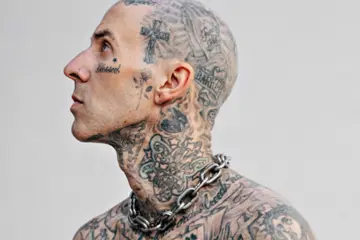
Daniel "trials" Rankine has been making music for 20 years. Now the Ngarrindjeri man is releasing a personal album in hendle, the title symbolically his middle name. And, for him, the omnibus represents "the first time I thought I could really explain who I am to somebody – without me being in the room."
Today the prolific Rankine is celebrated as a polyhistor – an MC, producer and composer, having expanded into film and television. But on hendle, the hip hopper's debut solo album, he recounts a "complicated childhood" – alluding to domestic violence, dispersion, racism, the justice system, psychological distress, substance abuse, and intergenerational trauma – rendering his many accomplishments ever more impressive.
The album is aural cinema at its most emotive. Still, the message is unequivocal as Rankine advocates for generational change – the lead single, what's the colour of love?, urging men to be accountable.
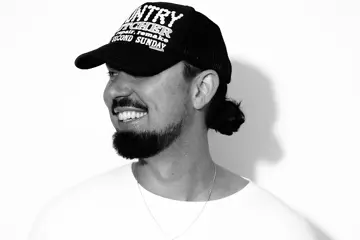
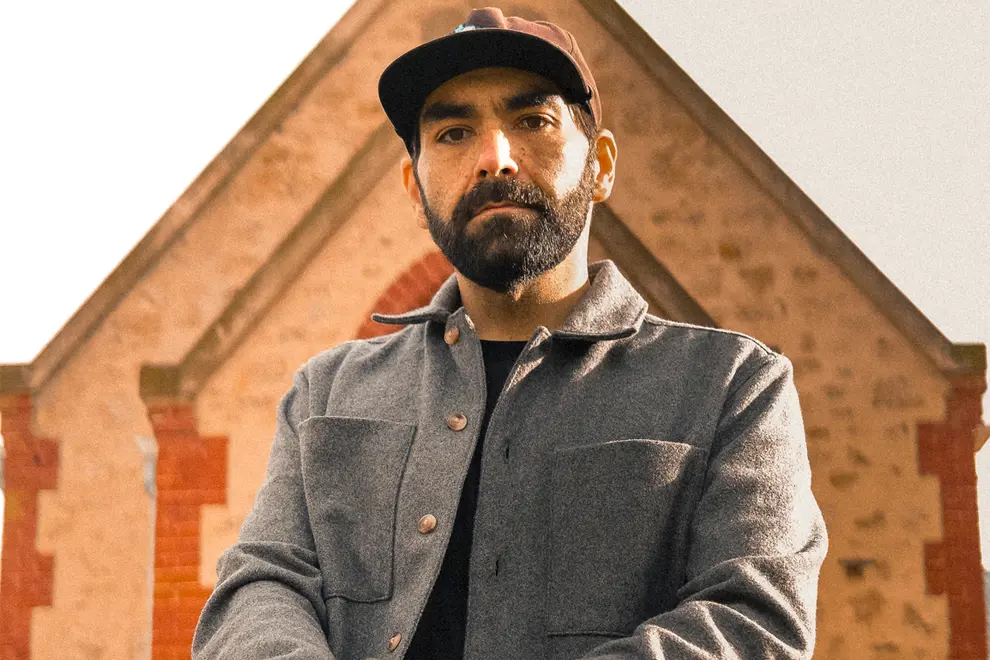
Based in Tarndanya/Adelaide, Rankine is visiting Eora/Sydney for media duties – the hirsute icon relaxed and sporting a bucket hat at his label's headquarters. Buoyant yet contemplative, and frequently nodding assuredly with a warm smile, he's actually rolling out several projects.
Aside from hendle, which Rankine promoted as a "special guest" on Hilltop Hoods' sold-out arena tour in February, he is mounting an art exhibition and publishing his autobiography while balancing family life.
Chuckling, Rankine insists he isn't overworking. "I try my hardest not to, honestly. None of this is work. So I think that's the only reason I get away with it."
But he's creatively restless. "I've got lots and lots of ideas running through my head at any given time, especially when I'm trying to go to sleep."
A descendant of the Ngarrindjeri peoples, with ties to the Raukkan Indigenous community in South Australia, Rankine experienced turmoil early. Fleeing family violence, Rankine's Welsh mother took him to the UK – that displacement crucial to his backstory.
Returning to Australia in his tweens, Rankine was a legit hip hop kid – embracing graffiti culture. "I started making music just after I started writing on walls," he remembers. "I was always too slow and too overweight to paint trains, but I gave it a go!"
Rankine may have pursued the visual arts sooner as a "satirical" cartoonist. He now paints on canvas. "Portraits became a thing for me when I started to do a lot of inward stuff." Rankine is also a photographer – and directing his own videos.
In fact, Rankine threw himself into music on collecting a payout from a car accident that enabled him to purchase gear. In 1999 he co-founded Funkoars – trailblazers of the Tarndanya/Adelaide hip hop scene – rapping and producing.
The group split in 2014, their last foray, The Quickening – issued through The Hoods' Golden Era Records – reaching #11 on the ARIA Top 50 Albums Chart. But, even in 2005, Rankine had dropped a solo EP, Mr Trials: For The Ladies, on the feted Naarm/Melbourne independent Obese.
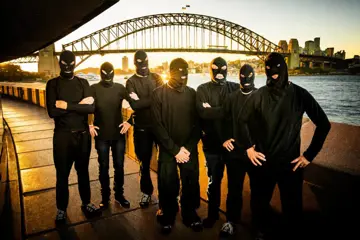
Next, the dynamo partnered his Yorta Yorta mate Adam Briggs to introduce the game-changing super-duo A.B. Original. They'd unleash 2016's Reclaim Australia – incisive socio-political rap stacked with cameos by Archie Roach, Dan Sultan, and Thelma Plum, not to mention West Coast pioneer King T – via Briggs' Bad Apples Music.
They won multiple awards, becoming the inaugural Indigenous act to receive the Australian Music Prize and scooping two ARIAs. Ice-T invited them to support Body Count.
In the interim, Rankine emerged as a sought-after producer for mainstream rockers in addition to hip hop acts like the Hoods, latterly contributing to Pete Murray's hit LP Longing.
An established composer, he was involved in the soundtrack accompanying Ryan Griffen's ABC sci-fi series Cleverman with AB Original's theme, Take Me Home, featuring Gurrumul. (The program was an immediate draw on the pop convention circuit.)
In mid-2020, Island Records Australia announced that it had signed Rankine – and that year he aired the "emo-rap" i'm a fucking wreck (with underground Portland rapper Daniyel), the prelude to a collaborative EP. However, the set never materialised as Rankine pivoted to hendle.
He determined to tell his story – and, in the course of understanding himself, recognised his emotional detachment. Songs such as you could never hate me (like I do), be an adult (have a breakdown), and …then i got dressed reveal a new vulnerability, describing depression, and suicidal ideation.
"The journey for the actual record only really started a couple of years ago," Rankine illuminates. "That first version of what I was trying to release back then was going to be a production record – just all of my beats and features. Anyone who knows my history knows that's my favourite thing to do – make records with my friends. So that was initially the plan.
“We had some really, really cool tracks in the cut, which I think will still escape my computer one day. The more and more I put it together, the more and more I realised it was a cool piece, but it didn't really represent what I wanted to be my first actual album by myself; a full solo piece."
The project documents Rankine's tribulations particularly prior to Funkoars. "I thought it would be cooler to try and just synthesise all of my life up to 16,” he explains. “People sort of know me from 16 onwards.
“That's when I started releasing records, doing the best impression of the stuff I was listening to at the time and trying to sound like all the hardcore shit that got me into rap music. I definitely think that people are familiar with me from then onwards – so 16 upwards is when I started doing that. So before that is this whole album."
The album opens with the expressive run to the river – Rankine chronicling how one night he and his mother fled his father and ended up in Wales as their safety plan (he raps, "We was home free if we did not wake him") where, no sanctuary, he endured racism from other children ("All of a sudden they wanna fight me?/Cos no one in this motherfucker looks like me").
Reflecting on his youth in maturity ("Now I'm older than my dad when he ruined my life, I stopped running"), Rankine acquires self-awareness, asking "Everybody falls down, now can you get up?"
Rankine acknowledges that it's a "harrowing" tale of survival. "Yeah, that was the most stark thing that I think I went through as an adult – understanding myself as a child as an adult and realising what did and didn't have an impact on me.
“Sometimes there's formative experiences that you go through as a child that you don't realise had this big life-changing [impact] for you. So when I woke up in Wales a couple of years later after a big black spot – which many, many, many, many, many of my childhood years get into – it was a shock to the system to be in a community of people that looked like people I knew, but all referred to me the same way that the racist kids at home did already.
"So trying to understand racism as a child was really difficult,” he continues. “But, when you look back at it as an adult, you can understand what was going on and you can understand that a lot of those kids are usually victims of their own circumstances and their own 'nurture and nature' as well.
“So seeing kids as kids and seeing my parents as people was the biggest thing for me to understand – that this is all on me at this point. Any step forward I make is because I've chosen that. And there's a million ways to sidestep or move around these things or these issues that I feel like I'm constantly reminded of every morning – you know, it's something from my past…
"[But] I try not to live in the future too much; just I try to live right now. I think there's a lot of things about seeing your parents as people and seeing kids for kids that should give you more of an understanding of who you are yourself."
Did Rankine engage in an internal monologue while recording hendle, and processing his feelings, consciously motivating himself not to hold back? "I realised really quickly that it would be much harder for me to not write the songs than to write those songs – and that was probably paramount in everything for me," he responds.
The greater predicament was recalling or reconstructing fragmented or distorted traumatic memories. "I started writing my childhood down, just for myself to try and make sense of it – because so many of my memories are amalgamated into one." That led to his penning a memoir – and "those chapters became song titles." After tracking some music, he'd pick up a paint brush.
Another multimedia artist, Solange Knowles, conceives albums that are simultaneously specific in their personal narratives – 2019's When I Get Home inspired by her recollections as a Black Southern woman raised in the Third Ward of Houston, Texas – and panoptic.
Rankine achieves the same transcendence with hendle. And that universalism was the objective, he says. "I really wanted to make sure that it wasn't pigeonholed as a one-of-one. You know, it's not an 'Indigenous album', it's not a 'domestic violence album'.
“It is an album that purely represents me as a person – and is an album purely for people. It is humanity. It is at its very, very core earnest honesty about what it feels like to be a person struggling every single day. That's why even on whistle while i walk, I've got a whole song about the positive aspects of sobriety and how it's affected me over the last five years, mentally and physically.
“It's still a challenge every single day and to present it any otherwise is disingenuous, you know?" Indeed, hendle is about tenacity, holistic healing, and empathy.
Protean, hendle also finds the multi-instrumentalist freed musically. The album presser stresses that it is "entirely produced, written, performed, recorded and mixed by trials" – redolent of Prince with his famous sleeve credit, "produced, arranged, composed and performed by Prince," although the Purple One wasn't an audio engineer.
"He's very smart – very smart," Rankine quips. "I wouldn't recommend it." Humble, he admires that Prince was so self-contained: autonomy, self-authorship and self-portraiture empowering for a Blak man.
"I'm a fan of everyone who will learn a new way to convey their idea. I'm not a producer. I'm not a songwriter. I'm not a rapper. I'm not a bass player. I'm not an artist. I'm none of those things. I'm just me and I do those things because they get my point across."
But, managing everything single-handedly, Rankine has previously "struggled" with perfectionism. "Maybe 10 years ago or so I was really overproducing things and I didn't understand that it was more about capturing more of the energy and the earnestness and the honesty in the room."
The AB Original album taught him to go with the flow. "So I wanted to do that with this one, too. Even though it's a completely different type of energy, I wanted to make sure that that was very, very much maintained across all the songs, where there is a triumphant angle to all of it.
“Even when I'm discussing the harder things, there's a tabletop view of it, where you can see the start and the end of the maze that I've walked you through."
At any rate, hendle is boundless sonically as Rankine breaks out of hip hop – six letter word broaching avant-garde jazz (it turns out that he was channelling The Bomb Squad's "huge, obnoxious, industrial sounds" for Public Enemy) and with rock elements elsewhere.
"All of these sounds that you're hearing on there is all guilty pleasure. Everything on there is just me; the things I wanna hear – everything." Rankine isn't interested in music trends. Quizzed about what he's vibing to and Rankine declares himself "a Luddite". "[Legendary American bluesman] Howlin' Wolf is my soundtrack to life often."
Rankine recently joined Hilltop Hoods on the road, trepidatiously previewing hendle by solitarily utilising bass, samples and live loops. He hadn't meant to tour the project when longtime champion Suffa (Matt Lambert) offered him a slot, admitting to feeling "terrified at the prospect of it." That the Hoods "trusted" him was enough. "They didn't know I was gonna walk out with six samplers and a guitar and [it be] just me on stage."
Rankine doesn't regret it. "The Hoods' tour was my first go on stage by myself ever in my entire life, so that was fun. As daunting as it was exciting, the idea of doing these songs live for the first time was outrageous!"
He explained the lyrics to a receptive crowd. "It's unbelievable to play songs that no one's ever heard before and get that reaction in the room – like there's just thousands of people either in the moment or afterwards giving me their experience and sharing with me how these songs have affected them or how they saw themselves in the music. And that's paramount to me – big time.
“That's what it's all about,” he adds. “The conversation on the way home is all I really want."
With hendle, Rankine is officially positioning himself as a mixed media artist, displaying portraits painted from memory – "they're all just pictures of people that I see in my brain and from my life who have left an impact on me one way or another."
Again, he's purposeful. "Trying to give as many people as I can an entry point into my world is important to me – because I know that not everybody's a rap music fan, I know not everyone's a lyric fan, not everyone's an art fan… But I know everyone is a person and that they are a parent or a child or a son or a daughter and they have something that they will see themselves in in this collection of work somewhere, I hope."
Rankine will launch hendle by performing a live showcase in tandem with an interactive installation of his artwork at Eora/Sydney's City Recital Hall – part of the Great Southern Nights program. "The exhibition is my first chance at really letting everybody into my world and seeing it all together in this big umbrella format," he says.
The memoir will be "the final piece" – Rankine deeming his literary endeavour "as essentially the liner notes to my story."
He elaborates by sharing a happy time. "I grew up listening to records and falling in love with bands and music, because I would hold the thing in front of me and just find out who did what. So I would see a Parliament-Funkadelic record and see someone called B [Bootsy] Collins and I might wonder what B Collins does and then, next minute, I'm on a Bootsy trip for 10 years – like that's been my life.
“I've made every single discovery that way, through liner notes. So to be able to give somebody something like this so they could sit down and read all the little words with it – that was the type of thing that I wanted to do as a kid; sit back with the record and really feel like I'm with the artist."
Every detail of hendle is intentional – including a limited-edition translucent violet-coloured vinyl. Rankine invariably blends pink on his palette and its shades "resonate" with him since they do not correspond to the codes of "macho men," he observes.
"I hate that shit… So I'd rather just paint with pink and stand on stage and tell anyone who's risking the safety of women and children that they're a punk!"
November will mark the 10th anniversary of Reclaim Australia. AB Original have been quiet in the interval, though in 2023 they broadcast YES (platforming rising R&B singer MARLON plus US turntablist Total Eclipse) ahead of the Australian Indigenous Voice referendum.
Rankine teases a follow-up. "I mean, wouldn't it be crazy if we already had one finished already?," he laughs. "Wouldn't that just be wild? Wouldn't it be cool if we already had one in the tuck already with a bunch of my heroes that I never thought I'd ever work with ever on a whole full-length album, just sitting there ready to go?
“Wouldn't that just be bananas? I'm not saying [there is] – allegedly,” he adds. “Wouldn't that just be pure speculation as one half of the group? It's gonna be a fantastic year and an awful year to be an endorphin around me. I'm taking 'em all."
trials’ hendle is out now. Tickets to his what’s the colour of love album launch show are on sale now.
trials – what’s the colour of love Album Launch Show
Wednesday, May 13 – Great Southern Nights, City Recital Hall, Sydney, NSW
This piece of content has been assisted by the Australian Government through Music Australia and Creative Australia, its arts funding and advisory body