 The Rolling Stones Profile
20/20 rear vision is a wonderful thing, of course. And staging a successful festival works on many factors which have to fire on all eight cylinders.
But there are those WTF instances where punters and the music industry have shaken their heads and thought, “Really”?
This year already we had Bluesfest in Byron Bay which had many reasons why it was brought to its knees, and the UK’s Wireless scheduled for July which had to slam the shutters down when its headliner for all three days, Kanye West, was blocked from entering the UK.
Here’s a list of festivals through the years where somebody wasn’t reading the room in time.
Fyre, 2017
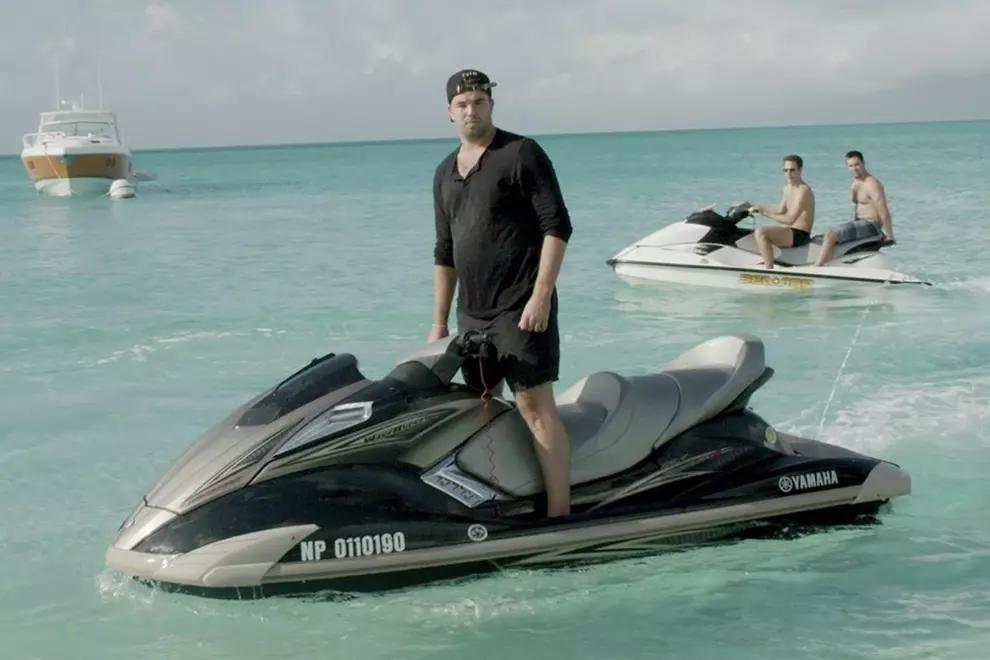
This is the god-daddy of them all. Not only did it breach virtually everything in the Festival Promoter 101 course and land businessperson Billy McFarland in jail on fraud charges, but more, he returned eight years later with a sequel but fumbled the ball on that one too.
The festival was to promote the Fyre app for booking music talent. It encapsulated a culture of instant just-add-water influencers, reality TV figures and festival glamsters.
McFarland and rapper entrepreneur Ja Rule promised an exclusive and luxury event in the tropical paradise of Great Exuma island in the Bahamas, on April 28–30 and May 5–7, 2017. The event was capped at 5,000 people.
Some guests paid up to $100,000 for luxury villas, gourmet food, and A-list artists. Kendall Jenner, Bella Hadid, Hailey Baldwin, and Emily Ratajkowski pimped it on Instagram initially without letting anyone know they had been paid to gush. Jenner apparently pocketed $250,000 for every post.
The reality was when the jammers arrived for the first weekend, local tradies were still working on the site. They got packaged sandwiches, had to fight to get poorly furnished aid relief tents with waterlogged mattresses which had been left out in the rain, and had no one to complain to when some of their luggage failed to arrive.
Pusha T, Tyga, Migos, and Blink-182 had dropped out a week before, and eventually the only music was local acts holding jam sessions. The second weekend was cancelled. Cash-strapped local suppliers were never paid.
A number of class actions were filed. One demanding $100 million only got $2 million. Two documentaries emerged in 2019: Fyre: The Greatest Party That Never Happened on Netflix and Fyre Fraud on Hulu.
In February 2025 tickets were sold for Fyre 2 (May 30 to June 2) in two Mexican cities. This unravelled when the cities said they had no knowledge of this, and Fyre 2 was axed in mid-April.
Lesson Learned: do the maths, keep a constant eye from the start on the whole production, and cancel before the punters arrive.
Blueprint, 2009
Australian live music enthusiast Gray brothers – Tristan, 23, and Aaron, 20, of the Melbourne suburb of Mitcham – figured they’d put together the sort of festival they’d want to attend.
Locking in September 18 – 21, they booked farmer David Powne’s 200-hectare field near Ararat in country Victoria. The Earthcore rave was also held there.
Jebediah, The Panics, Tim Rogers, Clare Bowditch, Ash Grunwald, Blue King Brown, The Beautiful Girls, Drapht, Resin Dogs, Bodyjar, Galvatrons, and The Basics were advertised among 53 acts. They cost $350,000.
The bros set up a beer tent, promised no queues and kept the ticket prices down to between $100 and $200. If someone queries how two young fellers with no festival experience could pull it off, the standard response was, “don’t worry, mum’s backing us.” By their estimate, it cost $1.1 million to put together.
The beer ran out on the first day, some acts didn’t show due to poor communication and overheads were higher than expected. The 35 security people hired were inadequate for the crowd. They brothers ended with debts of $500,000 and oodles of remorse.
Creditors included Grampians Hire ($22,000), David Powne (20,000), a septic tank company ($6,000), an earthworks firm ($6,000), a cleaning firm ($11,000), Mountain Goat Beer, Security Armed Solutions, and Chrissie Vincent Publicity.
Lessons Learned: Tristan Gray told the Sydney Morning Herald, “We sold tickets cheaper than we should have, and only made about a quarter of what we counted on from food and alcohol sales.'' He added, 'We were so high-spirited and wanted to do this amazing thing and … it's wrecked my life. There are a lot of people out there who've taken advantage of us: a couple of young blokes new to this.''
Pyramid Rock, 2009-2010
Pyramid Rock had been running as a New Years Eve camp-out on Victoria’s Phillip Island since 2004, building up to multi-days, two stages and international acts through the years. At its peak, it drew 20,000.
But the 2009/2010 edition was given a blow when lightning storms and gale force winds hit, forcing punters to shelter in garbage bags.
Social media went into meltdown, blaming the promoters Inversion Productions for cancelling the four headliners – Empire Of The Sun, Grinspoon, The Butterfly Effect, and Van She – without letting the crowd know.
Lesson Learned: One attendee complained on social media, "Not only did they have no back-up plan in case of the forecasted storms, but they sadly failed to provide a simple announcement, apology or even a traditional countdown into the new year.
"Thousands of punters were left without a clue, stranded in the rain for hours with nothing to celebrate. A great way to start the new year, especially after paying over $300 for a ticket."
Woodstock, 1999
The original Woodstock festival in 1969 was love, peace and “getting back to the garden”, as Joni Mitchell sang. The 1999 “tribute” was more Lord Of The Flies, ticking off violence, sexual assaults, rape, corporate greed, and arson. Under-trained security didn’t know how to deal with these situations.
Staged in July, the northern temperatures rose up to 100ºF. The site was the Griffiss Air Force Base in Rome, New York, no shade, grass or trees, just concrete. Free water was polluted by sewage seeping from portaloos and bottled water cost $4. Add to this was the fact 400,000 people crammed into the venue although only 250,000 legitimate tickets were sold.
Limp Bizkit and Kid Rock increased the “toxic macho” element, and Rage Against The Machine burned the US flag. When the Red Hot Chili Peppers finished off their set with a version of Jimi Hendrix’s Fire, the crowd started bonfires, turned over cars, and set fire to vendor and merch stalls.
Lessons Learned: Don’t light my fire.
Rock Isle (AKA Mulwala), 1972
Flushed with the success of Woodstock in America and the first Sunbury in Victoria, the people behind Mulwala (March 31 – April 2, 1972) promised something bigger than these in regional NSW on the banks of the Murray.
On paper it looked like a winner. It cost $10 a ticket for a bill with 21 of the cream of Aussie head bands, including Billy Thorpe & The Aztecs, Carson, Lobby Loyde & The Coloured Balls, Piranha, Friends, Doug Parkinson, Jeff St John, La De Das, Company Caine, and Tamam Shud.
From overseas were blues-boogie Canned Heat and Stephen Stills & Manassas, both well-known but overpaid at $35,000 each ($454,037 in today’s money). Some of the local acts blew them off the stage.
The expected crowds didn’t come. An hour before the acts rolled up, there was no accommodation set up, and two stage managers had to race around commandeering caravans and tents from St. Johns Ambulance. The heavy rains turned the site into a mudbath and cancelled the festival’s third day. The crowd got pissed and violent. A person drowned in the Murray. The promoters went broke.
Lesson Learned: Talk to your accountants and Mother Nature first before committing to run.
CUSAT Festival, 2023
Four students died and 60 were injured at a music festival on the evening of November 25, 2023, held to mark the end of a tech exhibition at the Cochin University of Science and Technology (CUSAT) in India.
The students committee which organised the event, with permission from academic staff, were not expecting thousands of students from other colleges to suddenly turn up uninvited.
As Bollywood singer Nikhita Gandhi began, a heavy downpour saw those outside scrambling to take shelter in the auditorium, which was already jam-packed with 1,000, and trampled them. A locked gate stopped audience members from escaping.
Two years later, some faculty members were charged with criminal negligence.
Lesson Learned: A police investigation laid the blame on poor planning, inadequate security, and bad design of the venue which had steep narrow stairs leading down from a single entrance.
Yuewen, 2024
Yuewen Music Festival (December 28, 29, 31, 2024) was Yuewen Group's first music festival in Singapore. It featured top pop, hip hop, and EDM acts from China, Singapore, Netherlands, South Korea, Japan, and Thailand.
It was on Sentosa’s Siloso Beach, with the New Years Eve show promising an awesome drone and fireworks display.
But some fans complained of poor management, pedantic security officers, and failure to communicate to the crowd when some sets had to be cancelled because of heavy rain.
A major complaint was that due to a lightning alert, they were temporarily told to leave the venue. This meant the crowd had to move out to the beach and be exposed to the elements. When the festival resumed, fans complained they were still waiting in line when their heroes began their sets.
Lessons Learned: A festival staffer told CNA Lifestyle they addressed crowd grumbles, “including setting up six additional tents for extra shelter inside the venue, distributing free ponchos, adding extra on-site staff for improved crowd management, and significantly reducing advertising time during act transitions."
TomorrowWorld, 2015
TomorrowWorld was the US spin-off of Belgium’s EDM Tomorrowland, held on 8,000 acres of Chattahoochee Hills in Georgia. In its first year (2013) it was enough of a trip for 160,000 to be nominated for Best Music Event at the International Dance Music Awards.
But the wheels fell apart at the third – and final – instalment in 2015. Held September 23—25, drawcards included Armin van Buuren, David Guetta, and Big Gigantic.
However, on the Saturday night, the heavens opened up and turned into a giant slush. Patrons tried to bail out via shuttle buses and ride-share experiences to get to the nearest biggest city, Atlanta.
But because roads into the site were clogged, promoters refused to let these transport options in. Patrons had to trudge through miles of mud and rain to reach these rides, with no food or water. When they arrived, taxis and ride-shares escalated fees to hundreds of dollars. Some opted to sleep on the side of the road. Sexual assaults and injuries were reported.
The next day, promoters announced that the remainder of the festival would be restricted for those who camped onsite. Angry patrons who demanded full refunds were told these were only for those who’d bought tickets for that day or had problems getting out.
The fan backlash that followed, including threats of class action, was worsened by the fact the festival’s parent company SFX went into bankruptcy, and TomorrowWorld never returned.
Lesson Learned: Have a contingency plan to move patrons quickly out of a disaster-hit site, and keep communications open at all times.
Alternative Nation, 1995
With young upstarts Big Day Out emerging in 1992 as a major force in Australia’s live sector, rivals Michael Coppell, Michael Chugg, and Michael Gudinksi teamed up in 1995 to counteract with Alternative Nation.
Chugg would admit later: “Everything about Alternative Nation was a disaster, not least having to lick our wounds and admit defeat to our BDO rivals without them having to lift a finger."
The original plan was to make it the Australian leg of Lollapalooza (talks fell through) and have side attractions such as poetry, comedy, body art, interactive media, and a love-match tent.
It was held in three cities over the Easter long weekend – Brisbane’s Chandler Sports Complex on April 13th and 14th, Sydney’s Eastern Creek Raceway on the 15th, and Melbourne’s Olympic Park on the 16th.
The three promoters individually had the clout to bring in Faith No More, Lou Reed, Nine Inch Nails, Tool, Regurgitator, Violent Femmes, Powderfinger, Live, Ice-T, Supergroove, and Cosmic Psychos. However the loss of original headliners, Red Hot Chili Peppers and Stone Temple Pilots was a blast-damper on profit.
Chugg recalled in his memoirs, Hey, You In The Black T-Shirt, “We announced the tour. Tickets went on sale. First morning sales went really well. At 2pm that afternoon, Red Hot Chili Peppers’ management rang to say they weren’t coming. One of them had a drug problem, had gone into rehab and all touring had been cancelled. Sorry. We were fucked from that day on.”
As to be expected with such a line-up, there were great live moments. But incessant rain brought things undone for crowd experience.
In Melbourne, freezing patrons crept into the female toilets to warm themselves up with hairdryers. Sydney crowds pelted some acts with mud. Live's Ed Kowalczyk responded by throwing his guitar into the audience.
In Steve Bell’s report for The Music, he pointed out the first day in Brisbane was a work day, which pulled attendances down.
“Then the second day fell on Good Friday, which meant they couldn’t sell alcohol (leading to the farcical sight of people offering to swap substantial amounts of illicit substances for smuggled cans of warm beer, the usual festival black market flipped on its head). Similar licensing issues apparently caused headaches in the other states as well.”
The three promoters decided not to bring Alternative Nation back again.
Lesson Learned: If you’re emulating the new kid on the block, recall they have it in summer. Of course in one year BDO had its “mudline” issue in Melbourne, leading Juke to memorably headline its review in huge font: “Bog Day Out”.
Altamont, 1969
Altamont was the result of two major events in 1969. One was the “peace and love” Woodstock on the American east coast in August. The other was the tour later in the year by The Rolling Stones, now able to tour the US after ditching original guitarist Brian Jones who had legal complications entering the US.
Altamont was the idea by The Grateful Dead and Jefferson Airplane of having a free concert in December in California as a “Woodstock West”. The Stones’ tour had been criticised for high ticket prices, so the British band wanted to make amends by being involved in a free event.
Staging it at the Altamont Speedway outside of Tracy, California was not the first choice. They’d tried a college ground in San Jose which had staged festivals for up to 80,000, Golden Gate Park in San Francisco and another raceway. All turned them down so Altamont was chosen hastily as time was running out.
That was a mistake because the one-metre stage was at the bottom of a hill. The bigger disaster was employing the Hells Angels for $500 of beer to monitor the stage.
December 6 saw 300,000 people arrive. It started off well enough with Santana, but when Jefferson Airplane went on after, the bad acid and drunken violence had kicked in.
Airplane’s Grace Slick recalled, "The vibes were bad. Something was very peculiar, not particularly bad, just real peculiar. It was that kind of hazy, abrasive and unsure day. I had expected the loving vibes of Woodstock but that wasn't coming at me. This was a whole different thing."
When drunks in the audience started to throw beer cans onto the stage, the Angels responded by beating up crowd members with sawn-off pool cues to push the crowd from the stage.
The Flying Burrito Brothers, and Crosby, Stills, Nash & Young, followed as violence escalated. The Grateful Dead canned their set as a result.
It was left to headliners The Rolling Stones to soldier on, occasionally stopping their set while trying to cool things down. Four people died at the festival: a girl who was dragged across the stage by her hair, another on a bad acid trip was kicked by bystanders who then walked on her.
The worst was the murder of 18-year old black man Meredith Hunter by an Angel who stabbed him 16 times. One version was Hunter joined others in trying to get onto the stage, and pulled a gun when pushed back. The other was the Angels were confrontational about the fact Hunter was with a white girlfriend.
The whole episode was captured in the concert film Gimme Shelter.
For Mick Jagger it started when he arrived by helicopter at the site, and a crowd member punched him in the face, shouting “I hate you!”
It ended with rumours that the Hells Angels were planning to assassinate the singer because in the intense blaming that took place, they felt he hadn’t defended them enough.
In 2008, a former FBI agent claimed there was a conspiracy to approach by boat a seaside residence where Jagger was staying in, and kill him. The plan didn't work because the boat got upturned in a storm.
Lesson Learned: From The Stones’ song Gimme Shelter, “War, children/It's just a shot away.”