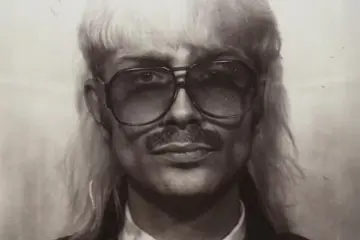
While he may be making a name for himself in Australia on the open-minded dance party scene, Omar is well known in his home country across all walks of life. His music is available at bootleg markets across Syria – the lack of copyright law in the country means that his back catalogue of over 750 released recordings have been reproduced countless times.
Omar says music has always been a very important part of his life, and his earliest memories attest to this.
“From earliest childhood I kept always singing to myself,” he says. “When I was older I started singing in front of others too, like in family gatherings or such. People around me started telling me that I should make something out of this gift. I went to a recording studio and told the owner that I wanted to record a cassette – he was very sceptical at first. He told me that no one would buy the cassette but I insisted.
“I recorded the cassette and the studio owner distributed it in a few places. Then people who bought the cassette started asking the studio owner about me and he started sending me to weddings, private parties to perform. And then the circle became wider, more and more people asked me to perform on their events and there were times when I performed every single evening and especially at weddings.”
Performing at weddings is where Omar originally made his name, and eventually he would be invited to perform at Syrian weddings overseas, which is where his international reputation started to flourish. Even to this day, he still sees these performances at weddings as integral.
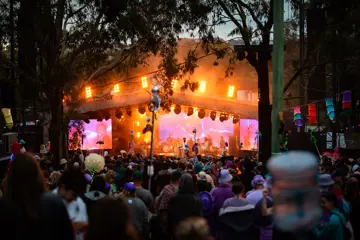
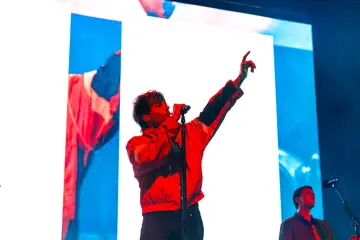
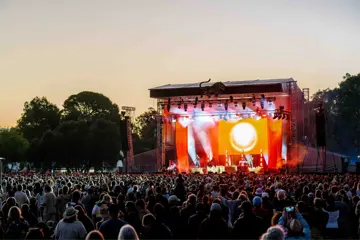
“I love playing to crowds. I feel best when I get a huge audience to move. Given my last experience in Australia, I am expecting everybody to dance to my performance. Like in the weddings, I love to get people to move. I try to find rhythms that make people interact, dance. Like in weddings, I love when I can make people spend some good hours forgetting themselves and just let the rhythm take over.”
Given the current political situation in Syria, Omar is not releasing any music there these days. Instead, he is happy to take his own take on the country's traditional music further than it has before.
“Dabke is a tribal music style,” he explains. “It is traditionally played in weddings. It is rather slow and people take each other by the hand and dance to dabke in circles. I perform an altered form of dabke, as I sped up the rhythm dramatically. My dabke is fast and thus brings people to move. There are many musicians in Syria who, like me, make music using melodies of the Arab Peninsula. There are many shades, some with more modern influences, some with less – but I think nobody plays the dabke as fast as I do.”
Omar says he enjoys the opportunity of travelling overseas, and takes up the opportunity to tell people about a part of the world they hear about in the news but may not know much more about. “People always ask me about my country,” he admits. “They are very interested and curious. I usually get much friendly feedback from the people. Many of them want to take pictures with me. I am sad that I don't speak any English, because then I could communicate better with all these great people.”
WHEN & WHERE: Thursday 6 December, Oxford Art Factory