They were our knights in tight satin.
If you weren’t living in the ’70s, it’s easy to forget just how big Sherbet were in Australia.
Things got so crazy, they had to be transported to gigs in armoured cars.
Keyboards player Garth Porter remembers being mobbed by screaming fans after one Sherbet show at Melbourne’s Festival Hall.
“I was on the ground curled into a foetal position. I could hear the screams, ‘I got some of his hair!’ I could feel my hair being ripped out. My clothes were being torn apart at the seams. It was terrifying.”
Tired of the relentless touring, the constant focus and the songwriting pressure, guitarist Clive Shakespeare exited the band at the start of 1976.
“The pundits were saying, ‘This is the end of Sherbet as the main songwriter has gone’,” singer Daryl Braithwaite recalls.
But bass player Tony Mitchell stepped up to write Howzat with Garth Porter. It entered the Top 40 on the national charts 50 years ago this week.
Because Daryl and the band’s manager Roger Davies were mad for cricket, they decided to write a cricket song when they were driving back to Sydney after a gig in Wollongong.
The song was created at Garth’s house in Rose Bay, opening with Tony’s slinky bass line.
When Clive Shakespeare departed, Harvey James wrote to Roger Davies, suggesting he would be a good fit for the band.
Harvey – who had played in the Little River Band forerunner, Mississippi, as well as Mike Rudd’s Ariel – got the gig. And his first Sherbet duty? Recording Howzat.
“It came time to do the solo,” Harvey recalled. “Normally, when you’re doing a solo, they run the tape a few times, so you can get warmed up. They ran the tape once, just to let me have a practice. I started getting warmed up and then said, ‘Okay, run it again.’ And they said, ‘Nah, that’ll be fine.’
“It was one take.”
Howzat was produced by Richard Lush, an Englishman, who relocated to Sydney in 1973 after having worked with The Beatles – he was an engineer on Sgt Pepper’s, Magical Mystery Tour, and The White Album. Producer Mark Opitz says Lush “is a true legend of the Australian music industry because he raised local recording techniques to international standards”.
When Sherbet had nearly completed Howzat, Roger Davies played it for Arthur Sheriff from CBS, a promo guy from England who’d been brought to the studio by Festival’s local PR manager Peter Karpin.
“We were in the studio, laying down the song,” Roger recalls. “It was pitch-black and there’s this bloke stumbling around in sunglasses. We thought he was a bit of a flake.”
But after listening to the song, Sheriff predicted: “That’s going to be a hit in England.”
At this stage in their career, the band had heard it all before – promises that led to nothing. But the Sheriff was right.
Sherbet signed to CBS’ Epic label and Howzat roared into the UK Top 5.
“I know it sounds schmaltzy, fairy tale, whatever, but when Howzat went to the top in England, well, it was a dream come true,” Roger told the American edition of Rolling Stone.
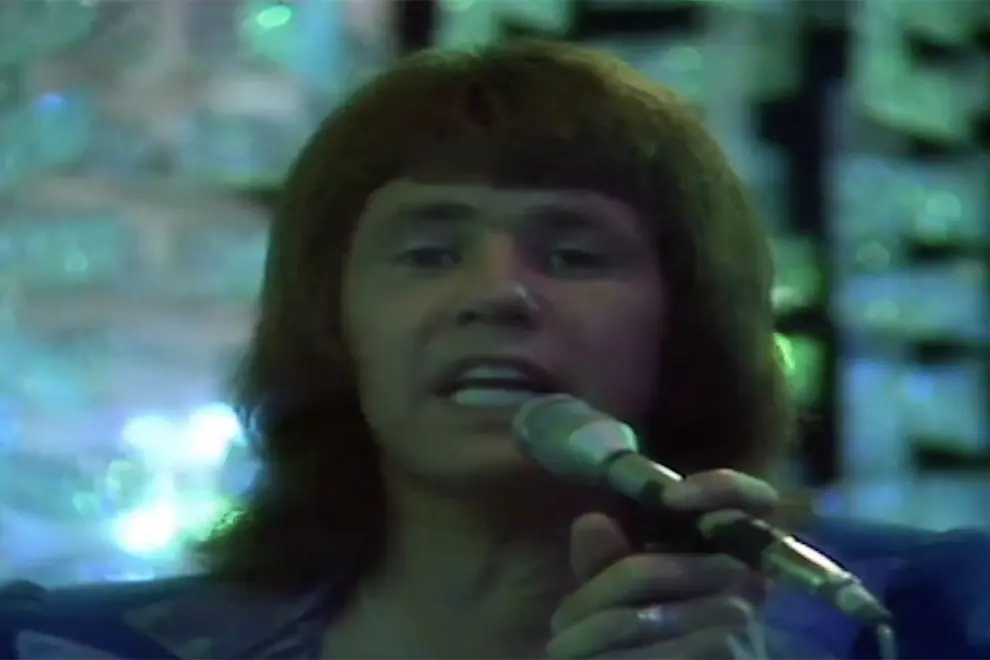
The band went to the UK and performed the song on Top Of The Pops.
Roger says the legendary music show was “an eye-opener – we realised Australian directors on Countdown were more creative and technically proficient”.
Sherbet also performed Howzat on the German TV show Musikladen.
A German version of Howzat was issued in November 1976. Juliane Werding’s cover was called Da Staunste, Was? The title translates as “You’re amazed, aren’t you?” or “That’s a surprise, isn’t it?”
Sherbet also ventured to the Netherlands to perform on the Dutch show TopPop, a clip that’s now been viewed more than 750,000 times on YouTube.
And Sherbet got to play on The Basil Brush Show in the UK.
Visa issues meant that Sherbet did only one headlining show in the UK, at London’s New Victoria Theatre in November 1976. On the morning of the gig, Daryl Braithwaite woke up to discover he’d lost his voice. But the show was a success.
When Sherbet returned home, they were greeted by screaming fans at Sydney Airport. Daryl said there was “no way” the band would relocate overseas. “Living in Australia is a privilege,” he said.
Sydney’s Daily Telegraph ran a front-page editorial stating: “What a refreshing change it is when international entertainers are more than happy to live here. The humility of these five young men should make us very proud of them. Good on you, Sherbet.”
Howzat won Most Popular Australian Single at the 1976 King of Pop Awards, while Daryl Braithwaite was crowned King of Pop, a title he would claim three years in a row.
Sherbet also won Most Popular Australian Group, Richard Lush was awarded Best Australian Record Producer, and the Howzat! album was proclaimed Most Popular Australian Album.
NSW Premier Neville Wran presented Sherbet with a gold record for Howzat. He later gave the band a special award for being the first local act to sell one million records – 500,000 singles and 500,000 albums.
Australia’s great Civil War was still raging when Howzat was released. It was our version of The Beatles versus the Stones – Sherbet versus Skyhooks.
Hooks guitarist Red Symons fuelled the fire by claiming he’d slept with Garth Porter and liked to “take his organ to bed”.
Countdown’s Ian “Molly” Meldrum was caught in the middle of the conflict. He loved both bands. He also lived near Daryl Braithwaite’s grandmother in Prahran. She would pop into Molly’s place with freshly baked scones and tell the music guru to play Sherbet more often.
“She’d also give me a mouthful if she thought I was favouring Skyhooks,” Molly laughs.
“Funnily enough, we got on really well with Sherbet,” Skyhooks manager and label boss Michael Gudinski recalled.
“People used to think, ‘Oh, they hate each other’, and the fans would be fighting. But Sherbet actually helped us out. The first gig we ever did in Sydney was at the Opera House with them, and we did quite a few shows together.
“It was an exciting time, a great era for Australian music.”
As Howzat was taking off in the UK, AC/DC were desperately trying to get a foothold in London.
Bon and the boys were famously competitive with their contemporaries, and Angus Young told Juke, “Sherbet haven’t got much happening over there … I didn’t even know they were in the country, to tell you the truth.”
The Music’s own Christie Eliezer challenged the guitarist: “You call getting a Top 5 single nothing?”
Bon Scott just shrugged his shoulders. “You get so many bands on the charts that don’t mean anything. Look at Hot Chocolate – they’ve had about six number ones there and our tour sold twice as much as theirs. There are singles bands and touring bands, and touring bands are the ones that last.”
Christie remembered that Bon thumped the table to make the point. “Look, mate, the only band that’s done anything in England is AC/DC. The rest of them are just bullshitting!”
When Howzat hit number four in the UK in October 1976, the chart was headed by Pussycat’s Mississippi, followed by ABBA’s Dancing Queen and The Real Thing’s Can’t Get By Without You, with Rod Stewart’s Sailing at number five.
Sherbet’s American label, MCA, promoted the Aussie group as a “sophisticated pop/rock band”, comparing them to Chicago and Three Dog Night.
The US music bible Cashbox raved about Howzat, calling it “refreshing, with a subdued, economical arrangement, and professional, pleasing vocals. Should be Top 10 in no time at all”.
Howzat entered the Billboard Hot 100 at number 85 in August 1976. But the song stalled at number 61 in the US.
The second single from the Howzat! album was called Hollywood Dreaming; America remained the holy grail.
Sherbet would later change their name to Highway in the US, hoping it would see them taken more seriously as a rock band. Howzat remained the band’s biggest American hit until it was matched by 1980’s I Have The Skill, which was issued under the name Sherbs. Like Howzat, it reached number 61 on the Billboard charts.
With their massive teen appeal, Sherbet struggled for credibility with the critics. Before the battle with Skyhooks, Garth Porter remembers the band being compared unfavourably to Daddy Cool and then Billy Thorpe and Madder Lake. “It was promoted as ‘good music’ against our teen appeal.”
AC/DC labelled Sherbet “tea-towel rock”.
But even the hardest of rockers realised that Sherbet was a seriously good band.
“I’ve always loved Sherbet,” Angry Anderson reveals. “But the reason I so publicly put shit on them was because Angry Anderson, the frontman for Rose Tattoo, would not be expected to love Sherbet, where in truth, I loved pop music.
“Also, I liked Sherbet because I thought they were better than a lot of the other bands around at the time.”
And then there’s Courtney Love.
When she was 12, the future grunge queen found herself at boarding school in New Zealand.
Every weekend, Courtney and her fellow boarders at the Nelson College for Girls were glued to a New Zealand music TV show called Ready To Roll. She fell in love with ABBA and Sherbet’s Howzat.
Courtney ended up being expelled from the school, but she never forgot Sherbet. When Hole first toured Australia in 1995, she sang a snatch of Howzat at Selina’s in Sydney.
“It’s one of my all-time favourite songs,” Courtney said.
Bon Scott might have had a point: it’s the touring bands that stand the test of time. And that’s why we’re still talking about Sherbet.
Sherbet adopted the Slim Dusty model of playing all over the nation. In 1976, they did the “Around Australia in 80 Days” tour.
They even wrote a song called Another Night On The Road: “There’s just a hotel room/An empty bed and a chair/A radio for company…”
“Touring was actually the easy thing,” Garth Porter told uberfan Debbie Kruger for her Songwriters Speak book. “It was physically tiring, but mentally the biggest demands were the songwriting parts. Playing gigs, that was easy, that was fun. I loved every minute of every gig, just about.”
Despite the mania, Garth enjoyed talking to the fans. “These same girls, in ones and twos, were terrific to talk to. But when the numbers grew, a hunting pack mentality developed. That was frightening.”
So, who won the Skyhooks/Sherbet war?
Well, Sherbet had more Top 40 singles in the ’70s than any other Australian band – 19. Skyhooks had 11.
However, Skyhooks sold more albums.
But only Sherbet had international success, with Howzat topping the charts in New Zealand, South Africa and Israel, and hitting number two in Thailand, four in the UK, six in the Netherlands, and eight in Norway.
And though Garth thought it was a “crap lyric”, Howzat was Sherbet’s longest-running hit in Australia, spending 29 weeks on the charts.
It topped the national charts in July 1976, knocking off ABBA’s Fernando, which had spent 14 weeks at number one to become the longest-running chart-topper of the ’70s.
Thirty years later, Sherbet reunited to headline the Countdown Spectacular tour. They warmed up for the tour by performing Howzat at the Logie Awards.
The cricket lyric might have stumped the Americans, and Daryl Braithwaite was amused when comedian and radio host Richard Stubbs told him he always thought the “You messed about, I caught you out” line was actually, “You missed the ball, I caught you out.”
The song remains closely associated with Australia’s favourite summer pastime. When Channel Seven snatched the cricket rights from Channel Nine, they got Daryl to re-record Howzat to promote the coverage.
Howzat was Sherbet’s second chart-topping single. The Howzat! album – the first album that Vika Bull bought – also topped the charts.
Some chart trivia for you: Daryl Braithwaite is the only Australian artist to have had number one singles and albums with a band and solo. Sherbet’s Greatest Hits 1970-75 topped the charts in 1975. Fourteen years later, Daryl was back at number one with his solo album Edge. He’s also had four number one singles: two with Sherbet (Summer Love and Howzat) and two solo (You’re My World and The Horses).
And aside from The Mixtures (The Pushbike Song), Sherbet were the only Australian-based band to have a Top 10 single in the UK in the ’70s.
Howzat, indeed.
This piece of content has been assisted by the Australian Government through Music Australia and Creative Australia, its arts funding and advisory body