Sofia Coppola's fame-whoring black comedy The Bling Ring sure lost some of its shine by the chronology of the release schedule; arriving, as it does, mere months after the high-art-vomit of Harmony Korine's far-more-singular Spring Breakers. The films share plenty of obvious things in common, from their subject (essentially: the warped 'reality' of a generation raised on reality television), to their filmmakers (each showbiz kids who arrived from '90s indie filmmaking, whose artistry is oft unfairly maligned). But it gets way more specific than that, too. When Coppola shoots a scene of wasted kids dancing in super-slow-motion to a thumping club jam, or sets out a scene in which a scantily-clad teenaged girl wields a loaded gun at her lover, mockingly making him powerless before her as a form of foreplay (replete with phallus symbolism, feminist subversion, and problematic iterations thereof), there's a real sense of déjà vu: didn't we just watch this?

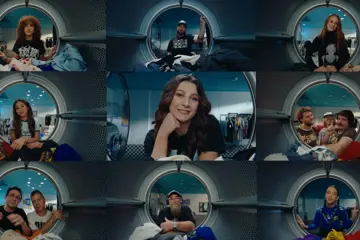
Selfies in da club, coz we can.
Even if they circle the same themes, and coincidentally depict some of the same scenes, The Bling Ring is a far different beast: a traditional narrative, presented via framing-narrative 'flashbacks', and with its intent worn on its sleeve. It's based on a true story of Los Angeles youths - based on a Vanity Fair article entitled, awesomely, The Suspects Wore Louboutins - who looked up celebrity addresses on the internet, broke into their houses, and stole stuff from them: Coppola shooting a pop-song-montage of 'shopping' in Paris Hilton's closet just as she montaged proto-consumerism when depicting Marie Antoinette as their original valley girl. The strict formalism of her excellent Somewhere is largely absent; save for a great scene that shoots a robbery from a still camera on a distant hillside, watching two kids careen through the lit-up, glass-walled modernist house from afar, sound tracked solely by the chirp of cicadas and the sirens ringing out distant in the valley below; and another in which one of the bling-ringers sips juice at a silent family breakfast, the sound of sirens growing ever closer. Instead, Coppola shoots in digital for the first time, and often takes her cues from the rapid-edits of entertainment-channel news updates; though she doesn't come close to Korine's fidgety montages and surreal colour-grading.
Another key difference: Spring Breakers was about poor kids left behind by aspirational America; but The Bling Ring depicts children of extreme wealth and privilege. Here, with rap music at obligatory blare, they drive wide-open, palm-lined streets from monolithic ponderosa to towering Xanadu, robbery to robbery, in their own BMWs and Lexuses; already having so much, yet still yearning for more (at one point, ringleader Katie Chang says she wants to steal Orlando Bloom's rugs because she needs to decorate a new room at her dad's house in Las Vegas). As much as it wants you to look at its shiiiit, this isn't a film about the grind; but about hyper-capitalism as a psychological compulsion that can never be sated. Films like Lost In Translation and Somewhere captured the existential emptiness of excess, The Bling Ring is more about its grotesque absurdity. Paris Hilton's closet is, actually, Paris Hilton's closet; and the fact that Hilton (unlike other victims, including Lindsay Lohan and Megan Fox) invited Coppola and crew into her unimaginably tacky home - allowed them to essentially mock her self-obsession for comic sport; to laugh at her pet monkey and pillows with her face on them and stripper-pole-boasting 'nightclub' room - says so much about the milieu the movie inhabits.

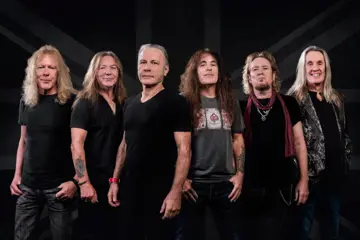
We own none of this shit.
Coppola essentially portrays these as the children raised not so much by their clueless, assenting, endlessly-nodding, matching-tracksuit-clad parents, but by a culture of exploitation television and rap-video narratives; kids whose greatest career ambition is to appear in a music video, if not a breaking-news update. Their heroes are Lohan, Hilton, Amanda Bynes et al; so they wear their own DUIs (“my level was off the charts!” howls Claire Julien, excellent in what could've been a one-note, Juno-quoting role) and, eventually, arrests, like a badge of pride. Their body language in court is generally pissed off, annoyed; Emma Watson - with Leslie Mann as a former-Bunny-turned-new-age mom who, again, shows that Coppola's metier isn't broad comedy - turning her own trial into an eye-rolling suffering of extended victimisation. Watson's character eventually serves 30 days(!) for her part in the thefts, and the film's theme is crystalised, near close, by a staged TV interview after her release: her stay in jail, it turns out, has coincided with Lohan serving a stint in a nearby cell. The interlocutor doesn't care about interviewing a convicted criminal, or to moralise or admonish this wayward child, instead, all he wants to know, really, is: what was Lindsay wearing in there?

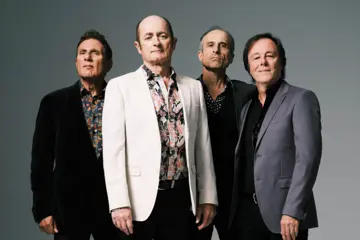
They just heard another lame, old man's joke from Steve Carrell.
It's noble, I suppose, that The Way Way Back makes its 14-year-old hero (Liam James) feel authentically 14 years old: he's awkward, borderline silent, forever scowling. On holiday at the beach-house of his mother's douchey new boyfriend (Steve Carrell, injecting every “buddy” with passive-aggressive venom), he has plenty to scowl about: writer/directors Nat Faxon and Jim Rash - making their directorial debut after scoring an Oscar nom for the adapted screenplay for The Descendants - essentially making a film about what it's like being the annoyed children of drunken, oversharing, inappropriate adults. This is fine, in theory, except that means watching The Way Way Back feels like hanging out with one of the least charismatic leads in living memory: a humourless, hangdog dullard who communicates displeasure with his bottom lip. To counteract the essential void of the leading man, Sam Rockwell blows in, playing to type, endlessly talking high-grade, rapidfire shit as a form overcompensation. Rockwell becomes a father-figure for James, and the film is, really, a romance between the two: the rom-com running-for-the-emotional-farewell saved for the pair; the actual love-interest (AnnaSophia Robb) having almost as little charisma as our leading man. It's never obvious what she sees in him - why she would be so entranced by this tedious, tedious teen - nor what we're supposed to; and when Faxon and Rash make the decision to 'montage out' the moments in which boy and girl are actually engaged in enlivened discussion, it shows they have just as little an idea.

From Lonely Boy to Buckley's Boy.
It's hard, when watching Greetings From Tim Buckley, to forget the fact that this is the Jeff Buckley biopic that the Jeff Buckley Estate refused to allow any of Jeff Buckley's songs to be in (ps: Jeff Buckley). In response, Daniel Algrant's picture looks at a formative week in the life of the budding songwriter, preparing to make his solo debut at a 1991 tribute concert for his late father, Tim; and fills the film with Tim Buckley's music (which is, it should be noted, infinitely superior to Jeff's) and extended flashbacks to his father back in '66, the year Jeff was born. Although it's a logistical way around the absence of Jeff Buckley songs, this 'origin story' should be ripe for drama, and potent as theme: a film about father begetting the son, the burden of paternal celebrity, daddy issues, the trans-generational spectre of heroin; the kind of genes that carve cheekbones and birth warbling voices also tending towards self-destruction and self-loathing. Yet, Algrant has no idea how to bring such themes to bear: Greetings From Tim Buckley not having a single instant where the writing or direction rises above a kind of plotted-out, plodding, shrugging mediocrity. For a film devoted to music, it's amazing how uninspired the depiction of performance is. The pic's few flutters of life come in the flirtations between ex-Gossip Girl beefcake Penn Badgley - who manages to capture Buckley's pouting prattishness and mimic his astonishing voice - and Imogen Poots, who fresh from her amazing The Look Of Love turn, manages to make the generic love-interest feel like an independent human-being. But even these charms are fleeting: sitting around waiting for them to kiss-on-close feels like so much thumb-twiddling; this a minor portrait of a minor event in the lives of a famous father and son.

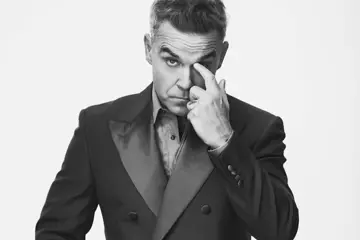
All jokes aside, you don't wanna fuck with a man holding a gun.
The 'horror-comedy' isn't the most noble exploit - let alone the Australian horror-comedy, which sounds like a disaster in waiting - but 100 Bloody Acres gets it right. Taking a hoary horror set-up - three wayward youths on their way to a music festival come across local yokels who run an 'organic fertiliser' business - the Cairnes brothers milk it not for shocks, but for laughs. Their debut picture is less interested in scenes of gruesome horror or fright - their relaxed editing and careful framing are far from the realm of jittery jump frights - than in creating an affectionate portrait of smalltown Australia; with its dinky 'tourist attractions' and she'll-be-right folksiness. It's best captured in how lovingly they tend to the local radio-station that soundtracks the picture; that broadcasts from its first frames all the way through the final credits. It's perfectly playlisted (from Slim Dusty to Brian Cadd!), dotted with suitably-cringey jingles, and voiced by an old three-testicle DJ on loan from Magic 693; and the loving devotion the Cairneses show to it suggests the tender tenor the whole. It may be a low-budget horror picture, but it's never cheap nor nasty.