 Archie Roach Profile
I move: That today we honour the Indigenous peoples of this land, the oldest continuing cultures in human history... For the pain, suffering and hurt of these Stolen Generations, their descendants and for their families left behind, we say sorry. To the mothers and the fathers, the brothers and the sisters, for the breaking up of families and communities, we say sorry.”
In a few words, on Wednesday, February 13, 2008, Prime Minister Kevin Rudd addressed centuries of mistreatment of the original inhabitants of this land by the hands of European settlers and their non-indigenous future generations. It was a long, long time coming; various Indigenous rights groups had been pushing hard for the federal government to make a formal apology for the Stolen Generation, amongst other issues, since John Howard's tenure. A little over two months after he was elected to the position, Prime Minister Rudd promised Indigenous people all over the country that, both as a government and as a people, Australians would try their hardest to bridge the gap between Indigenous and non-indigenous Australians. He finished the speech on a hopeful note for the future: “A future where all Australians, whatever their origins, are truly equal partners, with equal opportunities and with an equal stake in shaping the next chapter in the history of this great country, Australia.” On yet another anniversary of what has now been termed the “National Day Of Healing”, it's time to once again stop and truly understand if we are any closer to reaching that crowning goal.
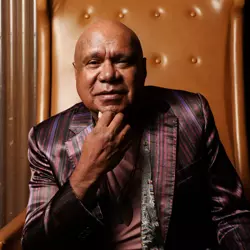
But then it's easy for Caucasian, middle-class Australia to look back and judge on what we've done to repair the damage. For Archie Roach, it's a much more pertinent and personal question. Roach, for one, was a victim of the tragedies that were being addressed in Rudd's speech. He is now known as one of the most important Indigenous singer-songwriters of our time, a harbinger of change and understanding. But he had to learn his craft in an incredibly difficult environment. Forcibly removed from his family at Mooroopna, near the Goulburn River in Victoria, Roach spent the early years of his life with a Scottish Pentecostal family in Melbourne. But after finding out what had happened to his family, he left, angry and hurt, with no money to his name. This lead to years of homelessness and alcohol addiction, which was only abetted by his love of music. “I was already writing songs, but they were mostly just love songs and country-type ballads,” Roach says of his start as a singer-songwriter. “One of my uncles, Banjo, he said to me, 'Why don't you write a song about your life, about what happened to you when you were younger and taken away as a kid?' So I started writing about that, and I guess it just became a bit of a push in making me write more about myself and about culture.”
The ability for music to transcend usual socio-cultural boundaries, Roach believes, is what has made his music such an effective tool in the move towards a state of racial equality in Australia. “Music is always a great way to reach out to people,” he says passionately. “I think people would always rather listen to a song rather than having someone giving them a spiel on a podium and screaming at them about this and that. Music is a great place to go not just for information, but when you're feeling down or happy, it can really trigger those emotions a bit more.” That has been the key to Roach's career; with little more than a guitar and his voice, he has traveled all around Australia, sharing his message about what it means to be an Indigenous Australian. “It's just really good to go to those rural communities and remote areas of Australia,” he says. “I get a lot from the people, it's amazing how so many people come and listen to you. In a lot of ways, it's not so much what you give them, but what you get back from them. They keep me going.”
Roach uses these trips to address the issues that may affect Indigenous communities head-on; by speaking directly with the people who are affected. His message is not a simple one, however. The acknowledgment of responsibility for the treatment of Indigenous people by both the government and what we hope is most of Australia is tempered by more than just racist Australians. Roach says he is a firm believer in the fact that, in order to forever close the gap between 'black' and 'white' Australians, the line has to be met halfway. “I guess a lot more people are now aware of those issues [that affect Indigenous Australians],” Roach argues. “The government and Kevin Rudd did apologise, and I think it has changed. When we talk about change, it's a two-way street. We do, as a people, have to meet the rest of Australia half-way. I think it's a matter of whether everyone is willing to accept that apology. It's really up to us to get better, you know?
“For me, it's about convincing people to turn their life around, and get stronger and better. And in terms of that, the government's done what they could already. As Indigenous people, we can't always keep pointing the finger at people. This is why I do what I do. We've got to get people to say to themselves, 'This is really why I wanna better my life and become stronger'.”
And Roach truly does have the experience to know that racial equality is a two-way street. Throughout his career he has strived to make a connection between all people in this country. Far from saying that the issue isn't still prevalent, it's something he still hopes for in the future. “I'd like to see more consultation with Indigenous communities, rather than just going in full-bore and saying, 'We know what's best for you',” he says. “When it comes to getting involved in rural communities, like in attempted interventions, we still really need to break it all down, speak to the leaders in these communities and speak to people in general. We really need to form a true partnership between the government and indigenous people. That would be a good place to start for the future.”
Roach is a man who has come a long way in his life, and has seen Australia progressively change from a racially segregated society to, what he hopes, is one where tolerance and understanding is much more appreciated. “I suppose one of the messages I really try to get across to people is that they have to understand this country,” Roach approaches when asked what his one definitive message for Australian people would be. “I wonder how much people really know about the land and the country, and how much they really appreciate and love it. For instance, I've worked a lot with Shane Howard (Goanna frontman) and Neil Murray. They're two people who have written some great songs about belonging and understanding yourself. I found out, through working with those two gentlemen, that to really love and appreciate this country, and to have a connection to this country, you don't have to be Aboriginal - you just have to embrace it.”