 Pete Murray Profile
A decade ago, Pete Murray went into Sing Sing Studios in Melbourne with producer Paul McKercher and cut his debut album, Feeler. It went on to sell seven-times platinum, nearly 500,000 copies, topping the chart March 2004. When Sony reminded Murray it was ten years since the album's release, they suggested an anniversary remastered reissue but with, perhaps, a bonus few tracks recorded with an orchestra.
“I said to them, 'There's no point doing a couple of orchestral versions',” Murray explains the bonus CD included in the tenth anniversary reissue of Feeler. “'Why don't we do the whole album?' I already had five scores written for songs off Feeler for a show I did in Adelaide with an orchestra. So we rang Rod Ennis, who did the scores, and got him to complete the album.”
Murray chose to use the same Bulgarian Symphony Orchestra that Sarah Blasko had used for her 2012 album, I Awake, and Ennis was sent to Bulgaria's capital, Sofia, to conduct the sessions, via local production company SIF309. Nick DiDia, expat American engineer/producer/mixer with a slew of huge acts, then mixed the orchestra sessions with the original album masters at Studios 301 Byron Bay. Murray then threw down an additional song, Don't Change, which he co-produced with Anthony Lycencko, who recorded and engineered the session at Murray's studio, The Music Farm, in Byron.
When McKercher took on the gig as producer for the original Feeler sessions, he'd already chalked up two ARIA Awards for Engineer of the Year – most recently then for Augie March's 2001 Sunset Studies album. Recorded over three weeks with Murray's original band, Murray felt McKercher was on the same page sonically.

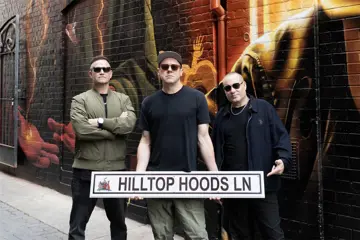
Pete Murray with Paul McKercher and The Stonemasons in 2003.
“He was into the Neil Young kind of vibe and I wanted this to be an album that would sound timeless. I was really about going in to do it because I didn't think the band was ready for it – we hadn't played together for 12 to 18 months – but we had the studio booked and had to do it. We got there in the end. Looking back on it now, and I've spoken to him since, I said, 'You know what Kerch? Without you, this album wouldn't be what it is,' and I thanked him for being a little bit forceful in some parts where I wanted to do something different and he said, 'No, you don't want to do that.' Deep down he really knew how [Feeler] should sound.”
Today, Sing Sing Studios comprises five well appointed studios as well as a mastering suite run by veteran producer Ross Cockle, all running ProTools 10 and 11 with the new HDX 192s, the main four studios variously running Neve VR60, SSL G+ and SSL K-series consoles, along with a Sony 3348 and Sony 3324 tape machine.
“We were recording everything onto two-inch tape,” Murray remembers, “but certain things were done on ProTools. He's old school, Kerch – he's really big on tape. He was piecing things together like that rather than doing the editing on ProTools – not all of it, but certain parts.”
For the remastering, Sony sent the album to Frank Arkwright at Abbey Road Studios in London. Arkwright has worked with Arcade Fire, The Smiths, New Order, Joy Division, Coldplay, Oasis, Snow Patrol and Primal Scream among many.
“It really has lifted the album,” Murray admits, still surprised at the difference the remastering has made. “It's given it a bit more brightness or something.”
The Deluxe Edition includes a third disc – a DVD of original footage of Murray and the band in the studio during the original recording of Feeler.