 Van Morrison Profile
Australia receives more than its fair share of visits from musicians on the global tour circuit, so can it ever be worth flying to the other side of the world for the sake of a good show?
The parlous state of our festival scene provides one reason to contemplate such a trip. Try as our festivals might, the tyranny of distance means we can never hope to rival the scale and variety of the world’s great festivals.
Sitting on the sparkling shore of Lake Geneva, and literally in the shadow of the Swiss Alps, the Montreux Jazz Festival's 60th edition, which concluded last weekend, offers perhaps the best argument for such travel.
Don't be fooled by the title: acts as diverse as Moby's techno rave and PinkPantheress' garage set show how far the festival has evolved from its jazz roots. Those roots are still revered - echoes of Miles Davis, who would have turned 100 this year, reverberated this year, from screenings of his past Montreux performances through to the fabulous set headed by Marcus Miller, reuniting members of Davis' early-80s comeback band - but never at the expense of new music.
When it worked, it worked exceptionally well. Ezra Collective moved between stage and audience, wedding serious musicianship to the jubilant jazz-funk party spirit that has become their hallmark. The Roots followed with a darker but no less celebratory hip-hop set: two distinct branches of jazz’s evolution in one perfectly balanced line-up.
Paris Paloma used part of her set to make the case against AI-generated music. The stronger argument was her performance itself: imperfect, embodied and plainly the product of one person’s particular choices, in that particular room, at that particular moment.
Montreux offered a complementary argument against the algorithmically ordered way in which we increasingly encounter music. Part of the magic of a good festival is the serendipitous exposure to artists no streaming service would think to place before you.
Montreux has legendary status among musicians, some of whom will reportedly accept a swingeing pay cut for the privilege of appearing on its stages. For an audience, that means you might come for Moby and discover that the preceding artist — Noga Erez, on this occasion — gives the better show.
Not that Moby didn't deliver what you would hope for - hearing the great tracks from his 90s records live remains special, but live electronic music has evolved in the hands of artists who have built on his achievements. His set offered the pleasures of familiar history; Erez offered something of the future. Relatively unknown, the Israeli singer combines clipped rhythms, theatrical control and a coolly detached stage presence into electropop that feels entirely her own.
A sense of nostalgia ran deep in this anniversary year. RAYE - who is a favourite of both the Montreux machine and its audiences - did festival opening night honours with a set that moved effortlessly from covers of Montreux legends Aretha Franklin, Prince and Al Green to a glorious rendition of her own WHERE IS MY HUSBAND!, making her own work sound entirely at home among the classics.
Yet for all its history, Montreux is no musical museum. Sprawled across venues along the lakefront and running for over two weeks, it avoids the all-you-can-eat ticketing model that produces the standard festival dynamic.
More than 90 per cent of events are free, and for the major shows audiences buy a nightly ticket covering two acts. You choose your performances, move between venues and assemble a mini-festival within the larger one: an Italian pop night, an evening of Francophone rap, ageing folk royalty, or whatever else suits.
That structure changes the energy of the crowd. People are there specifically for what is on, rather than trapped in a field for 11 hours waiting for the one act they came to see. Everyone around you actually wants to be at that specific show.
Francophone rap night was a genuine education. R2 Makala, Bekar and especially RNBOI made the case that rap simply sounds better in French — there is a poetry the language brings that 'Strine, for all its charms, does not quite manage. The American original remains the genre's true north, but RNBOI's set was a reminder of the vast Francophone rap ecosystem that our radio and festivals almost never touch.
Less nostalgic but no less welcome was the abundance of pop: Zara Larsson's gleaming, high-energy pop spectacle made Montreux suddenly and exhilaratingly young, cleverly bringing thousands of teenage fans into the heart of a venerable, serious music festival.
With Larsson touring Australia in October, however, it was also one Montreux experience Australian audiences will shortly be able to enjoy closer to home. Jovanotti’s exuberant Italo-pop and Cerrone's lavish orchestral disco supplied pop pleasures of an older vintage which we cannot expect to see repeated over here.
Meanwhile the festival's new Duplex EDM stage featured cult figures including Japanese techno auteur DJ Nobu, Berlin electro specialist Helena Hauff and the American DJ and producer Avalon Emerson, evidence that Montreux's curiosity extends well beyond the concert stage and deep into contemporary club culture. Several of these bookings would have constituted significant standalone events in Australia. That they appeared as part of a free programme seems almost absurd from an Australian perspective.
A strong contingent of Australian talent was equally unexpected. Nick Cave & the Bad Seeds gave one of the festival’s most moving performances. Although the same touring show we saw last summer in our cities’ biggest spaces - Sydney’s Domain, Melbourne’s Alexandria Park, Brisbane’s Showgrounds - inside Montreux’s 4,000-capacity hall, with its near-perfect sound, Cave traded scale for intimacy and emotional force. It may seem strange to travel to Europe for an Australian artist, but this was precisely the kind of experience our own live music ecosystem cannot readily provide.
RÜFÜS DU SOL made their own case for the festival's range: their lakeside DJ set was one of the hottest (free) tickets of the festival (so hot, in fact, that this reviewer couldn't get in, but by all accounts they did us proud).
Most surprising of all, for one who claims to know our local music scene, was Don West. This Australian model turned soul singer did not surprise only this reviewer: his show began before a thin crowd but, as word spread that something special was happening, ended the hour with a packed house. West has a claim to be the greatest Australian artist you have never heard of. What kind of European festival magic does it take to educate us about our own artists?
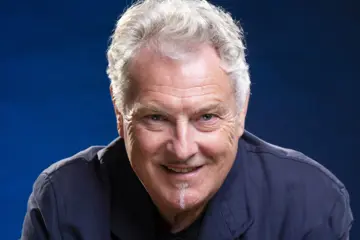
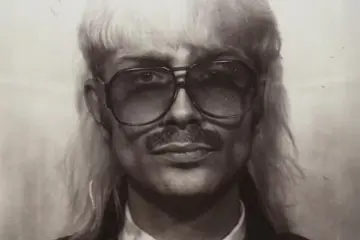
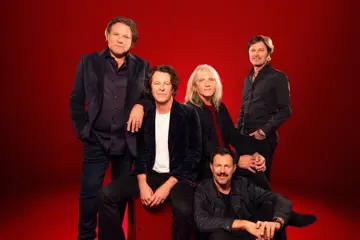
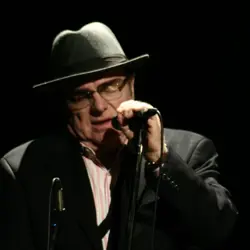
Not everything worked. Even the Montreux halo could not stop Van Morrison from living up to his reputation as one of rock's grumpiest, radiating frustration. Morrison spent his show telling his drummer to turn it down, yelling at his sound engineer and generally casting a pall over proceedings. The rest of the band - each an accomplished musician in their own right - would make a great Van Morrison tribute act, if only they could find a more willing frontman.
That sour exception only clarified the festival’s prevailing spirit: generosity, musical dexterity and reverence for the great while continuing to reach for the new. That is what Montreux has spent 60 editions building - ample compensation for the discomfort of a long-haul flight.