US music tourism has got a national boost, with the signing by President Donald Trump of the American Music Tourism Act into law.
The US Department of Commerce now has the task of identifying US locations and events that are “important to music tourism” and to promote domestic and international travel to them.
This covers major festivals, “venues of all sizes,” museums, studios, and famous attractions.
According to travel operators, the most visited by Australians is Elvis Presley’s Graceland, which gets 600,000 global visitors a year.
Also on the list are blues birthplace Beale Street in Memphis, Los Angeles’ Sunset Strip, Prince’s Paisley Park, Compton in Los Angeles, Seattle’s Museum of Pop Culture, Sun Studios in Memphis, Jimi Hendrix’s Electric Ladyland Studios in New York City, New Orleans’ French Quarter, and Dolly Parton’s Dollywood.
The crossroads of Highway 61 and 49 in Clarksdale, Mississippi where bluesman Robert Johnson made a pact with the devil is regarded as a must-see. So is the site of the legendary 1969 Woodstock festival, homes of Johnny Cash and Louis Armstrong, and various gravesites.
Trump’s signing of the bill was hailed by US peak associations covering promoters, venues, songwriters, publishers, and record labels.
Said the Recording Academy which presents the Grammys, “The American Music Tourism Act recognizes that music is more than an art form — it is an economic engine.
“By elevating music tourism as part of the nation's tourism strategy, this legislation will help showcase America's musical heritage while bringing more visitors and economic activity to music communities nationwide.”
The cost of implementing the bill is estimated to be $500,000 over the 2025–2030 period, according to the Congressional Budget Office.
At the same time, revenue from US music tourism is forecast to reach $11 billion by 2032.
Independent festivals and venues make up 9.2% of total US travel and tourism revenue, according to a 2025 study by the National Independent Venue Association.
Throw in what travellers also spend on hotels, dining, shopping, and local transport, and you get $10.6 billion per year.
The global music tourism market was valued at $6.44 billion in 2024 and projected to exceed $15.5 billion by 2034. Concerts were 52.6% of revenue in 2025.
The US has the leading 38% of the revenue share, with Asia Pacific the fastest growing area.
Australian Growth
Music tourism in Australia is on the growth, both domestically and internationally.
74% of people from the Asia Pacific (APAC) who travel to Australia for an event do so for a concert or festival. It was a slightly larger crowd (85%) for sports.
The scope for growth is impressive. There is greater awareness of Australian music abroad, as the 2025 version of Music Australia’s report The Bass Line showed a rise in exports.
The growth of “gig tripping” – 32% of Australians happy to take short trips to see their favourite acts – is growing, most prevalently in NSW.
The SiteMinder Changing Travelling Report found 23% of Australians are more likely to travel specifically for concerts and festivals compared to the previous year.
A number of executives that The Music spoke to agreed a national approach would escalate the growth of music tourism in Australia.
But at this point of time, music tourism is still prevalently state-based and localised in viewpoint and marketing. They doubt it will change.
“Music tourism is absolutely happening in the states,” one executive said. “There is no denying that governments and tourist associations are well aware that music drives music tourism.
“The difference is that nationally, there is a long-term approach, through funding and supporting of, say, regional festivals and venues and touring circuits. Or funding export drives for music acts to grow their presence abroad.
“These ultimately do contribute to the growth of music tourism but in a less obvious way.
“Whereas with states, the focus is more on an event, and the numbers of attendees and their economic impact on local hotels and restaurants.”
Creative Australia’s International Arts Tourism: Connecting Cultures found that arts/music tourists grew at a faster rate of 47% than international tourists (37%) between 2013 and 2017.
They also spend more and stay longer, interact with First Nations events, and tend to visit more parts of the country.
A previous deep-dive into arts/music tourists found one in four were aged between 25 and 34, there were more female (56%) than male (44%), more than half were on return visits to Australia, and 50% travelled solo.
With the current trend of international acts playing only one or two cities on Australian tours, expect more states to drive tourism dollars with landing exclusive shows by international acts.
Opera star José Carreras’ star-studded show on December 5 at the 42,000-capacity Gabba in Brisbane is tipped to bring $11.7 million to Queensland.
It is financially supported by the Queensland Government through its 20-year tourism strategy Destination 2045, and positioned as part of Queensland’s move to double visitor spending before the 2032 Brisbane Games. Corporation packages range from $5,000 to $16,000.
Earlier the WA Government spent $8 million for two Coldplay dates at Optus Stadium in November 2023. About 40,000 of the 130,000-strong crowd came from outside Perth, injecting $68 million into the economy. WA unsuccessfully tried to get Taylor Swift and Oasis as well.
Foo Fighters played a one-off at Launceston’s UTAS Stadium, funded by $150,000 from the Tasmanian Government and $150,000 from the Launceston City Council.
There was a 11.1% return on the investment. The show drew 25,157 fans and brought in an extra $7.8 million to the state’s economy.
Tasmanian Premier Jeremy Rockliff observed, “The positive impact they have on our visitor economy cannot be understated.” Other events saw tourists reach a record 771,000, visiting other parts of the state, and boosting jobs.
Biggest Impact
For the music industry, the biggest impact is when tourism campaigns use Australian music and acts as a drawcard.
A notable effort was in 2022, when Empire Of The Sun’s Luke Steele reimagined their 2008 hit Walking On A Dream with his daughter Sonny and The Gondwana Children's Choir.
Part of a $15 million 11-country campaign, it featured shots of the Kimberley, Ningaloo Reef, the Margaret River region and Perth, and First Nation dancers Rika Hamaguchi and Ian Wilkes.
The thinking behind the ad: Tourism Minister at the time Roger Cook said at the launch, the campaign reflected First Nation culture being the "beating heart of WA's tourism strategy".
He added: “80% of international tourists come here wanting an Aboriginal cultural experience, less than 20% leave having actually had that.”
Also in 2022, Tourism Australia worked with EDM duo Flight Facilities on a 90-second immersive video titled Tune Into Aus.
It used vision, music, and 8D audio on Good To Have creating a sensory experience to remind travellers coming out of the pandemic why they wanted to return to Australia.
Iva Davies penned ICEHOUSE’s Great Southern Land after flying over the desert on his first overseas trip and marvelling at its red splendour.
Through the years he turned down millions of dollars from brands wanting to use the song. But as part of the song’s 40th anniversary, he allowed its use for a tourism operation.
A $40,000 video was sound-tracked with Davies joined by Katie Noonan, Eskimo Joe, Cut Copy, and the Sydney Philharmonia Choir with shots of Uluru, Kangaroo Island, Parliament House in Canberra, Federation Square, Bondi Beach, Taronga Zoo, and tropical North Queensland.
"The song has been very heavily guarded – I've been incredibly precious about anyone mucking around with it,'' Davies told the Daily Telegraph.
"After turning down all those massive commercially attractive propositions, we ended up giving it away to celebrate the anniversary - which would have probably passed unmarked - and I couldn't think of a better use for it than celebrating Australia.''
DJ and producer Josh Abrahams wrote a song for a three-year, $150 million marketing campaign with the slogan There's Nothing Like Australia.
"Many of the ads I've worked on have been more about getting a contemporary beat and production sound and less actually about the melody. This was very melody-driven," he said.
Two of Queensland’s tourism pitches used Queensland artists doing covers of iconic songs.
Tia Gostelow and Busby Marou redid Van Morrison’s Days Like This in 2021.
At the time, the world was just emerging from pandemic restrictions. Viewers of the Tokyo Games, and top-rating Survivor Australia series filmed in Outback Queensland were reminded why the state’s destinations were matchless.
Tourism and Events Queensland Chief Executive Officer Leanne Coddington explained, “The time is right as we emerge from COVID restrictions and seek to reconnect with friends, family and our environment, and we look to simplify things and enjoy moments with those we love.”
In 2025, Queensland Tourism tapped Queensland-born Byron Bay-based Kita Alexander to be voice and face of a campaign, behind a cover of Madonna’s Holiday.
The campaign zoomed in on holidaymakers paddleboarding, hiking, swimming and snorkelling, with a push to coastal destinations like Lady Elliot Island.
A tourism executive explained, "Most of those would have had a family or themselves holiday in Queensland and they would remember that feeling that they had, holidaying here. We want to remind them of that."
At a SXSW Sydney panel on the subject, Tourism Australia’s Come And Say G’Day campaign was hailed as “best in class”.
Tourism Australia Chief Marketing Officer Susan Coghill called it an “innovative market-first approach by partnering with local talent to drive destination appeal.”
It included NT’s King Stingray, who sing in English and Yolŋu Matha, reinterpreting Men At Work’s Down Under. It also used other First Nations talent including William Barton, Frank Yamma, The Iwiri Choir, and The Marliya of Gondwana Choirs.
The campaign which ran in 2022 and 2025, saw rises of 15% of people wanting to visit, and searches for flights to Australia by 10% and 22%.
Significantly, a high percentage of the 370 million views of the campaign video and 64 million social media impressions, said they learned something about Australia from watching the video that they had not considered before.
A successful combination of music and regional tourism has been the self-drive Queensland Music Trails. It was first trialled in mid-2021, with the Queensland Government later investing $20 million over the first three years.
In its fifth year, the 2027 Outback Trail (May 8 – 22) takes in seven outback towns, from Charleville to Mount Isa.
Headliners include Kingswood, Troy Cassar-Daley, and Pete Murray. The Longreach will host Dusty Days – marking what would have been Slim Dusty’s 100th birthday year.
Presented in association with Opera Queensland’s Festival of Outback Opera, paying tribute are Cassar-Daley, Kingswood, and Tori Darke.
Organiser Queensland Music Festival says the Music Trails concept is widening its appeal. The 2026 run was the biggest yet, with a 95% attendance rise from the year before.
Over 16 days, it hosted 7,650 across eight communities and 1,400 kms. Of these, 2,339 were visiting from outside the region. It generated 21,684 bed nights and $2.6 million in visitor spending across the state.
QMF CEO Daryl Raven said, “The scale of that engagement shows the incredible appetite for shared cultural tourism experiences in Outback Queensland, and the role music events can play in connecting communities, industry and visitors.”
In another example of its impact, in June QLD Music Trails won for a third consecutive year the 2026 Music Cities Award for Music Tourism in a ceremony in Hull, UK.
Other contenders included Canadian EDM festival MUTEK, and the USA’s Musical Getaways, a musician-led cultural travel organisation.
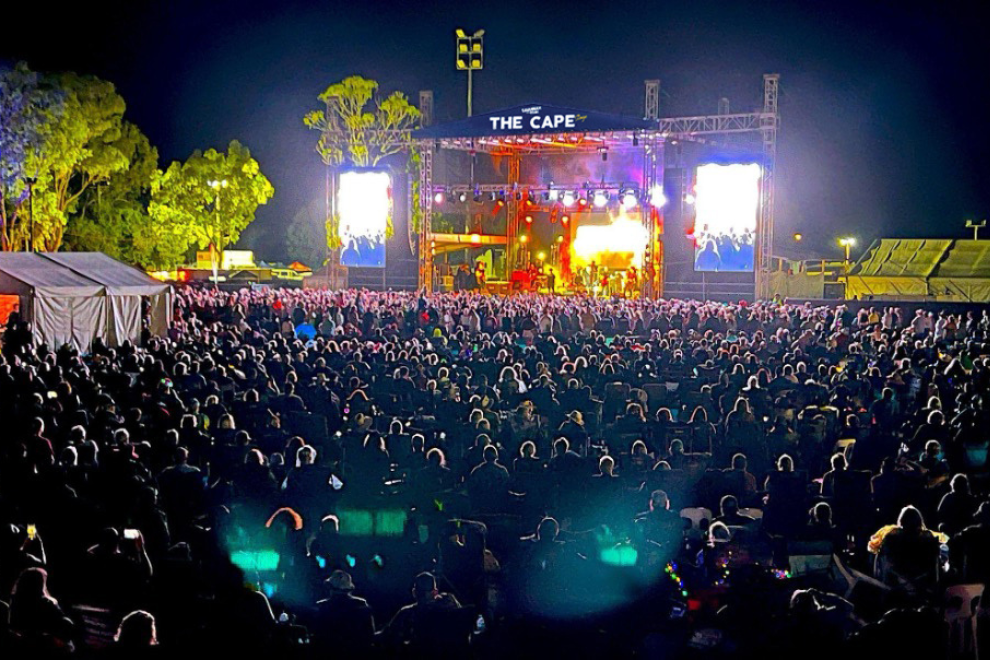
Another Government-supported regional event is Savannah In The Round. It is heavily backed by Tourism & Events Queensland, and last year got a $1 million boost until 2029 for it to continue as a long-term tourism driver in Far North Queensland.
This month the festival hosted 23,405 over four days (half from outside the region), including 5,554 campers across 1,640 campsites. It injected $12.7 million into the local economy.
According to organisers, many are first-time festival-goers eager for a new experience.
Acts included ICEHOUSE, Missy Higgins, Don McLean, Tyler Braden, Lee Kernaghan, Ian Moss & Troy Cassar-Daley, and The Wolfe Brothers along with country-culture events.
It won the Outstanding Commitment To The Industry award at the 2024 Tourism Tropical North Queensland Awards. It acknowledged Savannah’s significant contribution to the region’s tourism and cultural landscape.
Those coming to the Mareeba Rodeo Grounds event are encouraged to expand their visits to Cairns, the Great Barrier Reef, The Daintree Rainforest, and the Atherton Tablelands through holiday packages, helicopter flights, cruises and reef tours.
Festival founder James Dein admitted, “Savannah was always established as a tourism event. We are in the business of event tourism, bringing people to the region and encouraging them to stay and explore, with the average extended visit around four nights.”
He added, “The camping culture is a huge part of what makes Savannah special. We have got people travelling from all over Queensland and interstate, from New South Wales, Victoria, Western Australia and the Northern Territory to be part of it.”
This piece of content has been assisted by the Australian Government through Music Australia and Creative Australia, its arts funding and advisory body