A couple of years ago, I bought an old guitar and a broken microphone for $10 at a market stall. I love the way the mic distorts, and the guitar has become my favourite instrument to write on. They lie around my house, and I pick them up whenever a creative rush hits.
For the past few months, I've also been paying $10 a month for AI music generation software that pumps out a passable song from my prompts in around nine seconds.
They're each fun in their own way, and I get ideas from both. But cheap tools have never decided who gets to make music, and robots won't either. What decides is time: how much you have, depending on your financial comfort zone.
As tools keep getting cheaper, the years it takes to become an artist keep getting dearer. Only one of those makes the news.
Last month, the Prime Minister called the unlicensed training of AI on Australian music and writing “theft”, and knocked back the rumoured trade: a copyright carve-out in return for a $350 million creative fund and $50 billion worth of datacentres.
Reports since suggest that deal may not be as dead as Mr Albanese’s speech implied, and creators still aren't being paid either way. But while the whole fight is about songs that already exist, nobody is asking who can afford to make the next ones.
AI-generated music has, so far, held very little interest to consumers. AI uploads to Deezer peaked in June at 90,000 tracks a day, more than half of everything arriving, and pulled just one to three per cent of streams. Supply went vertical, demand didn't.
But nobody is testing the assumption underneath it all: that cheaper is better. We've been running that experiment for 30 years.
In my 20 years as an artist and manager, recording, mastering and distribution have collapsed in price. But the 2024 Artists as Workers study conducted by Macquarie University for Creative Australia found just under half of all artists earn less than $10,000 a year from their creative work, and real artist incomes have gone backwards since 2009. Musicians average a 46-hour week, 11 hours of doing something else so they can afford the other 34.
For two decades, this country bought musicians time with unemployment benefits. Jebediah's song Teflon is an ode to it, dole and all, and so many bands I loved in the ‘90s got good the same way. When I signed my first record deal, we called the genre ‘dolewave’, which tells you nobody was hiding it.
I surfed it as far as I could. Carlton North, 2006, $80 a week rent, which left enough to play and find out whether I was any good. That room is near $270 now, and the payment hasn't kept pace: rent took a third of the dole then, and it takes two-thirds of JobSeeker now. The wave has broken.
Nothing has replaced it. Twenty years ago I was paid $200 a show to open for big international artists. That fee has not really moved, and often it's inverted, with the support act paying to play. Rent tripled, the dole fell behind, muso fees froze.
The cliché says it takes 10,000 hours to get good at something, but nobody prices that number. At minimum wage, 10,000 hours is roughly a quarter of a million dollars of somebody's time. In my day job managing artists, I watch that invoice arrive in a different form: about five years of writing, releasing and playing before anything breaks, if it breaks at all.
The data agrees on the slog. Of the 710,000 new artists the analytics company Chartmetric started tracking in 2023, 0.05 per cent reached even the industry's mid-tier within the year. Overnight success is a rounding error.
American singer-songwriter Gracie Abrams is Hollywood mogul J.J. Abrams' daughter, and she's great at music. Nobody picks their parents, so the nepo argument is silly. But on the New York Times’ Popcast last month she named the real advantage herself: a safety net; “the gift of time to dedicate to doing this thing I loved.”
The most talented person I've ever seen played an open mic in Elwood in 2005. I’ll call him Simon. Labels circled. I ran into him years later in high vis, and neither of us needed to explain. Every year he played, gear got cheaper. It bought him nothing. What he ran out of was time.
I didn't run out of time. I had parents who scraped to support me, and a partner who let me live at her place for free, much to her housemates' dismay. That's the main difference between Simon and me, and it isn't talent.
Cheap gear did make some great music though. The Roland TB-303 flopped, went cheap into secondhand shops, and kids in Chicago used it wrong and invented acid house. Hip-hop came from turntables played by people who couldn't afford instruments. Gear you could own, open up and misuse, like the broken microphone on my desk.
Now compare that to my $10 AI song-making subscription. It doesn't make music easier; it certainly doesn't make it better, and it does not buy anybody time. The extinction of the Australian musician is down to rent, food and power bills. As much as we'd like the villain to be a sci-fi boogeyman called AI.
The solution? Somebody has to pay for the time, and here's the thing: the countries that do keep topping the export charts.
Sweden buys time in childhood. Every Swedish school kid gets at least 230 compulsory hours of music education. Max Martin, one of the most successful songwriter/ producers of all time, thanks public music education for his success. Sweden is now the biggest exporter of pop music per capita on earth, third overall behind the US and UK.
Ireland buys the time across a career. Artists' creative income has been tax-free since 1969, up to a cap. In February, Ireland made its Basic Income for the Arts permanent: €325 a week to 2,000 artists, after the pilot returned €1.39 to society for every euro spent.
Australia bought the time by accident with the dole, then stopped. We don't need to be original, just deliberate. Formalise it. An artists' stream in JobSeeker with the mutual obligations switched off, or a living wage for a few thousand artists at a time.
And if the AI companies want those songs that badly, fine, licence them properly and direct the revenue to fund artists’ time, not subsidise the datacentres consuming their work.
So no, I'm not going to bemoan AI software. Make it free tomorrow, and you still won't get great music, because the bill that stopped Simon was never for equipment. It was always for time.
For $10 I own a tool. For $10 a month I rent permission. Neither one is the real bill. The music still costs what it always has. Time.
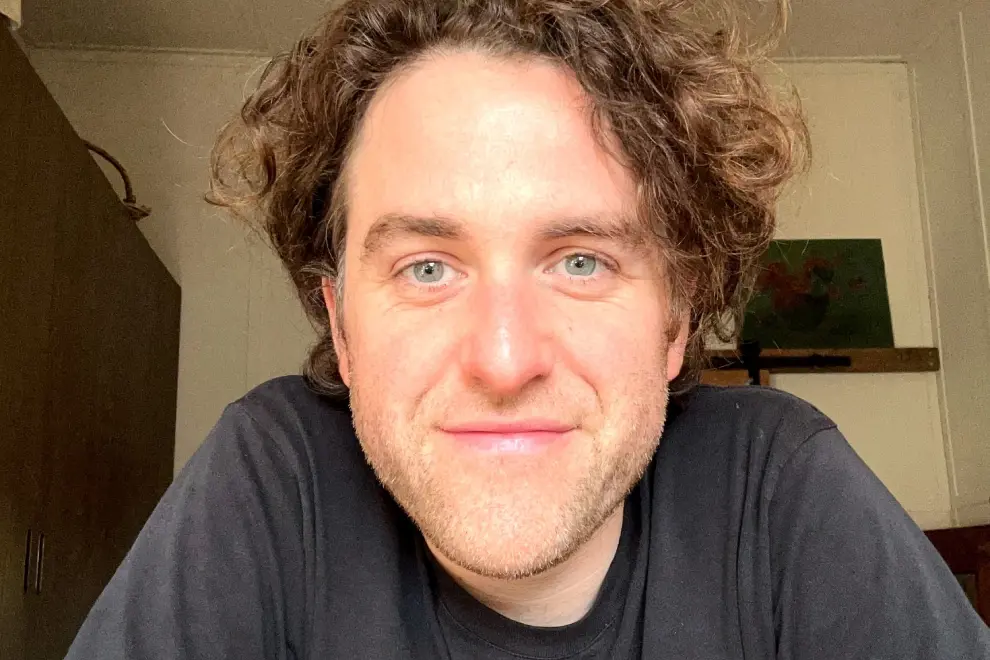
Matt Walters is an Artist Manager at Unified Music Group.