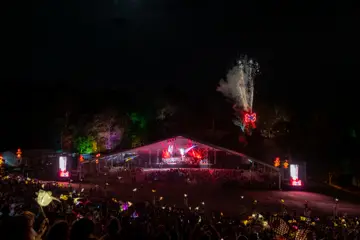
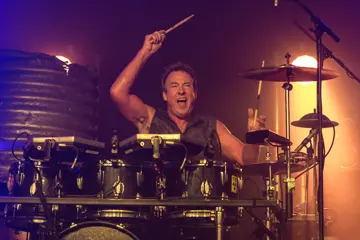
As the consumption of local music took a tumble according to new figures from APRA AMCOS, so too has the country's live sector seen a downshift, according to the latest report from Live Performance Australia (LPA).
Outlined in the 2025 Live Performance Attendance and Revenue Report, the LPA has revealed that while the industry has managed to generate a total of $3.4 billion in ticket revenue across 2025, it's still a decrease of 0.1%.
While this might not seem like much, it's worth considering that the previous year's report had understandably put forward a similar figure, which had been achieved following a 6.9% increase from the year prior.
Meanwhile, the 2025 report noted a 2.4% decrease in ticketed attendance, down to 30.7 million after a 4.6% increase in last year's report.
Despite these falls, this year's figures are still the second-highest on record since the report's inception back in 2004.
Looking at these figures more in-depth, only five of the 12 live performance categories actually recorded year-on-year growth in terms of revenue and attendance.
The lowest growth was achieved by Contemporary music and Multi-category Festivals. For the latter, they experienced a 10.1% growth in both revenue and attendance, with revenue reaching $92,620,164 and attendance hitting 2,455,541.
Contemporary festivals featured almost twice as much revenue, but half the attendance growth, with a 20.7% increase in revenue bringing it up to $399,885,481 and a 4.9% jump in attendance hitting 2,108,737.
Classical music saw a 28.6% increase in revenue to $133,079,955, with attendance jumping 6.7% to 1,484,317. Opera, meanwhile, raised its revenue by 48% to $46,012,447 as its attendance rose 33.2% to 356,403.
The biggest mover was circus and physical theatre, which featured a massive jump of 159.6% in revenue to $64,674,071, as its attendance jumped 88.1% to 727,473.
The report does also note that circus and physical theatre only accounts for a relatively small share of revenue (1.9%) and attendance (2.4%), with its growth largely attributed to the inclusion of data from Cirque du Soleil’s national tour of Corteo.
Thankfully, the losses were far less significant than the gains, with the biggest reduction in revenue belonging to the special events category, which reduced revenue by 30.1% to $6,964,987, while attendance dropped 10% to 234,940.
Comedy saw revenue fall 24% to $129,905,173, while attendance fell by 10.2% to 2,187,275, and musical theatre has a 16.8% drop in revenue to $442,298,542 as its attendance fell 16.6% to 3,651,468.
Children's/Family had a 8.4% decrease in revenue to $70,677,102 and a 5.4% drop in attendance to 1,794,707; ballet and dance reduced revenue by 4.7% to $69,595,885 and attendance by 3.4% to 699,380; theatre saw revenue fall 3.8% to $101,386,608, with attendance dropping by 9.1% to 1,260,082; and contemporary music – itself the biggest category – dropped by 0.9% in attendance to $1,794,208,278 while attendance figures dropped by 2.4% to 13,744,540.
Some may surmise the reason for these higher revenue figures in categories such as contemporary music festivals being due to an increase in ticket prices, and the report does note this track, with the average ticket price for that category jumping by 14.1% to $206.17.
On an overall basis, however, the average ticket price only increased by 2.4% to $117.83.
Though some categories featured higher increases, this average increase was below the inflation rate of 3.8% in 2025 for more than half of the live performance categories.
"Australians love their live performance experiences but are under more intense cost-of-living pressures and being more selective in their ticket buying choices which led to a softening in overall demand in 2025," said Live Performance Australia CEO Eric Lassen.
"At the same time, our producers and presenters are grappling with rising costs of production and touring which is reducing operating margins and increasing financial risk, particularly in the theatrical sector.
"There will always be some variability in the overall revenue and attendance figures depending on touring and production cycles, particularly for big international acts, but we also need to address the longer-term structural challenges for the industry if it’s to have a sustainable future," he added.
"LPA’s proposal for a live performance production incentive is an internationally tried and tested model to attract investment and improve financial sustainability for live performance businesses and organisations.
"In challenging business and economic conditions more broadly, it’s exactly the kind of practical confidence building measure we need to set our industry up for success over the medium to longer term that will return a positive economic and cultural dividend."
The full report can be viewed on the Live Performance Australia website.