APRA AMCOS have issued a response to the reports of the Australian Government considering providing access to the works of creatives in an effort to appease OpenAI.
According to publications such as The Guardian, senior representatives from ChatGPT creators OpenAI have reportedly met with Labor ministers, warning them that Australia's current copyright laws meant that the organisation was unable to train their models locally, and thus unable to invest billions of dollars in the local economy.
The ABC have reported that a leaked Government copyright proposal has put forward a new copyright reform plan, effectively making it necessary for creatives to opt out of their inclusion in AI training by default.
It's a slap in the face for Australian artists who – along with organisations such as APRA AMCOS and ARIA – have fought to secure the rights of local creatives in the face of looming AI tech.
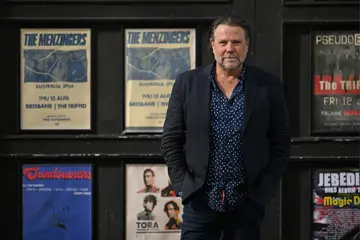
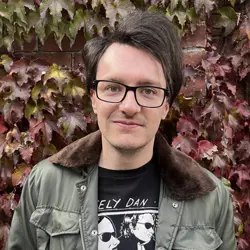
"Since generative AI models became publicly available at the end of 2022, no multinational AI platform operating in Australia has approached us to discuss how a licence for training would work. Not one enquiry in nearly four years," APRA AMCOS CEO Dean Ormston said in a statement.
"Every other ingredient in these products is paid for at market rates, without complaint. They pay Nvidia for the chips. They pay for the power, the water, the land and the construction. They pay their engineers, and they pay their army of lawyers and lobbyists. Creative work is the only ingredient they refuse to pay for, and it is the one ingredient without which none of it functions. A model trained on nothing produces nothing.
"We have licensed music in this country for 100 years and very little of it came easily. Commercial radio, television, streaming services, the digital platforms. Every one of them argued with us, several fought us for years, and some of it was settled in court. That is how a price gets set, and it has always ended in the same place. A licence is built, and money reaches the people who wrote the songs.
"The machinery to do that exists and it is ready. What is different here is the refusal to turn up," he added. "Describing copyright as a barrier, having never once tested it, does not stand up."
Many in the Australian music industry – like Ormston himself – believed the matter of copyright in the AI age had been settled in July, when Prime Minister Anthony Albanese addressed the University of Sydney to outline the country's approach to AI, and the rights of all creatives.
"An artist’s creative endeavour is their work and their property," Albanese said in his address. "No company should use Australian books, music, art or news to build or train AI without the artist’s control.
"That includes the artist’s control of the price and value of their work. Anything less, is theft. No country has got this right yet."
Despite this apparent backflip in regard to artist rights, Ormston pointed toward an immediate need to build standards founded on consent and payment, and specifically described local creativity as a national asset in need of protection.
"Australian intellectual property and copyright is one of the few inputs in this build that Australia actually owns," he explained. "The chips are imported. The models are foreign owned. What is being proposed is that we hand over the part we hold for nothing, in exchange for infrastructure that could be relocated at any time.
"Investment that is conditional on a country rewriting its property law is not investment."
As he concluded his statement, Ormston pointed out that this goes beyond a copyright issue, and becomes a "coordinated attempt" for companies to rid themselves of an obligation to pay artists for their works. Ultimately, he points out, the Australian Government needs to immediately quantify the value of the country's intellectual property before they begin negotiating with AI developers.
"No one has ever measured what this asset is worth," Ormston stated. "It appreciates when it is licensed into AI development and it depreciates every time it is stolen without a licence. Government should know the value of what is being brokered before anyone sits down to discuss it.
"We want AI training to happen in Australia, built on Australian ingenuity, and properly licensed. That offer has been open since 2023 and it remains open today.
"The invitation is a simple one," he concluded. "Tell us what you need and we'll negotiate a price."
Ormston's full statement can be read via the APRA AMCOS website.