Urban music – R&B and hip hop – has a subculture of mystique, with myriad acts now avoiding (social) media exposure and even welcoming anonymity. They're about cult, not celebrity, status.
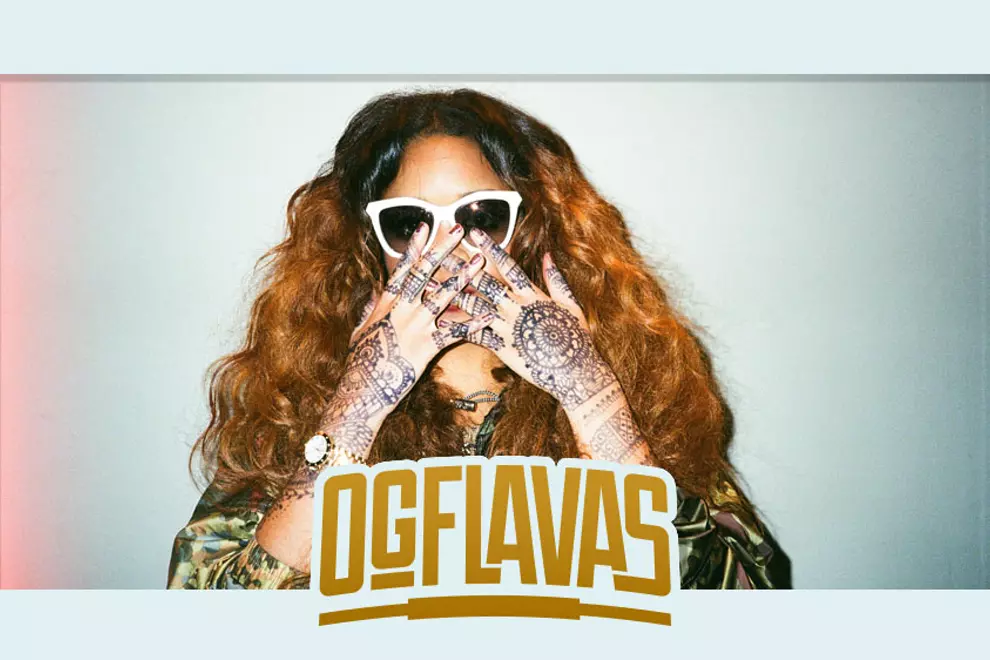
One of these private artists is the Californian avant 'n' B star HER – who's hitting Australia for the first time this month to perform at Sydney's Vivid LIVE, in addition to headline dates. Fans were introduced to HER (an acronym for "Having Everything Revealed") in 2016 by way of the nocturnal, Aaliyah-influenced EP HER Volume 1 – the singer/songwriter shown in silhouette on the cover and bearing no backstory.
The next year, she dropped a second volume, before repackaging both releases as HER. HER also duetted with Canada's Daniel Caesar on Best Part – recently joining him at Coachella. However, the enigma's biggest ballad so far is the celestial Focus, which received a co-sign from Rihanna.
HER has given select interviews, albeit incognito, explaining that she intends her music to be pivotal. She already lays herself bare emotionally in songs chronicling a dysfunctional relationship. "I always used to say that I'd never be the girl who fell for the wrong guy or ended up being in a lot of situations that most females end up in – bad relationships or whatever," she notes in her bio. "Growing up, though, I ended up being that girl – her. That's why I named the project 'HER'." HER hides her face in videos. Live, she even wears shades. Indeed, HER is a cipher more than a concept.
HER has since been unofficially revealed to be Gabi Wilson – largely due to a previously circulated cover of Drake's Jungle. A child prodigy, Wilson signed to RCA Records following television appearances. (She contributes a rendition of Have Yourself A Merry Little Christmas to 2015's seasonal album, A Classic Holiday… Presented By MBK, on Spotify!)
Electronic dance music has a long tradition of 'faceless' artists – starting with Kraftwerk, German machine men, in the '70s. Individuals have engendered mystique by concealing their identities or creating alternative narratives and personas. Rationales vary. Many want their music to be listened to free of preconceptions. Some do it for the allure or novelty value. For others, secrecy is politically expedient – a means to sublimate race, ethnicity, gender or sexuality. Regardless, it's effective marketing.
Responding to Detroit's historic racial segregation, Underground Resistance reclaimed techno as a black American manifesto for self-empowerment and autonomy. They've consistently refused to play the music industry game. Initially, members were photographed sporting bandanas on their faces. Again from the Motor City, Moodymann (Kenny Dixon, Jr) remains the most elusive house proponent. He has DJed behind curtains and doesn't court media. Significantly, Dixon has called out the co-option of black music both on record and in liner notes. Still, he isn't necessarily purist. Dixon remixed Lana Del Rey's Born To Die (as Born 2 Die). Presumably he allowed Drake to sample his DJ banter for the More Life jam Passionfruit.
Daft Punk wore masks early in their ascendence. After 1997's debut Homework, the French duo commissioned high-tech robot helmets. In the 2000s, the bedroom producer Burial (William Bevan) led the experimental side of dubstep, and nightbus, asserting an anonymity Banksy might admire. Once describing himself as "a lowkey person" in a rare social media post, Bevan doesn't play gigs. Today, several dance-types don masks or headwear – including the post-dubstepper SBTRKT, German tech-house DJ/producer Claptone, post-chillwaver Slow Magic, and EDM phenom Marshmello. ZHU, the Faded hitmaker, uses a screen. But, increasingly, the risk is that mystique can be distraction or come across as a conceit.
Among the first hip hoppers to embrace disguise was Ghostface Killah (Dennis Coles) of the Wu-Tang Clan – the collective massive self-mythologisers. Around the time of the Wu's Enter The Wu-Tang (36 Chambers), Coles assumed a mask. Legend has it that the MC was sought by police.
Mystique has become more pervasive in urban music with a heightened electronic influence. In 2010 The Weeknd (aka Abel Tesfaye) anonymously shared songs on YouTube. The Toronto maverick's inaugural mixtape, House Of Balloons, enjoyed wide acclaim. Tesfaye finally traded in that mystery for pop success with Starboy (ironically engaging Daft Punk). These days he's omnipresent in the media, too, because of his love life, having dated supermodel Bella Hadid, then Selena Gomez. The singer aimed to return to his illwave roots with the EP My Dear Melancholy, but listeners have deciphered its lyrics as being about his romances.
Even urban pop's superstars now choose to be remote. Like Sade, Beyonce no longer grants interviews, nor her sister Solange. Part of it is self-defence. In a digital world, artists are censured, or dragged, for every misstep (just ask Cardi B). On the flipside, the interview is deemed a potential commodity. All of this has fuelled the op-ed boom.
Nonetheless, mystique coupled with inactivity can irk audiences. In 2010 the UK's Jai Paul uploaded the unhewn BTSTU on MySpace – and was hailed by bloggers. He aligned himself with XL Recordings, which re-issued BTSTU. Drake and Beyonce alike sampled Paul's future funk banger. He aired another jam, jasmine, in 2011. That year, he gave his sole interview to Dazed.
In 2013, an apocryphal Jai Paul album (of untitled demos) ostensibly leaked onto Bandcamp. Conspiracy theories abounded: was the LP legitimately from a stolen laptop, as Paul told one journalist, or a stunt manoeuvre? Paul has never presented an album proper. He's still considered an innovator – but the scene transitions rapidly. In fact, the musician's older brother AK Paul has been more industrious, collaborating solidly with NAO. Latterly, the two siblings have launched a venture known as the Paul Institute – AK releasing the tech 'n' b Landcruisin'.
Especially baffling is the case of Jay Electronica (Timothy Thedford). The New Orleans rapper/producer is yet to issue an album. He was proclaimed a hip hop GOAT with 2007's mixtape Act I: Eternal Sunshine (The Pledge), which repurposed a Jon Brion soundtrack. Thedford generated much buzz for his debut album, Act II: Patents Of Nobility (The Turn) – first stating on MySpace that it would drop at Christmas 2007. In 2010, he inked a deal with Jay-Z's Roc Nation. But, despite numerable pronouncements on Twitter, Thedford's opus has never materialised. In an 2017 interview with Billboard, he implied that his hyper-perfectionism is the problem. Frustratingly, the eccentric figure then questioned the legitimacy of the album format, calling it "a false concept".
In 2018 Thedford is infamous for, not only that phantom album, but also for his empty hype and quasi-trolling of fans. Two years ago, he was scorned for dissing Kendrick Lamar (who upstaged him on Big Sean's Control posse-cut) via Periscope ("Kendrick wishes he could be me"). Late last year Joe Budden ranted about 'Jay Elect' on the popular Everyday Struggle. Curiously, Thedford's current activity suggests that he isn't done. He has been touring North America and will hit June's Governor's Ball. And, unpredictable as ever, Thedford cameoed on US producer Jason "Poo Bear" Boyd's slyly entitled single Hard 2 Face Reality (off the album Bearthday Music) alongside… Justin Bieber.