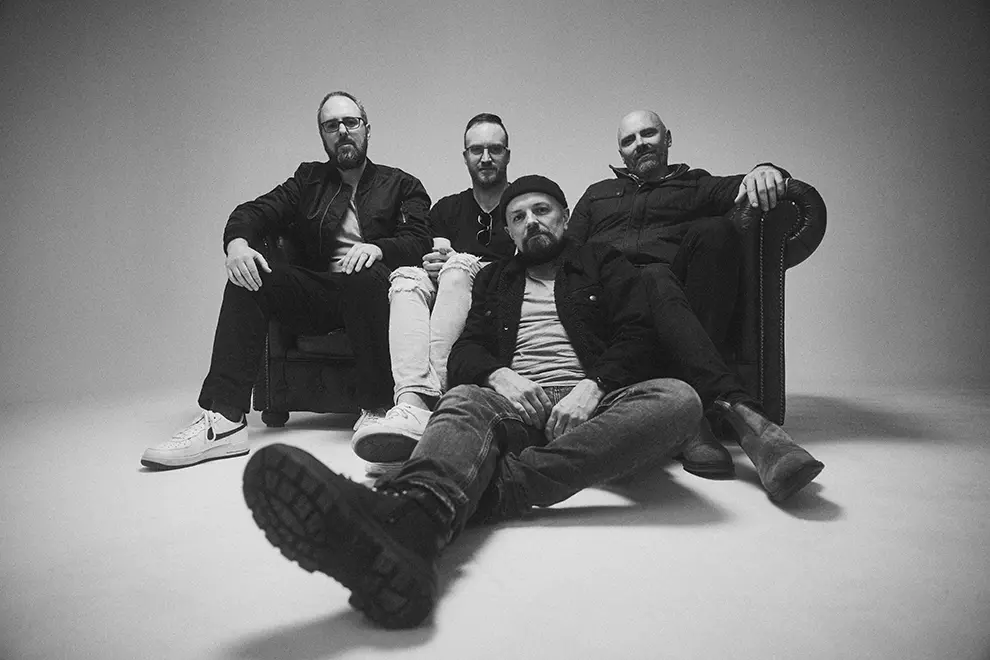
 The Roulette Generation Profile
Almost any artist will tell you that releasing a full-length record is a massive milestone.
It's one thing to have your first jam session, to write your first song, to record your first single, and even to play your first show, but a record is the moment in which most musicians would agree their creative outlet becomes 'real'.
It's the moment that friends and family might begin to take your passions seriously, it's the moment that your work now has a chance of competing on the charts, and it's the moment at which it all feels real.
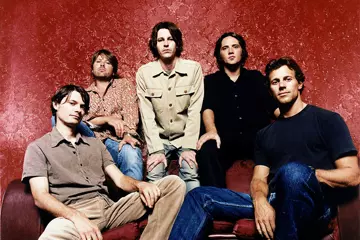
For some artists, that moment comes quickly, and for others it might take a long time. For Melbourne outfit The Roulette Generation, the release of their debut album was something which – ideally – would have happened 13 years ago.
As guitarist and vocalist Jim Young remembers, his passion for music has been a lifelong one, having played guitar since he was 14, and with a huge fanaticism for '90s rock and, specifically, the Smashing Pumpkins.
"I've been in a few bands when I was a teenager, through high school, and all that," he recalls. "This band started in 2006 when I got back from a year in Japan. I basically had a new lease on life musically and creatively. I called the first person I thought of, which was James Cox, our drummer.
"We had been in these kind of obscure, offshoot high school bands – the ones where you're trying to be a rock star when you're a teenager, and then you've suddenly got more time on your hands later because you're out of school.
"We had a bit of a musical thing where we locked in, and we just sort of finished each other's sentences musically," Young adds. "So I just went, 'Hey, you wanna start a band?' And we played as a two-piece for like two years before we even got anyone in.
"That was the kind of clumsy start of this band, which is still playing today with massive unplanned outages in the middle."
Those who would've been paying attention to The Roulette Generation back in the day would have borne witness to the release of their two-track Hindsight EP, which arrived in 2009, and was followed by the release of Rags To Riches, Dust To Dust just two years later.
Around this time, the typical approach that a band would take is – once they've offered a few tasters, played a few shows, and gotten enough confidence – they would head into the studio and begin recording a debut album.
In fact, that was likely the path that The Roulette Generation would have followed had life adhered to the idyllic future its members predicted.
While songs were written, demos were recorded, and plans were made, money was far from plentiful, and by Young's own admission, he found himself "stretched pretty thin" thanks to a dual role of both playing and working in the music industry.
"The running joke is that we're all raised with that weird sort of '80s and '90s idea that you can do whatever you want; just follow your dreams – but that's not true," he explains. "It's fun, but they should say, 'Follow your dreams once you've gotten a job.' And that's boring, but it's true."
While Young himself was "in the zone" on both sides of the creative fence, the other members of the band found themselves separating their careers and their hobbies.
So too did he eventually find himself heading in that same direction, with an admitted tendency toward musical self-destruction resulting in his "serious industry job" playing a separate role in the band's derailment.
"I drastically overthought the fact that we hadn't really produced anything I was proud of, and we couldn't afford to finish the record that I was proud of," Young recalls.
"When I went and worked with bands directly, tour managed bands, and worked with bands in the studio, I feared them turning around saying, 'What do you know?' Like, "What are your credentials to tell me which song to play first tonight?'
"Of course, that's not the reality, but that was my paranoia," he adds. "I felt like I had to take on this persona of a mysterious industry professional, and I was really fully committed to it. I literally quit my own band, and I mothballed my own album in favour of addressing the fork in the road."
While Young admits that he's aware there was no real fork in the road, and that adopting the guise of a "mysterious industry professional" was not mutually exclusive to being in a band, he indulged this notion, and didn't pick up his guitar again until 2019.
In the meantime, life happened, as it often does. Day jobs were picked up, families were started, but no rockstar dreams were chased – for Young or his then-former bandmates.
"They just stopped playing," Young notes. "I thought they'd join other bands, but they just went, 'Okay,' and they went and threw themselves into their day jobs.
"I haven't really unpacked it with the guys. We haven't sat down and had, like, a therapy session where I'm like, 'Did I kind of wreck your hobby for ten years?' But it sounds like it."
In fact, these rockstar dreams were ignored to an almost impressive level. Cox had been remarried for nine years by the time that The Roulette Generation once again entered the studio, and wife wasn't even aware that he could play the drums.
Presumably, she thought he just had an amazingly innate sense of rhythm. "He taps really, really correctly on the steering wheel," Young laughs.
While Young had found himself falling into emergency management and working with emergency volunteers at the likes of the CFA, he managed to use this path to get the same joy from his work that he used to get from music. "Totally different things, but it gave me that same sense of purpose," he explains. "I jumped out of bed in the morning 'cause I had to."
In late 2019, however, Young found himself at the tail-end of his musical outage thanks to an unintended incident which made it almost impossible to – literally – pick up the guitar again.
"I suddenly became interested in it again because my gear got stolen from storage," he explains. "That made me mad, so I rushed out and bought a cheap guitar. I was like, 'Fuck you, I was using that!' Even though I wasn't.
"It set off this gut reaction. I was like, 'Hey, don't take my guitars. Those are my fucking guitars.'"
This feeling of pure "bile and rage" left Young eager to wield his instrument again, but it was after he attended a bushfire benefit concert put on by Bodyjar, Luca Brasi, and former The Sinking Teeth member Nick Manuell at Melbourne's recently-closed Stay Gold venue in January 2020 that Young's perspectives changed.
"I go to this show terrified that my old friends would show up and ask me where I've been," he admits. "I've been offline for four years, I've been ignoring messages, and I nuked my social media.
"I went into the room and I was like, 'Oh fuck, what if I know someone?' And how insane is that to think that when you're on the way to a show in Brunswick? I walk in and Jules [Doan] from The Sinking Teeth is there.
"He goes, 'Hey man, how have you been?' And he just gives me a hug," Young adds. "And I went, 'Oh fuck, I'm an idiot.' And in that moment I went, 'I'm such a fucking moron. I've overthought this. What does this mean that I've kind of just deleted this part of my life?'"
Having realised his line of thinking for all these years had been faulty, the night progressed with performances from Fan Girl, Mid City, Columbus, and The Gooch Palms. But it was the headliner that changed it all.
"Then Press Club walks out on stage, and Nat Foster just fucking blew me away," Young states. "This was the turning point. This is where I went, 'I've gotta do it again,' because she just destroyed that night.
"It was like she just reached into my heart and just started fucking doing CPR on me, and I suddenly felt music again, and I never looked back from that moment. Like, I went straight back to thinking, 'I'm allowed to listen to rock music.'
"And also, I was kind of jealous," he adds. "I wish we played tonight. You know when you go to a gig and you're not playing, and you wish you were? Isn't that such a good motivator?"
The irony of Press Club lighting a fire under Young at a benefit fundraiser gig might be a little on the nose, but it was this moment where the pieces of The Roulette Generation's long-forgotten puzzle began to reassemble.
Young spoke to Cox with the intent of effectively picking up the story where it had been left long ago. "I go and have breakfast with him and I say, 'Can we do this record that we were working on in 2013?'" Young remembers.
"Instead of saying, 'What the hell are you talking about?' he said, 'Yes, please,' like, 'That sounds good.'"
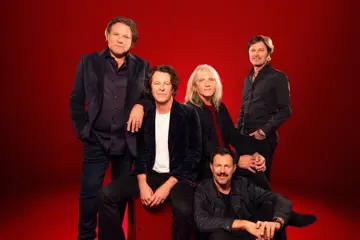
Teaming up again with guitarist Phil Etherington, and recruiting high school friend Joe Tynan on bass ("Bass player is a sore spot for us because we never had a full-time one that we kept longer than six months," Young notes), the idea was to polish off the record that had never quite been completed all those years ago.
Initially, the plan had been for Young to do a Billy Corgan or Trent Reznor-styled approach where he takes it on solo, but he swiftly changed his mind. "Something in my soul said that's not fair," he explained. "Like, I need to ask them. I was also terrified they'd say yes and then hold the whole thing up."
With the band on his side, they worked with producer Tyson Fish to resurrect the old recordings. Of course, anyone would likely agree that creative materials made more than a decade prior would potentially fall apart under the scrutiny of one's own modern standards.
For the most part, the resulting record that The Roulette Generation have unleashed into the world today – Sandcastles – is the product of both massaging the older material and simultaneously staying faithful to the original vision.
"I had to kind of compartmentalise it all from a project manager side of things, because the other guys were focused on questions like, 'Do we go to an E major? Are we doing distorted? Am I going to remember when to go to the middle eight?' Young remembers. "I was focused on, 'Do I still think the things that I said in these lyrics?'
"It was the emotional connection to stuff. 'Do I still want to release these songs? Is this still a representation of what I am as a musician?' The quick answer is fuck no. I'm decades past these songs… well, at least one decade.
"I've got, unfortunately, probably three or four albums' worth of stuff queued up, and early on I made the mistake of telling the guys that and it really impacted their ability to focus on this one. They went, 'What do you mean you've got more albums? We can't even wrap our heads around doing one.'"
By his own admission, Young notes it was "agony" to go back in time to revisit this material given that he had also been focused on writing new material.
However, believing he owed it to his bandmates who had also worked so hard on these songs, he went head-first into it all, working diligently alongside Fish, who effectively became an honorary member of The Roulette Generation by the end of the sessions, and made it possible for the likes of Young to be challenged by the music-making process.
"Billy Corgan's famously impossible to work with because he never lets James [Iha] take the steering wheel," Young explains. "He always goes, 'Nah, I can do better than that.' And that's the difference between creative genius – which he is – and a prick – which he is.
"Even when I was a teenager, all the stories in the magazines and Rolling Stone and stuff were like, 'Man, the album's real good,' and apparently he did all of it and pushed the other people out of the room and redid their parts.
"And I was like, 'I don't like that'," Young adds. "I thought, if I'm going to ask the guys to come in, then the guys better have an even share and an even stake in this creatively. So there's some moments on this album that I hate, but I love that I hate them because it reinvigorated me."
One of the most surprising things about the recording of Sandcastles was the fact that many of the lyrics felt strangely prescient for what was to come at the time of their writing. As such, it's a little bizarre for Young and his bandmates to be revisiting songs in the current age which were predictive of the era that they're well since past.
"I'd start singing and go, 'What are the words again?'" Young remembers. "I'd dust off an old Google Doc and think, 'Holy shit…' The band would be like, 'What?' and I'd say 'This song's about how we were about to break up.'
"It was just this, all through the recording process, they would hear me singing over and over and over doing takes of these vocals, and they go, 'Are you singing this? Or 'Is that about this? And I go, 'Yeah.'"
Young admits that he would attempt to homogenise his lyrics to remove the cryptic nature and ultimately make them more accessible to people.
Pointing to Ben Stewart – late of The Sinking Teeth and now the driving force of Slowly Slowly – as an inspiration for this style of songwriting and delivery, Young also notes that some of his own issues were predicted in the lyrics to these previously unheard songs all those years ago.
"The looks on their faces when the penny dropped and they realised what some of these songs were about," he exhales. "I'd go, 'Yeah, and, and seven years ago a doctor told me that was a real thing.' But it took me X amount of years to actually formalise it.
"Strange Case, for example, is about how I probably have bipolar, but I wrote it in 2012 and I was diagnosed in 2017. So what the hell was I doing in the meantime if my songwriting brain knew the answer to that?"
There's probably some laboured analogy that could be made in regards to how, typically, it takes far more time for sandcastles to be made than it does for them to be washed away.
However, while The Roulette Generation admit that it was certainly a long time coming, there's no immediate desire to be washed away with the tide, instead, the future is a ride they'll take as it comes.
While there is plenty of material on hand for more records, the immediate future will feature some live shows from the group. Young admits there's nothing planned yet, and similarly, due to the responsibilities of his bandmates, it's unclear what those gigs will look like.
"The answer is yes, there will be shows," he explains. "Who's on stage? I don't know. But that's fine. I really hope it's the band that I've got assembled at the moment, but I kind of get the idea that that might not be the case – especially with the two dads in the band.
"What I think though is that if I play a show with a different line-up and those guys see footage of it, they'll come running back and go, 'I've suddenly found time,'" he laughs. "I've learned this weird way of Pied Piper-ing the band into doing stuff that they want to do."
While The Roulette Generation's debut album took a long time to arrive, Young notes that whatever comes next won't be punctuated by such a long wait. Sometimes life gets in the way, but just as equally, when it comes to making music, life – like Young and his bandmates – finds a way.
The Roulette Generation’s Sandcastles is out now. Keep an eye on the band’s social media for word on future live shows.