 Alpine Profile
Alpine’s two vocalists Lou James and Phoebe Baker have both had radical changes in hair colour since we last met to discuss their debut album, A Is For Alpine: James (from brunette to platinum blonde) and Baker (from red to brunette) — Baker admits she’s feeling a little fragile this morning having indulged in, “Enough grasses of wine [laughs]. Grasses of wine? Glasses of wine,” the night prior.
The Melbourne-based sextet has also done a few laps of the global map since we last spoke. Back then, the duo said they had noticed, through social media, that Alpine attracted a large South American following. Have they managed to slot in a tour over there yet? “It’s still a dream,” the pair respond, almost in unison, before James adds, “Every message, it’s like, ‘[puts on an accent] Come to Brazil!’ We get that a lot, too.”
"It must look that amazing. I was hanging with crocodiles and flamingos."
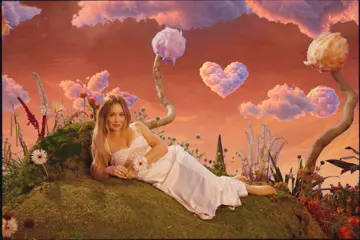
“It kinda makes us laugh,” Baker elaborates, “‘cause it’s the same sentence all the time.” James repeats: “‘Come to Brazil!’” Baker stresses, “Yeah, always, ‘Come to Brazil!’” James then shares that Foolish (the first single lifted from the band’s latest Yuck set) “was inspired by a lot of 1960s sort of South American popstars”. “It was kind of like an ode to them,” she explains, “and a friend of ours was laughing ‘cause he always notices all this ‘Come to Brazil’ on our social media and he was like, ‘Oh my god, they probably think that you’ve gone to Brazil and didn’t tell them.’” Laughter all ‘round since Alpine’s Foolish video clip is ‘set’ in Rio. Baker reveals, “Someone actually said to me the other day, ‘Oh, I really love the clip!’ and I was like, ‘Oh great, I got to go to Rio,’ and they were like, ‘Oh really?’ And I was like, ‘No, but it must look that amazing. I was hanging with crocodiles and flamingos,’” she jests.
Alpine have definitely already considered how their current long-player’s title, Yuck, may be utilised within album reviews. “Yeah, it’s Yuck,” James chuckles, which inspires Baker to contribute, “This is gross! Haha.” James does “a lot of the social media” for the band, often reads reviews as they pop up on Twitter and recommends, “Sometimes you’ve just gotta learn to disconnect from it… But the thing [with reviews] is, like, we created something as our opinion of a piece — that’s your opinion.”
“It’s funny, though,” Baker ponders, “sometimes you read reviews and you’re like, ‘Wow, this person’s understood this album more than I do!’ The language they use to describe it is just, ‘Wow! This is impressive.’ That’s quite interesting, ‘cause you’re being psychoanalysed [laughs].”
James recalls, “I remember I was watching — when I was really obsessed with Pink Floyd and there was a documentary, and David Gilmour was talking about The Dark Side Of The Moon, and he was like, you know, ‘I wish I could be the person who sat down and listened to this without knowing anything about the process for the very first time’. He was like, ‘I’ll never get that experience.’ And it’s the same thing with our album, or anything else that anyone creates: you maybe know too much about it.” Baker concurs: “We know so much about this album.”
For those trying to interpret Yuck’s lyrical content, Baker says, “[It] feels clear to me, but I like that it’s open to interpretation. Sometimes we have really funny perceptions of what we’re singing about. I read a thing, it was like, ‘Alpine’s lyric means…’ — for Foolish — and they’re like, ‘Alpine is begging men to come and play sex with them’ [laughs]. It was SO funny. We were, like, pissing ourselves.” The server approaches to check we’re good for drinks and Baker hesitantly orders: “Maybe a black tea?”
"They’re like, ‘Alpine is begging men to come and play sex with them’. It was SO funny."
Material for Yuck took shape over time. “Some songs were coming into fruition, like, when we were on tour two years ago,” Baker acknowledges. James remembers the A Is For Alpine process was “just hectic”, preferring her band’s approach to album number two, when they were “able to be pedantic and really focus on some songs”. “We just got this beautiful leisurely experience. And Phoebs and I were living together last year, just down the road [from Breakfast Thieves in Fitzroy] and the studio was just there [gestures somewhere off in the distance], and so we would, like, ride our bikes or walk and everything was in this perfect sorta little triangle. It was just all comfortable and comforting, and it was really quite an interesting experience… I guess we knew what to expect and we were more comfortable in ourselves, we were comfortable with what sound we were working with.”
Reflecting on their songwriting technique, Baker summarises, “Usually it’ll start with Christian [O’Brien, guitar] or Timmy [Royall, keyboards/guitar/percussion], but, anyone! It’s a very open process. So I’ll give you an example: Christian might write a riff or an idea, we’ll all say, ‘Yeah, this is awesome,’ or we might develop it into sort of a partial structure, and then he writes a lot of things and then sends it to me and Lou, and all the guys. And me and Lou will come up with lyric and melody, and perhaps extra instrumental ideas or arrangement ideas.”
“And sometimes I’ve got nothin’,” James confesses. “Or sometimes Phoebe will feel so connected to it, and she just goes to town on it and it’s so easy, and then I’ll come in later or vice versa. So that’s interesting. Sometimes I’m like, ‘This is hard!’” Turns to Baker. “Sorry, I just interrupted.” Baker reassures, “No, no, no,” and then picks up where she left off: “Yeah, and then we’ll take it into the rehearsal space and then it will develop from there, and change. So it has a few different layers, the process of writing it, and the other guys pitch in. So it’s become much more of a collaborative effort than it used to be; it used to be really just Christian starting off with the music and then we’d do, again, lyric and melody, but now the other guys are more involved and it’s working thus far!”
“Usually we both work on GarageBand and, like, come up with ideas and I felt — when we did A Is For Alpine — Christian would be like, ‘Ok, I think this idea, this idea, this idea,’ and then maybe kind of wouldn’t really consider all the other bits at first; his reaction might be ‘no’, but then it kinda works out. But then [for] this album, we just threw it all into the song and then a part that maybe makes sense suddenly doesn’t, so we didn’t kind of lose that gut instinct in a sound or an idea. And that was really good: being able to, like, really just throw it all in — in a big pot — and then take out something. So that was, I think, a really awesome development of the songwriting; being a bit fearless.”
Does this scribe detect harp on one of the Yuck album tracks, Much More? “It sounds like harp, but, no — it’s guitar, isn’t it?” James looks to Baker for confirmation. “Yeah,” Baker nods then James praises, “Christian is incredible.” Baker concurs: “Working his magic on the guitar, yeah.” After further contemplation about Much More’s instrumentation, Baker pipes up, “Oh, there is thumb piano that we sampled. My dad, like, years ago, travelled — drove through Africa with his children, my half-siblings — and he brought back instruments. And so I came up with a melody on that [instrument] and we sampled it.” “I forgot about that,” James admits. “That’s one of the cool instruments.”
“Oh, there is thumb piano that we sampled. My dad, like, years ago, travelled — drove through Africa with his children, my half-siblings — and he brought back instruments."
“I mean, I could play it on stage,” Baker ruminates, “but we wanted [to sample it] for safety, so — making sure it doesn’t de-tune [laughs].”
Upon the suggestion that there’s a recurring theme, relationships, throughout Yuck, Baker responds immediately, “Oh, yeah. We both had break-ups so both of those just got into the music, I s’pose.”
“I know if you’re writing poetry, or you’re writing lyrics, it becomes like a journal entry; it’s very honest,” James adds. Whereas Baker found processing her feelings through song “cathartic or something”, James opines, “Trying to express what you’re feeling is sometimes really hard — I even find it hard to talk about what we’ve created… Like, for me, I’d never felt heartbreak and that was the first time I felt it.” James found her break-up particularly “traumatic” because her mum is “living in England at the moment” so wasn’t around to give her daughter a hug. “I remember talking to my mum and she was like, you know, ‘Lou there will be a day that you’ll wake up and you’ll be fine’.” Although painful, this experience will be something James can draw from to inspire future portrayals. “I think Villages was a heartbreak song, on the first album,” she tells, “and I got it, but never really understood it. And now I really understand it.”
Baker reckons there’s “also lots of songs about being alone” on Yuck, quickly adding, “But not so much that it’s like, ‘Oh, no! I’m alone at the close of a relationship’… [more like] looking after yourself, so you can go out and do as much for yourself, or as little, as you want to.” She also details there was “lots of thinking about vanity” throughout the songwriting process. “With the band, there’s a lot of focus on image and looking good, and it’s quite exhausting,” Baker offers. “We’re not, you know, we’re not…” James finishes her sentence: “We’re not models.”
“We’re not models,” Baker seconds, “but not that that’s the point. It’s not the most healthy way of thinking.” Still, she’s keen to emphasise the positive aspects of being a performer: “It can be really fun — the fun of, like, putting on a show on stage but also letting people connect with us — who we actually are — as well.”
When asked whether it’s difficult to maintain control over how much information about yourself you allow the masses access to, James muses, “Sometimes it can be — and also ‘cause we’re both quite, like, sensitive souls. You know, some days it’s quite confronting and, to perform, you’re exposing yourself; like, if you’re having a really shit day it’s just so hard — you can’t sit on the couch and be a hermit.”