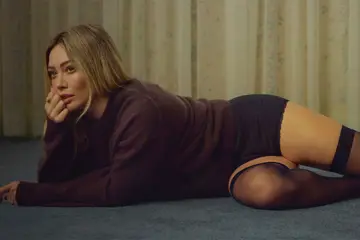
 Ainslie Wills Profile
Ainslie Wills is already seated, with a coffee in front of her, when this scribe enters a trendy Fitzroy café. The Melbourne singer-songwriter wears a patterned scarf that brings out her enviable green eyes. She's fresh from her day job as a singing teacher and Wills reflects back on one of her own teachers. "She was great, but she was very, very in the classical world." Although Wills praises this teacher for passing on breathing techniques and "all the technical stuff", she admits that she struggled to connect with the "very old school, really old pieces" she was forced to sing. "There was one that I always remember called Waitin' For My Dearie," she recalls. (We've since Googled it and can confirm that this song's from the musical Brigadoon and is very ye olde indeed.) "She obviously came from that world so she was very sorta passionate about it but, ugh! Yeah, it was just quite draining and you wouldn't really wanna practise it because you don't connect with what the message is."
"When you're using your ears and you're experiencing the chords and melody just through your senses, your connection to it's deeper."
On whether she usually enjoyed practising, Wills explains, "When I was younger I practised a lot, but it didn't feel like practice for me because it was just learning how to play tunes, and sing them, and I think it was a bit of an obsession; like, I had to work it out. It was like a little puzzle: you'd be hearing a piece and you've just gotta figure out how it goes."
Our conversation strays to "the phenomena of perfect pitch" and Wills enlightens, "The mystery to me is that people that are not trained will still know the name of the note. So you'll play it and they'll be like, 'That's an A'... they haven't been taught the notes necessarily but, yeah! It's, like, intrinsic in them; it's so weird. My aunty's got perfect pitch and she's incredible. She taught me how to play piano as a kid and, no matter what key you're in, if she knows the song she'll be able to go, 'Oh, that's the next chord' — she'll know everything." Everything fell into place when Wills "got obsessed with people like Tori Amos who played and sang". "Then I was like, 'Oh my god, that's what I wanna do,'" she shares.
Wills has extremely expressive hands that paint a picture while she speaks. Although she can read music, Wills stresses, "but that's not the school that I've come from, essentially". "I think if you have that desire to ingest something like that — you hear something and you really want to get inside it rather than just listening to it — I reckon that's the best way to learn music... I think what the main difference is: the sheet of music is external to you, whereas when you're using your ears and you're experiencing the chords and melody just through your senses, your connection to it's deeper than when you sit down and go, 'Oh, I'll play what's written on here,' you're relying on something else." Wills acknowledges that reading music is essential in the word of classical music "because, you know, sometimes it's, like ten-, 12-minute pieces that you need to remember", but posits, "I just feel like it's way better if you can internalise and digest it and learn it by heart — you're able to reinterpret the piece in a more connected way."