 What So Not Profile
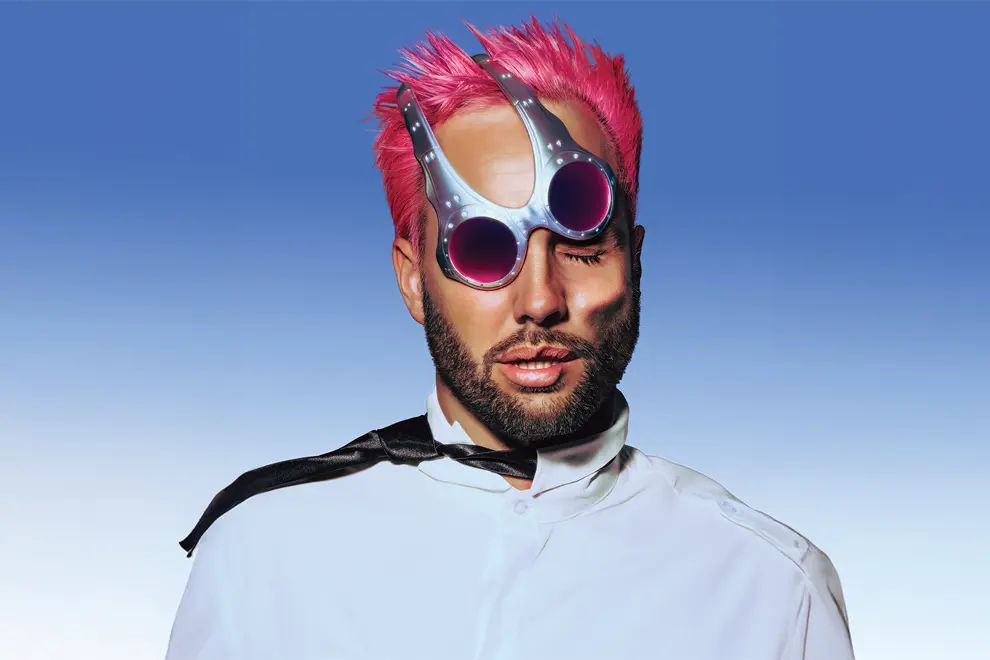
Australian producer What So Not has unveiled his latest project today, unveiling the six-track EP, I SAW A TRAP DJ AND IT CHANGED MY BIO CHEMISTRY.
Following on from the release of last year's The Quiet That Hurts, the new EP was first teased by way of the stellar single, Everest, which featured Ukrainian artist Alina Pash. Describing the track as a "call for strength and unity in troubling times," it was the first piece of work that the pair created during their time in the studio together.
While What So Not had previously performed in Pash's home country, his time working with her soon led to discussion about a return.
"She's like, 'You've got to come back to Kyiv, you've got to come back to Ukraine,'" he recalls. "'There's so many incredible music producers, rappers, vocalists, and not only that, incredible people in film and music videos that are stuck in the country, [that] can't leave because of the war, and are just so excited to work with people right now.'"
Sure enough, he soon found himself returning to the country in June, and later shared a video documenting his time in Ukraine, capturing time spent creating music against the backdrop of bombings and evacuations.
" It's quite hard to put into words what it was like being there and seeing a country at war first-hand," he explains. "It's not something I've ever experienced before."
"The most surprising thing was how normal everything felt through the days," he continued. "People at beautiful cafés with incredible food, incredible coffee, amazing fashion, people walking around the street everywhere, at the grocery stores, at the mall, and all of the artists just going about their lives, going to the music studio."
Writing and recording while in the country, What So Not points towards the almost captive nature of Ukrainian citizens while on-ground as one of the most unique aspects of the process. " A naïve Australian understanding of this I hadn't really considered is when there's war, there's often conscription," he explains.
"The males are forced to go to the front line and are also not allowed to leave the country. So the difference between recording in Australia and recording there is that these people can't leave to record anywhere else.
"You can only get access to these people if you go to that country right now," he continues. "So many of them are so starved for collaboration and so excited to work with people outside of their sphere, outside of their language, and convey their culture, their language, their ideas, their music outside of this bubble that's in such trauma."
While the footage captured is quite harrowing at times, What So Not admits there was no particular intention to start filming the events of his time in Ukraine. However, when a narrative began to make itself clear, it was obvious that filming needed to continue.
"I realised it started to tell this story and showcase this experience that I was having there that was really the story of what these Ukrainians are experiencing in their daily lives," he explains.
"And this weird dynamic of such beautiful, normal, lovely days in the streets, in the music studio, and then these terrifying nights that they have to go through going down to the bomb shelter, just waiting and hoping when the bombings happen."
While Australians like himself might not have been used to the experience of bombings occurring regularly, he swiftly began to become aware of how blasé some Ukrainians had become – almost treating constant bombings as more of an imposition rather than something terrifying.
"Just seeing how they handle it was very inspiring and impressive and they kind of made it a party," he notes. "It's like, 'We're going to be here till 6am, we might as well tell some jokes, have some fun, have some drinks and enjoy it.'"
While it was undoubtedly a unique experience that saw inspirational music borne out of tragic, scary, and turbulent times, What So Not also explains that footage such as what he captured should remind Australians – and the world at large – that war is not the sort of thing exclusive to desert or jungle landscapes.
"It was in this very normal, beautiful city with people, who – honestly – I could see just being my friends in day-to-day life, just trying to live their normal life, do their work, create what they want to create, go out and spend time with their family and their friends," he explains.
"And this type of war is really a war of endurance. It's how passionate and patriotic can they be to stay there and put up with what they have to experience every day so that others cannot just come in and take their land.
"It was very eye-opening and very sad, but I'm very proud of the people that I saw there and how strong they are to stand there through this."
With the documentary preceding the release of his new EP, and with Ukrainian artist Alina Pash on deck, what does a record like this – and an experience like this – say about where we find What So Not in 2026?
" This is the first time I've put the Ukrainian language on a record, and I was very proud of Alina pushing to do that, and I was very excited to allow her to do that on this song, Everest," he explains. "And of course, from us touring around showcasing that song, she ended up being on three records on this EP and encouraged me to come to Ukraine and write with all these other artists for all these records that I will write and finish and put out into the world as well.
"As for what the What So Not of 2026 sounds like and is doing, it's this, I hope," he adds. "Giving voices to all of these incredible people all around the world and collaborators that make incredible music, no matter the circumstances of their home country, no matter how big or small they are, and spread their message to the world."
What So Not's new EP, I SAW A TRAP DJ AND IT CHANGED MY BIO CHEMISTRY, is out now.
This piece of content has been assisted by the Australian Government through Music Australia and Creative Australia, its arts funding and advisory body