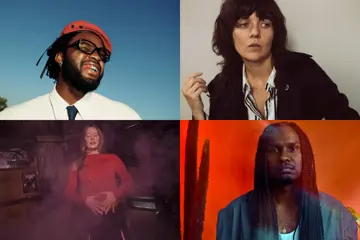
 Nahko & Medicine For The People Profile
The words of Native American activist John Trudell open the quietly scathing My Country, with its melodic refrain paraphrasing the American national anthem. It's one of the more openly political tracks on the second album, Dark As Night, from Portland-born, Hawaii-based singer/songwriter Nahko and his band, Medicine for the People.
Nahko's backstory is as intricate as it is essential to the music he makes. Coursing through his veins is a mix of Apache, Puerto Rican and Filipino blood: he was adopted and raised by a conservative white Christian family who introduced him to music early through piano lessons, and since his late teens his personal journey to recover his heritage and identity has fed directly into his music.
“I had to wait for some these stories to play out before I wrote these songs,” he admits. “So it's been an interesting journey for sure. I'm 27 now, and as young people now, in this generation, and in the arts community as well, we go through lots of change and we go through a lot of new forms of expressing ourselves...and there have been a lot of ways that I've taken in the story and been able to output it to my audience and to my friends.
“I've been playing piano since I was six and writing songs since I was ten, and probably the first ten years, they were pretty bad,” he chuckles. “I never thought of myself as a songwriter per se but now I've taken on a stronger personality of recognising the muse and the bard of being a storyteller and passing on the stories. Vultures Of Culture was a song that was on our first record, called On The Verge, and I remember when I finished it I thought, 'Aha, I've written a good song finally!' and I figured it was the starting point to build a compilation of true songs, of real-talk songs. It's a song about our national parks here in the United States and how unfair it seemed, at that stage of my life, to the sovereign people of this country to be using such land in this way.”
Nahko's journey has taken him from the strictures of an albeit happy childhood in Oregon through Alaska playing piano now to Hawaii where he works on an organic farm. The cultural issues facing Hawaii have now woven themselves into his narrative. “That's the interesting thing about the world. That right of land, that right of identity to where you were born and where your ancestors are from is a very real and passionate thing for many, and I feel like that bridge between cultures is really important.”