 Foo Fighters Profile
The success of last weekend’s Foo Fighters one-off in Launceston has sparked discussions that Tasmania could become a viable destination for international tours.
The band were on the ground in Australia for just 30 hours.
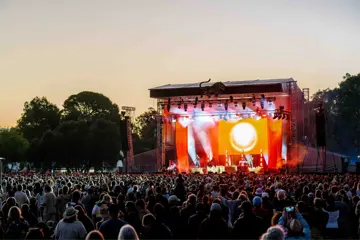
The January 24th show at UTAS Stadium drew 25,157, confirmed Stadiums Tasmania CEO James Avery, who added it made it “the state’s biggest concert event.”
At least 25% of the crowd came from the mainland or overseas.
Avery said hosting an artist of the profile proved Tasmania could deliver events of a national and international standard.
“The first ever Foo Fighters concert in Launceston was a success by any measure, paving the way for future events” he declared. “We wanted to make it an unforgettable experience, and I think we achieved this.”
“This is the type of event Stadiums Tasmania is seeking to deliver regularly as we look to elevate the stadium experience right across the state,” he added.
The Foos show created a boom in bars, restaurants, and club turnover. The demand began in the three days up to the Saturday show, and operators quickly put on extra staff.
Some venues opted to open up on the Sunday as well for fans in recovery mode. “Inside the venue there were 35 food and beverage stalls employing about 1,000 staff,” Avery said.
Hotel accommodation sold out. Latecomers had to pay up to $2,500 a night.
Estimate
The initial estimate by the Government was that the concert would generate an extra $7 million to the Tasmanian economy.
But it is now expected that the figure will prove to rise as fans from the mainland stay on to holiday.
The concert was secured with a $500,000 investment from the state government and $150,000 from Launceston City Council.
“This was a great investment, an investment in our economy, an investment in jobs and an investment in brand,” Premier Jeremy Rockliff said. “The concert last night was beyond everyone’s expectations.”
Launceston Mayor Matthew Garwood revealed it would cost an additional "couple hundred thousand dollars" to stage the event, and that it would be made public when the final figures are tallied up.
Garwood, a live music enthusiast with a strong standing in the city’s younger citizens, was enthused that small businesses benefited most out of the Foos’ visit.
“For every single $1 that we’ve invested in bringing the concert to Tassie, we’ll see $11 in extra economic activity. A very worthwhile investment in my mind.”
Promoter Michael Chugg told The Music, “There’s definitely interest (in government circles) to get international acts in there.”
He took Elton John to the UTAS Stadium (then York Park) on December 8th, 2007. Its capacity was 15,000.
However Chugg is interested in reports that current renovations of the venue will result in capacity for concerts rising to 35,000 in 2027.
Costs
The problem with staging major concerts in Tasmania, another promoter reveals, is “The costs are enormous. You have to take everything in there – staging, lighting, sound. Without government aid, you’d be looking at charging $5,000 per ticket to cover costs for a massive show.”
Brendan Self, Managing Director of local tour company Vandemonian previously revealed, "The scariest parts of operating in Tasmania is the weather. Large touring companies won't look at Tasmania because they don't have the option of a roof."
However such issues concerning promoters will be addressed in 2029 with the opening of the Macquarie Point Stadium in Hobart. It will have a roof and in-house staging.
After years of debate on whether it was needed and if it would cover its $1.13 billion cost, in December 2025 it was passed in both houses of Tasmanian parliament.
It will have 23,000 seats. It will go up to 24,500 in sports mode, including seated and standing. Concerts will initially cater for 31,500 patrons. It will later expand to 38,000.
According to economic reports, Macquarie Point Stadium will host 300 events including concerts (requiring between 1,010 and 1,210 staff on event day) and “attract performers and organisers who currently bypass the state due to limited venue options and logistical challenges with inbuilt staging.”
It is forecast to draw A1 List music acts and sports events that currently bypass Tasmania, draw 587,000 patrons a year (104,000 of them from outside the island) and inject $85 million a year to the economy.
It is also estimated that $50 million stays in Tasmania due to music and sports fans not having to travel to the mainland.
Having Foo Fighters as inspiring plans for Tasmania to rebrand itself as a major music destination, was a no-brainer.
The band have sold over 1.8 million records in Australia, with nine #1 albums to date – the most #1 in any territory for the band. Not playing Tasmania since 2015, it was inevitable that the UTAS Stadium show sold out in record time.
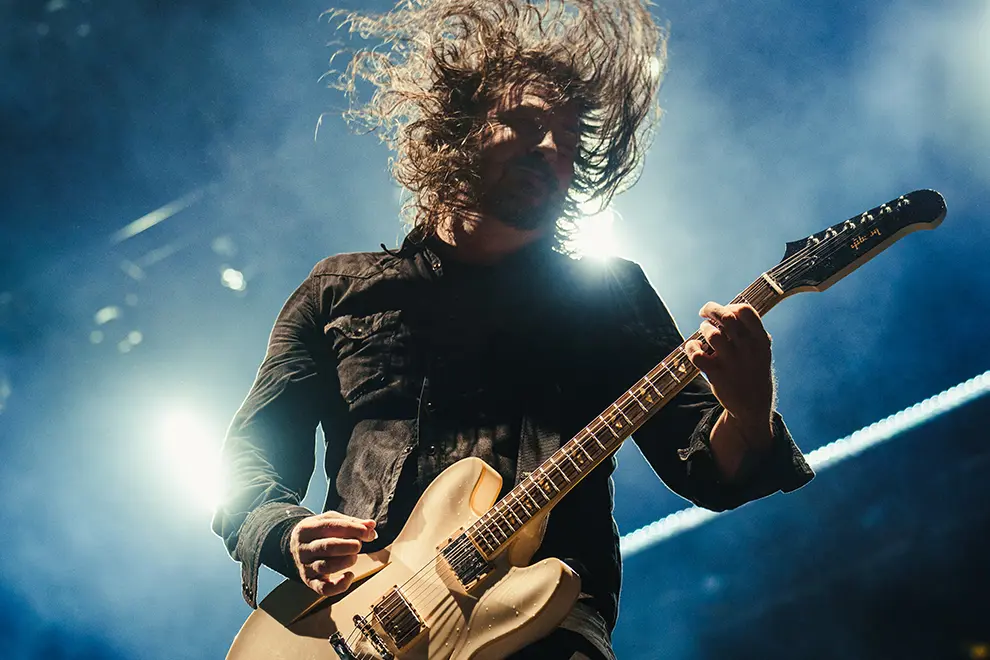
The show itself generated international headlines when Dave Grohl revealed for the first time anywhere that the Foos had just finished recording their next album.
That they reunited with Beaconsfield miner Brant Webb to come on and reintroduce them for their three-song encore which began with Ballad Of The Beaconsfield Miners, also grabbed global attention.
But moving forward, for political, business and hospitality leaders what was inspirational was how Launceston came together to collectively lift its game to cater for a mass input of music fans, and instilled a confidence in investors that it could be done on a regular basis.
For the Premier, Tasmania had shown it could host major events and “seizes opportunities”.
“We punch well and truly above our weight,” he posted. “Our brand extends further than Tasmania, further than nationally even.”
This piece of content has been assisted by the Australian Government through Music Australia and Creative Australia, its arts funding and advisory body