
 Powderfinger Profile
Just Ace is a podcast created by Sydney industry stalwart Danny Yau. The podcast tracks the history of Australia’s independent music scene across the 90s and is an excellent listen. Volume Two of the companion book is out this week, available through Amazon or through fantastic local record stores across Australia. This extract is from the chapter on Powderfinger (written prior to their reunion tour announcement).
Beginnings
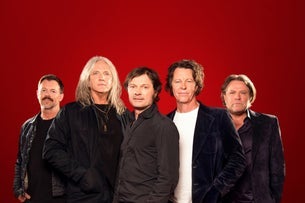
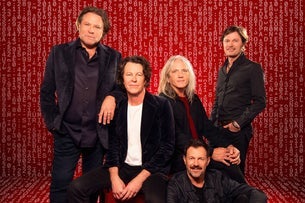
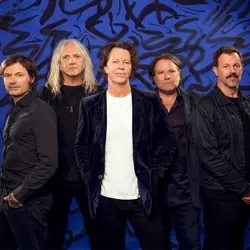
Powderfinger formed in 1989 in Brisbane, removed from the major hubs of Sydney and Melbourne. By 1992, they were Bernard Fanning on vocals and guitar, Darren Middleton on guitar and occasional vocals, and Ian “Hoggy” Haug on guitar. And yes, that's right: three guitarists. And then there’s John Collins on bass—and I assume incredible back problems from the way he's often bent over when he plays—and Jon “Cogsy” Coghill on drums.
There are actually not many Australian '90s bands with three guitarists and five members, but maybe that betrays their roots as a covers band, and that extra guitar attack could fill out parts for different songs. Their classic rock roots can also be found in their name, which is a '70s Neil Young song. But soon they started writing their own songs. As was the way in the early '90s, the band used their live gig earnings to fund some cheap studio time.
They recorded those songs for an EP to sell at shows. Released in 1992, it was self-titled with a blue cover and known as the “Blue” EP. Only 1,000 copies were ever made, and they are worth quite a bit now. If you wanted to get me a copy for Christmas, that would be very nice of you.
The EP was enough to get the attention of Polydor, who had just signed The Fauves and were building an Australian roster. As was typical of the early '90s, they didn't make a splash with their early EPs or their first album. Of that early work, only one track was included in their future greatest hits. It's not what Powderfinger would be remembered for.
Parables For Wooden Ears
The first Powderfinger release on Polydor came a year later. It was 1993’s Transfusion EP. Then came their debut album, 1994’s Parables for Wooden Ears, which might as well have been called Parables for Not Getting Too Pretentious When You Were Just Starting Out. Recorded in Melbourne with producer and dark wizard Tony Cohen, it's a grumpy affair. It's full of angst. The songs were complicated. It was matched with a dreary album cover and film clips full of moody lighting.
The album isn't bad so much that it has dated badly and showed a band still finding their feet. It sounded like a photocopy of a band that you might see support Live or Smashing Pumpkins. They actually opened for Pantera around this time. None of the singles were given much triple j airplay and came nowhere near the charts. The band haven't exactly disowned Parables for Wooden Ears, but they didn't really play anything from it after the release of their second album. The band have taken it as a lesson on what not to do.
1994 was near the end of the time where you could have a dud of a debut album and the label would still give you a chance. And despite some fear that they might be dropped, Polydor was happy for them to spend money and try again. Another EP followed in 1995 called Mr. Kneebone. Again, it failed to get on radio, but the band credit the EP as the point where they realised what they were doing wasn't working. They needed a change and new ideas.
Double Allergic
The producer of Mr. Kneebone, future Regurgitator producer Magoo, had told the band that they needed simpler songs. So that was one of the things that they went for. One of the new, simpler songs was called Pick You Up. They played it live and people seemed to like it. It was very different for the band, but still they allowed it to be the first single of their next album, 1996’s Double Allergic.
Maybe on first glance it didn't look like much had changed. Once again the album cover was weird and moody. The Pick You Up film clip was a moody performance clip with lots of weird angles and a sense of discomfort. Here’s that intense, angsty band being intense and angsty again. But Pick You Up had a quiet grace to it. You couldn't mistake this for a band that might open for Pantera.
Bernard's voice was contained, which made it more dynamic when he unleashed it late in the song. And maybe most importantly, there was a warmth and affection in the song. This was 1996 and we were eager to hear something other than dour grunge on the radio.
Pick You Up picked up high rotation triple j airplay and it was a huge breakthrough for the band. That year, triple j really seemed to support a number of these new bands they previously only gave a passing play to. You Am I, The Fauves, Spiderbait, and Regurgitator also had big albums that year. It felt like the arrival of a whole new group.
As the years go on, I find the other singles from Double Allergic to be better than Pick You Up. The album, produced by Tim Whitten, gave the band a lot of space to breathe. Everything wasn’t happening all the time, which is often a trap for three-guitar bands, especially young ones. Bernard put down his guitar more just to sing. Lyrically, it was still a bit mysterious, but there seemed to be some thoughtful wisdom and care, rather than accusations and angst.
You can hear it on DAF, the second single. It is so restrained. The song is so simple, and the DAF of the title is the three chords used over and over again in the song. Even the great guitar lick can be played by most first-year guitar students. It was an immediate classic in my high school music room and I'm sure most schools in Australia. It was again flogged on triple j. And again, lyrically, I don't know what it was about. It sounds like something to do with religion and society.
Double Allergic may as well have been a debut album. It sounded like a new band and it brought many people to the band for the first time. The songs crossed over into commercial radio in a way that other bands like You Am I and Spiderbait didn't. There's something at the heart of Powderfinger that worked for commercial radio. Other bands had come up loving punk or garage rock or dissonant tunings. Powderfinger by Double Allergic were stripping back to the essentials of classic rock.
Listening to it now, Double Allergic loses marks only because of the better music that came after. But this was just a huge album in 1996 and I listened to the shit out of it. The highs, including all those singles, are very high. I looked through that strange, dark, murky album artwork a lot. Powderfinger seemed like the smart band to my very simplistic 15-year-old brain.
They sounded like they were wise and talked about high ideas about life, and it made me feel smart just listening to them so I could keep up. They didn't sing about nice birds or dogs being the best people. If mid-'90s Australian music was a date, it would start with Spiderbait or Regurgitator and their fun, energetic nonsense. You know, that's hitting up Timezone with soft drinks and just doing something fun. Then it would be Custard and The Fauves, where you would share some jokes and laughs that others just won't get. Then dinner, and sharing your world views. That's the Powderfinger part, where you see the world through someone new's eyes. And then there’s the late-night whiskey and sharing of intimate personal feelings with You Am I and The Whitlams. And then The Cruel Sea would take you to bed and fuck you.
Anyway, that's where Powderfinger fit into the scene. They came across as intelligent men with something to say over dinner, although I'm not 100% sure what. In interviews, they spoke about social issues. Bernard wore an Amnesty International t-shirt, and they covered the anti-racism anthem Blackfella/Whitefella by The Warumpi Band on the B-side of DAF.
The band, and Bernard in particular, seemed like yet another new version of Australian lead singers who didn't care to be macho. Double Allergic got to #4 on the ARIA Charts and sold three times platinum. Pick You Up and DAF charted in the lower half of the Top 40. Pick You Up got to #6 in the Hottest 100 and DAF got to #18.
A third Powderfinger single, Living Type, made it to #32 in the Hottest 100. Basically, a lot of pretty good numbers. And they were nominated for the ARIA Award for Album of the Year, Single of the Year, and Best Group. 1996 was a breakthrough year for the band and they backed it up with lots of touring, including being the main support for You Am I on their national tour following the release of Hourly, Daily. They performed on Recovery, and they played possibly the biggest concert in Australian history at Crowded House’s farewell concert. They played all the big festivals too.
Double Allergic was also released by Polydor in Europe and Canada. In 1997, the band played their first international shows to support the album. None of the singles were given a big push internationally. They were sort of showcases and just a taste of this new band. The international labels didn't even bother to alter the track listing of their versions for no reason. But even though Double Allergic was successful, the feeling was they had worked out who they were and more was still to come.
Internationalist
Powderfinger spent most of 1996 and 1997 touring. There was a short break when Cogsy filled in drumming for Regurgitator after Martin Lee was hurt on tour. Hoggy also moonlit in a side project with The Go-Betweens’ Grant McLennan called Far Out Corporation. But for the band, this time was spent writing their next album. Double Allergic’s success meant the band could move out of share houses and move into their own rehearsal space under Hoggy's house. The band were always prolific and they had multiple songwriters, so a lot of songs were prepared.
It would have been easy for them to deliver Double Allergic II, Triple Allergic. They had worked out a successful formula, so let’s just run the numbers again. But they decided to be more ambitious. Some things stayed the same, such as the recording in Australia, but this time in Melbourne. One change was the producer. They chose American engineer Nick Didia, who had worked with Pearl Jam and Rage Against the Machine.
The first taste of album three was The Day You Come. It was a tense but ultimately anthemic song. The lyrics allude to the rise of a politically populist figure. They had done something similar on the song Living Type, and there was speculation the song had something to do with the rise of Pauline Hanson. It charted at #25 and came in at #8 in the Hottest 100. It also won the ARIA for Single of the Year. The album that followed was called Internationalist, released in September of 1998.
Internationalist tapped into a genre of music that had been lacking in the scene, and that was soul. It featured backing vocals from Tiddas and lots of space and lots of groove. Even the album cover was different from their last two. It was a clear, painted portrait of a young person, not some murky, abstract, unsettling image. There was something inviting about the album.
Internationalist for me is the personal favourite. Hindley Street was the opening song on Internationalist. It is, confusingly, not a Brisbane street, but an Adelaide one. I assume that there were tough negotiations between state governments to allow a Brisbane band to write about the main shopping strip of Adelaide.
When I first heard the song, putting the Internationalist disc into a CD player, I was blown away. The soulfulness, those Tiddas vocals, the playful drum intro, and Bernard just opening up his lungs and going for it, sounded amazing. Despite the soulfulness of the album overall, the album still had plenty of rockers.
Oddly, the second release was a double A-side single, featuring two of those rockers: Don’t Wanna Be Left Out backed with Good-Day Ray as one single. It was a strange move because it meant that neither track really got commercial airplay. They also made two film clips on the same set. It featured a circular camera track in a bright studio. The camera ran circles around the band in a mock live performance in both clips. They were both directed by Mark Hartley, who made pretty much the same film clip for You Am I’s Good Mornin’ two years earlier. I'm glad Mark got a lot out of that circular camera track.
Good-Day Ray is interesting because of who Ray was. Ray was Ray Martin, TV presenter and journalist who at the time was the host of A Current Affair. They don't have much to say about Ray other than someone was coming at him again, likely many of his critics in the wider media. Musically, it was the more interesting of the two A-sides, with the urgent piano adding a new colour to Powderfinger's repertoire.
But the heart of the Internationalist album were a number of mid-tempo ballads. Three albums in, it became clear that this was one of the things that they were good at: delivering a sombre, thoughtful ballad that thousands could sing along to. When people say something sounds like Powderfinger, I reckon they are talking about these kinds of songs.
Already Gone was the third single. A lot is made about the quiet, loud dynamics of early grunge. Here, the band were outgrowing grunge and using that dynamic in almost a gospel way. It goes from incredibly fragile to a sense of great relief. Lyrically, it was loosely about the band's friends who were getting older, working, and the dignity of just getting by. It was also a showcase for Bernard's soaring vocals, now not fighting against three guitars. Those slower, quieter songs gave the lyrics room to shine. Fanning wrote a lot of lyrics, but there was a spirit in the songs that was uncynical and earnest. These were big songs about how people lived their lives, but they made it personal. Ballads like Private Man and the final single, Passenger, became sing-alongs.
Internationalist exceeded Double Allergic in every way. It got to #1 on the album charts. It sold five times platinum. It was embraced by commercial radio and triple j. And they did it their way. They didn't go on lowest common denominator shows like Hey Hey It’s Saturday and commercial breakfast radio. They were already so successful that they could call their own shots. Whilst many of their peers were being told to go away and come back with more songs because there wasn’t a single, Internationalist had five hit singles.
I also love that all the single artwork followed from the same series as the album art. It's a small thing, but it was something that they hadn't done before. Those small things made it feel like Powderfinger had worked their shit out and they had a clear vision of what they were doing.
The film clips were all better and you were able to clearly see the band. There’s Bernard up front with the mic almost floating in his right hand as his hair flopped around. JC crouching his back over the bass. Hoggy, right shoulder pointing up but looking down to his left. Darren, wanting to jump around but staying mostly sensible. And Cogsy, with a big smile, like he just thought of a joke which he’ll tell you about after this drum fill.
These Days
All those singles were released in 1999, but one more thoughtful, kind of sad ballad joined them before the year was out. Powderfinger was approached to write a song for the film Two Hands, starring a young Heath Ledger and a young Rose Byrne. It was the first time the band had written something to order, which they based off bits of the film that they were able to see in advance. What they came up with was These Days.
These Days was a gift to buskers all around Australia. There is just something so simple and direct and emotionally open about the song. Country singer Kasey Chambers recorded and released a version almost immediately. It is a song that has survived many interpretations and covers. It’s been played by Powderfinger as a full band, or just on acoustic guitar, or on piano, or just with Bernard's voice on its own. The song always works. It has been used as a song for hard times.
In the years to follow, Powderfinger would play the song at benefit concerts after tragedies, and people would cry. They played it at the 2001 Big Day Out after a young girl was killed in a Limp Bizkit crowd, and people cried. They played it at big fundraisers like Wave Aid, and people cried. When Powderfinger did their farewell tour many, many years later, they finished the shows with These Days, and people cried. It's a moment of stillness in amongst the chaotic whirlwind of life. I've talked about hundreds of songs from this decade, but not many of them make people cry. These Days and Powderfinger's other songs around this time tapped in part into a weird feeling we all shared at the end of the millennium. There was this mix of fear and excitement about the future being so numerically confronting. The world was getting newer. There was so much information. If only we knew how much crazy was still to come.
These Days was released on the Two Hands soundtrack as the opening track in 1999. It was also included as the B-side of Passenger. It was not its own single, but radio flogged it anyway. The song was a huge hit, even when the film Two Hands only did okay. Safe to say it surpassed the film, and it kind of surpassed Powderfinger. It topped the Hottest 100 in 1999. It was the biggest song of that year. It was the second-highest placing Australian song in triple j's Hottest 100 of All Time in 2009. The only higher Australian song was the hip-hop classic The Nosebleed Section by Hilltop Hoods, released in 2003, four years after These Days. And guess what? That song references These Days in the lyric.
Another song from a soundtrack followed. This time it was a big-budget American film. It was Mission: Impossible 2, the worst one, starring Tom Cruise. The film was made in Australia and the story goes that Cruise heard Powderfinger and became a fan whilst he was here. So the band was invited to submit a song for the film. They tried to write something just for the film, but they also submitted some of the newer songs that they were working on.
A new song called My Kind of Scene was chosen. It was another tense downer ballad with a big chorus. Being on a big-budget American film was a step on the way to the final boss of Australian music in the '90s: breaking America. The band had played a couple of American and European showcases for Internationalist, but the album wasn't released or promoted in those continents. But with a song on a big soundtrack and the huge response to Internationalist in Australia, things looked good for the next album to be big around the world.
Odyssey Number Five
Album four would be called Odyssey Number Five. Nick Didia returned as producer. It was preceded by the single My Happiness. My Happiness and These Days fight it out for the biggest Powderfinger songs. They came out pretty close together. That 1999–2000 period was when Powderfinger just shot through the sky. My Happiness topped the Hottest 100 of 2000, making them the first band to top the Hottest 100 twice. It charted at #4, their highest-charting single to date, and it would remain a career best. It won the ARIA Award for Single of the Year and sold seven times platinum.
Look, I'll be honest. I didn't love My Happiness when it came out. At 19, I think the open, uncynical joy of the song wasn't for me. The terrible, childish film clip of a young boy missing his animated slinky didn’t help. But as the world descends into madness, this song sounds better and better. It's almost a pop song. The guitars are pared way back. This doesn't sound like the band of Pick You Up, let alone the Parables era. And maybe because of that, it was all over radio. It even crossed over into contemporary pop and easy listening stations. It was another reason why I originally gave the song an edge of being uncool. Because mums liked the song.
The album Odyssey Number Five followed in September of 2000. By now, the band was part of Universal's Grudge label, who had bought out Polydor. Grudge was supposed to be their triple j label, but Powderfinger were way beyond that. But they didn't leave the triple j world behind. Triple j, just like everyone else, loved everything they did.
I always found Odyssey Number Five to be an odd record. It featured a re-recorded version of These Days as well as My Kind of Scene. Along with My Happiness, it felt like I knew a big chunk of the 11-track record before it ever came out. The album takes some wild swings. There was the second single, the first after the album came out, called Like a Dog. If you like riffs, well, have I got something for you. Like The Day You Come, it was an angry statement about the times. This time it was about then Prime Minister John Howard. This was the push and pull of the band: writing Powderfinger these fiery rockers with heart, or these tender ballad-ish songs with brains.
Then elsewhere there was the almost glam-rock opener of Waiting for the Sun. There were the quiet acoustic moments like Whatever Makes You Happy. The album sounds a bit like a compilation. It was short and diverse. The final single was The Metre, a fine Powderfinger song. But after Already Gone and These Days, it felt a bit too familiar.
Despite all that, Odyssey Number Five was an even bigger success than Internationalist. It got to #1 and it surpassed the last album's five times platinum with three more platinums. It had four songs in the Hottest 100 of '99 and two the year after. Odyssey Number Five won the ARIA for Album of the Year whilst the band took out Best Group. It was the highest-selling Australian album of 2000 and it came out in September. At this point, the band always appeared united. They talked very little about their private lives. If the songs were personal, they didn't shout about it. When asked directly about the songs, the band deflected. It was unclear who wrote what. They were a united gang.
Probably in part due to the success around them, the band also closed ranks. But the truth was, the lives of these five men were changing fast due to their fame. And in a take as old as rock, it led to tensions within the band. Being recognised and losing privacy bristled some members. They were also getting older, relationships were getting more serious, and drugs and drinking became a problem. Add to that the problem of breaking America and the rest of the world.
Odyssey Number Five saw a release on the Universal Music label Republic Records. My Happiness was released as a single in the UK, Europe, and the US in April 2001. The label commissioned an expensive new film clip based kind of on the album cover. It featured people, cars, and ultimately a house falling from the sky. That clip cost more than the album itself. But most big US film clips did. It’s something American bands were used to and Australian bands found strange. But it's better than that slinky.
They also performed the song on The Late Show with David Letterman, whose viewing audience was bigger than Australia's population. Again, most American bands are okay with that. For Australian bands, it felt strange. The band did several tours of the US and Europe, including many dates with Coldplay. But outside of Australia, the band went back to doing supports and doing the hard yards in a tour bus. Then they'd head back home where they’d be headlining festivals, including the first Splendour in the Grass festival in July of 2001. It wasn't easy, and it was made harder by My Happiness not getting much American airplay.
Still, the American campaign was just starting. Another American tour was planned for October 2001 with maybe another single just before. But then 9/11 happened. The world changed. Some things became not important. Like developing an American audience for a band from the other side of the world who had so far taken America by calm. The American tour was postponed and it was never rebooked. Before long the album was too old to promote.
There were no more singles, no more money for expensive videos, and it all fell away. Why didn't Powderfinger make it to America or overseas? Why didn’t their songs that did so well in Australia travel? Well, there's all the business reasons. Maybe it just came out in the wrong week. Maybe some important radio programmer was too coked up when he heard it, or maybe not coked up enough. Maybe 10,000 bands are in the same grind and who the hell knows?
But for me, it's a more philosophical reason, which is, at this point, Powderfinger weren't really made for anything other than the big time. The Living End, The Lucksmiths, and You Am I—they had their retro rock and music nerds who would discover them and dig what they do. They could have a small, dedicated fanbase. Powderfinger were writing these big anthems for huge audiences.
What I’m saying is, Powderfinger wanted a seat at the big table. Or at least that's the only real space for them, which is tougher: to get straight to morning radio or whatever. Coldplay, who they toured with, managed to take one of those seats. And maybe that was all the seats taken up.
By the time the Odyssey era wrapped up, the band was exhausted and they took a break. A couple of them were drinking too much. JC got married. Bernard's brother died. Darren formed a new band and released an EP under the name Drag and had his first child. They were initially unsure what to make for their next album. It would have been easy for the band to deliver Odyssey Number Five II, Odyssey Number Six. In fact, the band apparently wrote plenty of mid-tempo, These Days-type songs. But even the band themselves were kind of sick of it. They realised that they had to make the album fun for themselves.
Vulture Street
They returned to classic rock and the '70s, the music they played in cover bands. Guitars came first and everything else followed. Bernard allowed himself the freedom to throw in some “babies” and “yeahs” as that's what AC/DC would have done. The album they made was 2003’s Vulture Street. That real street runs through Brisbane's West End where the band lived in their early days of share houses. For these men in their 30s on their fifth album, the title was another connection to why they wanted to be in a band in the first place.
They once again recorded in Australia and again with Nick Didia. The first taste of the back-to-rock Powderfinger was (Baby I’ve Got You) On My Mind. It's big, it's dumb, and even the band admits that, like The Police and R.E.M. before them, it’s a desire song that crosses into stalking. It was accompanied by a simple film clip of the band playing in a rehearsal room with amps and cables everywhere. Even though the band had gone through so much, they came back with their most joyous album. There was an energy in the band and the melancholy had faded. Perhaps after such hard years, it was a release and a relief to have survived.
The joy can be heard all over Sunsets, the second single, and probably the happiest song they've ever done. Which is quite an achievement for a band whose biggest song has happiness in the title. Even in the lyrics, Bernard sings that pity would do no good at all. Just to make the point about how it was a rock album, Vulture Street opens with a track called Rockin’ Rocks. Even AC/DC only dared to put rock in the title of a song once.
Two other singles were released, Love Your Way and Since You’ve Been Gone. Vulture Street went six times platinum and got to #1. They also had three songs in the Top 10 of the Hottest 100 of 1993, and five songs all up. They did massive tour after massive tour. There was a live album that also sold a lot. It was all massive.
But I tell you that they’re a private band. And as much as Vulture Street seemed like a triumph, a return after hard years of touring and dealing with Americans, behind the scenes was something different. Again, they never let on, but in a way Vulture Street was the band clinging on for one more album. Internal tensions ran hot. And in 2005 the band announced that they were going on a break, bringing the sun down on Powderfinger Volume 1.
The band did side projects, showing that they still wanted to make music, just not with each other. Darren did a Drag album. JC and Hoggy formed a new band, and Bernard made a solo album. Members had kids and they did more growing up. If someone gave me the money to make a 15-hour, Mark Cousins / Ken Burns-type documentary about the '90s Australian music scene and I had to choose an ending, it would be the 2007 Across the Great Divide Tour with Powderfinger and Silverchair. The nine-week tour played the biggest stadiums in Australia as well as going deep into Australia's regional centres.
It was two years after Powderfinger had declared a break and four since Vulture Street. It was five years since the last Silverchair album. Eight years past the '90s, it was a celebration of the two biggest bands from the era. Around them, most of the bands they came up with had broken up. This was the enduring legacy of the era. Both bands had gone on hiatus, but returned for this tour with new albums, and both bands would break up indefinitely a few years later.
Just Ace is a podcast created by Sydney industry stalwart Danny Yau. The podcast tracks the history of Australia’s independent music scene across the 90s and is an excellent listen. Volume Two of the companion book is out this week, available through Amazon or through fantastic local record stores across Australia. This extract is from the chapter on Powderfinger (written prior to their reunion tour announcement).