 Sarah Blasko Profile
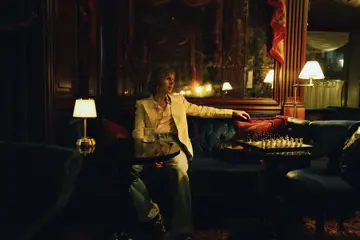
Sarah Blasko believes that political neutrality is no longer an option.
The Australian singer-songwriter’s career has spanned decades of ARIA Awards and chart success, culminating in this moment: contributing a previously unreleased song to Forever Young, a compilation album for the charity War Child Australia.
“It was a song that I’d recorded a long time ago, maybe eight years ago,” she explains over a Zoom call, just as the sun is starting to set. “I really loved it, but it just didn’t quite fit the material that I had at the time.”
The song, Dance on Fire, was released on October 23rd. The compilation itself, out on November 20th, is set to feature offerings from other beloved Australian artists, including Paul Kelly, Missy Higgins, King Gizzard & The Lizard Wizzard, and Any Young Mechanic, to name a few.
“I always knew that I wanted to do something special with [Dance On Fire] because, actually, I don’t often write songs that are political in nature. I often write about my feelings.” The song, she explains, was inspired by the Recognise Movement, a campaign that advocated for constitutional recognition of First Nations people.
“I felt really emotional about it at the time. Anger and frustration.” The same feelings overwhelmed her during the failed 2023 Australian Indigenous Voice Referendum. “Why can’t we recognise these first people in Australia, the very basis of who we are? How must that feel, to not be recognised in a place that is yours and that you belong to?”
Dance on Fire, in both its lyrics and sentiments, is reminiscent of Midnight Oil’s rousing statement Beds Are Burning. It is a song that means something to her, because of the way it allowed her to challenge this sense of political outrage and emotional urgency.
“But I never knew what to do with it. So when I was asked about this, it made perfect sense. I was like, I know exactly which song to choose,” she says. The track had already been recorded and mixed - the only thing left to do was master it.
On a personal level, Blasko has been a fan of War Child as an organisation since the 90s. She owned their 1995 compilation The Help Album - which featured the likes of Radiohead, Paul McCartney, Blur, and Oasis - as a teenager. Funds raised from the album helped to provide aid to war-stricken areas such as Bosnia and Herzegovina.
“It really meant something to me at the time. It made me really emotional. Because the conflict at the time in Bosnia was intense and very upsetting, and because I was starting to get into music at the time, those people were like my heroes. So I’ve been really familiar with their compilations. When I heard that they were doing an Australian version. I was immediately ready to say, yes please.”
Involvement - particularly as a mother to an eleven-year-old and a six-year-old - was a no-brainer.
“I was sixteen when that first compilation came out,” Blasko recalls. “At that age, you understand children; you’re still a child, so it really impacted me. And now, the conflict in the world impacts me potentially in a different way because every day, as a parent, you’re trying to see the world through your child’s eyes. It’s really troubling, and there’s a deep sense of responsibility as a parent to give answers or to try to find solutions.”
So far, music is the only solution that she has. “I feel like it’s something that I can give. In my small way, music is deeply affecting for people, and I think that we have to believe that these things can bring about some sort of change, even if it’s just an internal change in people.
“Because ultimately I believe in the power of music and I believe in the power of people. And I feel like it’s when people feel like they don’t have any power and any voice and they give up hope that the world really becomes a dark place. I think we’ve all got our different skills and our different parts to play.”
Musicians, however, can face repercussions for involving themselves in or speaking up about humanitarian issues that are deemed political - Macklemore being removed from Ed Sheeran’s Loop tour for expressing pro-Palestine sentiments onstage comes to mind.
“Musicians have been silenced a bit,” she says, but argues that politics and art are irrevocably intertwined. “They come hand in hand. People who write music and write plays, you’re always looking to the world and at people. It’s reflecting what’s going on in the world, so how can you possibly stay away from those topics?”
Does she fear being labelled a “political” artist?
“I wish I could do and say more,” she admits. “But I’m certainly not afraid of it, particularly at this point in my life.” She just recently turned 50 - things that used to matter no longer do. In the grand scheme of things, professional consequences, or the loss of universal appeal, are simply small potatoes.
“The way that the world is heading, I don’t think anybody can remain neutral,” Blasko says, though throughout the interview, she doesn’t name any specific humanitarian crises or conflicts currently occurring. “It’s not political to care about other human beings. You can’t pretend these things aren’t happening.”
Though Dance On Fire was obviously inspired by a specific issue, its recent release allows it to acquire new significance and varied messages.
“I think that is generally what happens with releasing music,” Blasko says. “It comes from a place, it comes from a point of inspiration, and the meaning changes as soon as it goes out to other people.” Sometimes, for example, she will write a break-up song, and it will end up soundtracking the first dance at a wedding.
“So for me, this song, even though I wrote it specifically about that moment in Australia, I feel like the sentiment of it applies to the world: that certain people are considered more important than others, depending on where they were born, where they were brought up, the colour of their skin…” she trails off—the list feels hopelessly endless. “The sad state of the world is that some human beings are just not recognised by other people, or other governments.”
As time passes, Blasko is attempting to accrue more wisdom and become more in touch with humanity. She points to her recent milestone birthday.
“You really go through quite a process,” she laughs. “I mean, it’s quite a sobering thought to think that you’ve probably gone through the majority of your life by now. You’re probably not just halfway through. That’s kind of chilling. But I’ve got less to lose, in a sense. It does make you feel like you want to be more genuinely who you are. You realise that you kind of have to pave a different path from here. So I’ve been doing a lot of soul-searching.”
As a birthday present to herself, she holed up in a studio and made a new album - one the rest of us have yet to hear. “I’m still doing what I love, and that’s the important thing.”
Forever Young from War Child Australia is set for release on Friday, 20 November. Order your copy here.