Have you noticed that people seem to care about wearing earplugs more than ever? Whether it’s wearing them in bed to tune a snoring partner out, on a flight, noise-cancelling, or at concerts, more and more people have their chosen kind – and brand – of earplugs.
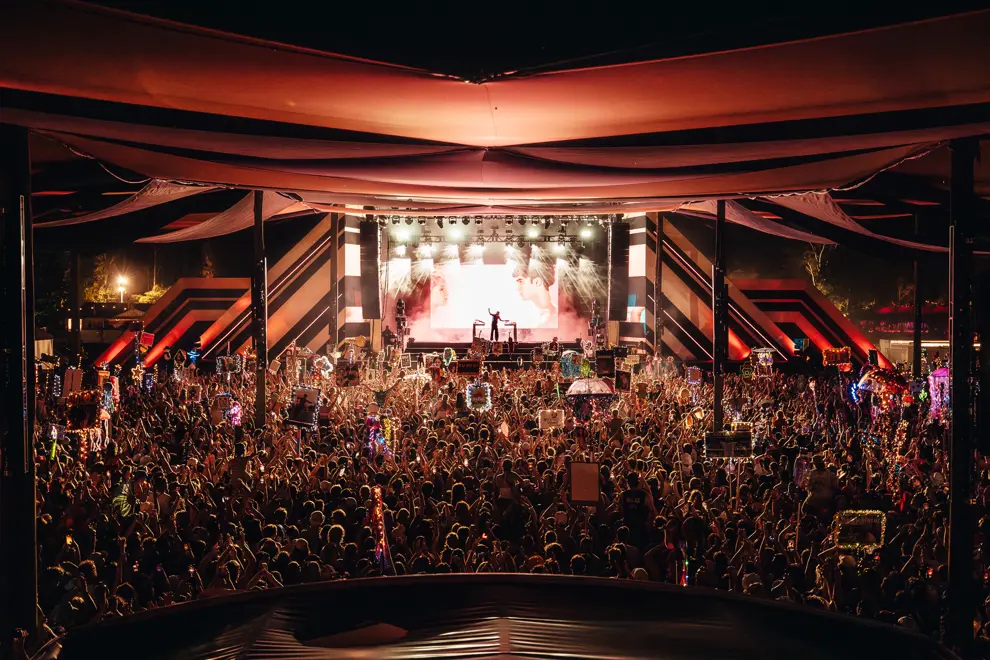
At gigs, you can now witness a sea of punters wearing earplugs. Maybe you’ve heard a horror story, or experienced one of your own, from not wearing earplugs at an especially loud gig (or a major pop concert with screaming fans), resulting in temporary tinnitus.
Maybe you’re in the music industry, playing shows or keeping said gigs running smoothly from the sound desk or backstage, and ear protection has become a necessity. Maybe you’re working the bar at a music venue and need your hearing to stay on point for your day-to-day life.
Maybe you saw the film Sound of Metal on Amazon Prime, which featured the drummer of a heavy metal band losing his hearing and going on a journey to rediscover his sense of self. Whatever your reasoning may be, it’s nice to see people prioritising ear protection in a loud environment. And it’s quite a recent development in human behaviour.
Google Trends backs what we’ve all seen with raw data. Two decades ago, you wouldn’t have seen anyone bar one or two careful punters wearing earplugs to a gig or music festival. From 2004 to today, plenty has changed.
Earplugs on Google Trends
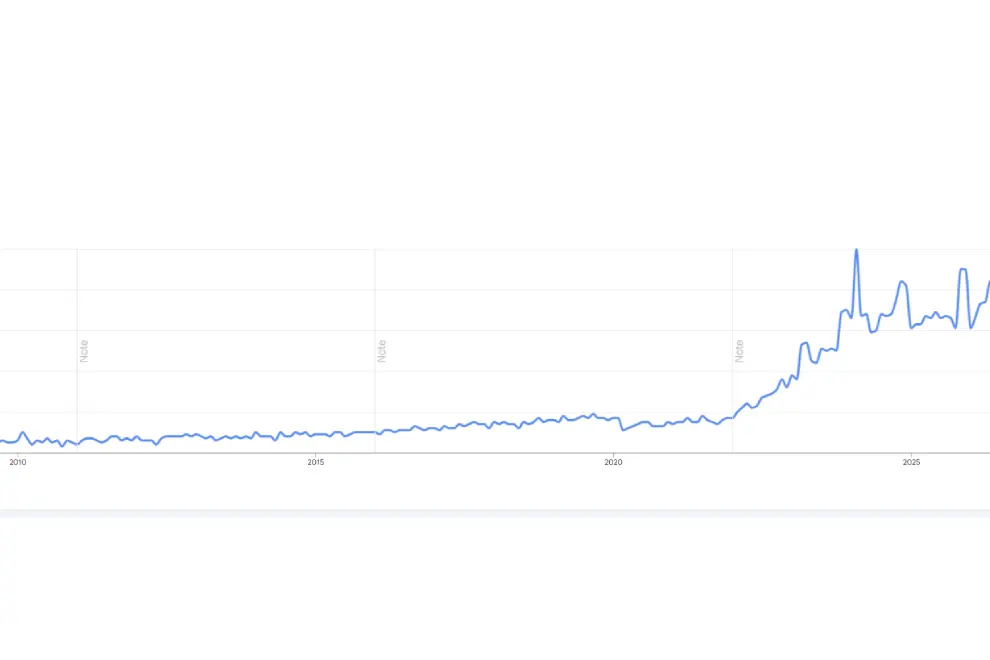
In a graph of search interest over a specific time period, Google Trends shows the data on a relative scale from 0 to 100: zero suggests insufficient data, 50 indicates half the popularity, and 100 signifies the peak interest during a time period.
Earplugs on Google Trends
The search was at 15 in September 2005, followed by a dead zone for months until April 2006, when it sat at 17. After a quiet period of figures hovering from the 5-10 range, the figures jumped up – not very high; under ten – and then down to zero throughout mid-to-late 2007.
From 2008 to December 2015, the figures didn’t get very high, staying around the number of 10. 2017 until March 2020, the numbers were in the mid-to-high teens, then consistently in the low teens, closer to 10 during the height of the COVID-19 pandemic and subsequent restrictions on social gatherings.
The numbers started to climb steadily in 2021 before rising rapidly in 2023.
By February 2024, interest in earplugs reached a rare peak of 100, with the surrounding months quite high (around the 70 range), all while Taylor Swift and Matchbox Twenty landed on our shores in February. Meanwhile, other massive tours stopped in Australia that year, including Olivia Rodrigo, classic rock revivalists Greta Van Fleet, punk band High Vis, a co-headline tour with raucous outfits Dune Rats and FIDLAR, plus British heavy metal icons Iron Maiden.
Another peak of 84 was witnessed in November 2024, and again in November and December 2025 (90 and 89, respectively), when Metallica, AC/DC, Oasis, Jelly Roll, and Ricky Martin all brought arena- and stadium-level shows to Australia.
Since then, the numbers haven’t dipped below 60; in May 2026, the figure went up to 84. And with Harry Styles, Lily Allen, Erykah Badu, Foo Fighters, Ed Sheeran, Good Charlotte, Kesha, BABYMETAL and many others stopping in Australia this year, it’s little wonder why looking for earplugs has gotten popular again.
Popular Search Queries
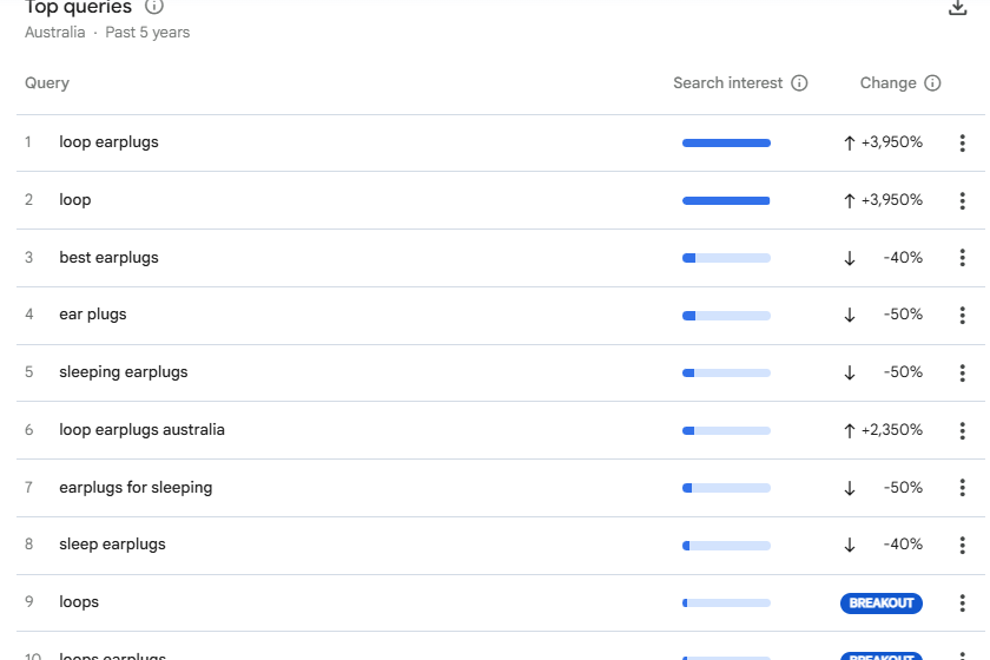
People who searched for earplugs also searched for queries such as Loop Earplugs, Best Earplugs, Sleeping Earplugs, Noise Cancelling Earplugs, Earplugs To Block Out Snoring, Custom Moulded Earplugs, and Earplugs For Kids.
With the emergence of Loop, which launched in 2016, a brand born from wanting to bring something new to the market—something that actively targeted live music and nightlife experiences—delivered not just any earplugs.
Loop doesn’t just protect your ears, but the products are also comfortable and very stylish. What happens when you pair ear protection with fashion? A popular product that actually gets used, and we’re happy to see it.
Earplugs on Google Trends
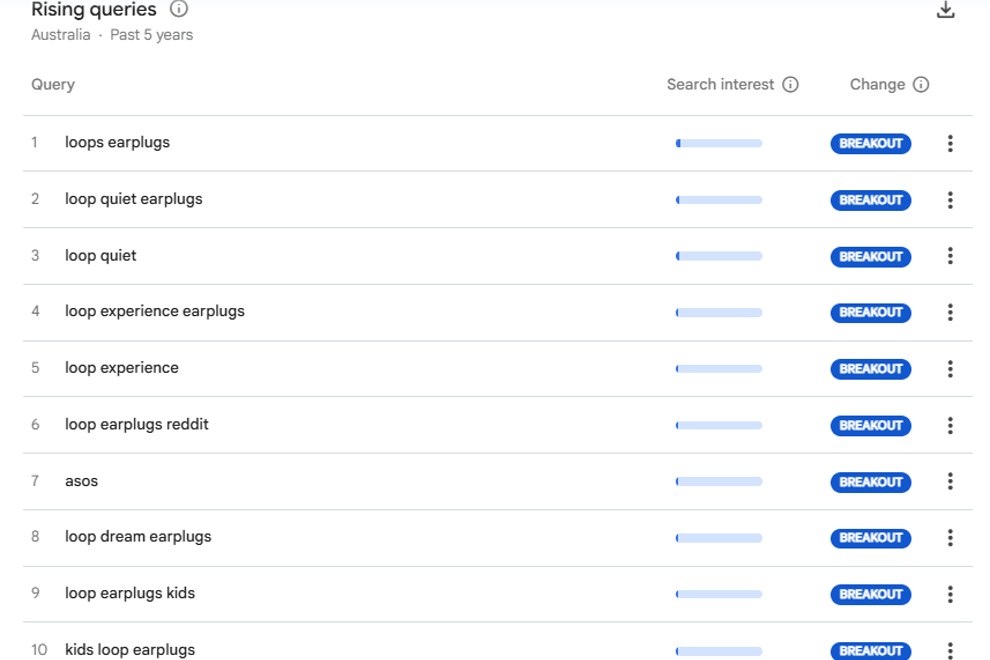
Earplugs on Google Trends
Looking at the data, those searches and the spikes in interest make sense.
With Australia and the world opening back up following restrictions to curb the COVID-19 pandemic, people were ready to get back into the world, whether they were going to concerts or travelling overseas. Plus, with so many resources at our fingertips, who wouldn’t want to tune out their snoring partner if they could? Or get earplugs that feel comfortable, or fit their kids’ ears?
Over on Reddit, it’s clear that conversations about earplugs at concerts have become extremely popular – check out this thread on r/Music. In it, punters discuss their experiences with and without earplugs, expressing relief to not have ringing in their ears the following day, while others even shared that they felt less tired when they wore ear protection.
The Music recently caught up with Sarah Swann, a lecturer in the Department of Audiology and Speech Pathology at the University of Melbourne.
She also works at the Melbourne Hearing Care Clinic, part of the University’s offerings, where she runs the musicians’ hearing care clinic. Her work primarily focuses on managing tinnitus and sound intolerance, as well as musicians’ hearing care.
At Audiology Australia, Swann is the chair of the Musicians Hearing Group, a special interest group that allows audiologists “to share their expertise with each other and facilitate networking in their areas of interest.”
Before transitioning into the audiology profession 15 years ago, however, Swann was a trained, professional classical flautist.
Discussing the changes in people’s behaviour regarding frequently wearing earplugs and other forms of ear protection, Swann points out that she’s noticed “a shift in attitude” for a “younger cohort.”
Swann witnesses young people in particular “wanting to protect themselves, wanting information about how overexposed they are, asking about the different forms of hearing protection and when they should be using them and what they should be using.”
She remarks that, in 2026, people are “a lot more comfortable” wearing earplugs, especially at gigs and other public events, and that professional musicians are also wearing ear protection more often.
“Musicians professionally wearing protection, it’s a lot more readily taken up,” Swann tells The Music. “Whereas, the old guard of musicians, a lot of them – I shouldn’t generalise, but a lot of the old guard had a bit of a negative attitude towards wearing hearing protection when they’re performing and playing and rehearsing because it changes their experience of the music around them, which is absolutely a fair point and it’s something we’re well aware of as an issue with wearing plugs.
“But the attitudes have definitely shifted because of how horrific sound-induced, sound intolerance and tinnitus can be, how impactful it can be, and I think that’s a lot more readily talked about nowadays than it used to be,” she adds.
“So, I think that’s part of the reason, because it’s discussed more openly and there are well-known musicians who openly discuss their issues with noise-induced hearing loss, sound-induced hearing loss and tinnitus. I think that has brought people around to the idea.”
Plus, she notes, there’s a lot more information out there about “gold-standard” hearing protection, which Swann says is custom-made to fit your ear, and filtered.
“It’s easier to find that information and to find reports that are basically validating their decision to go and get that,” she says.
In February 2024, Taylor Swift brought her Eras Tour to Australia. If you don’t remember the madness surrounding that tour, here’s a refresher: talk about the Eras Tour was everywhere, all over the TV, newspapers, and the internet. It was the hottest ticket in town. And if you didn’t have earplugs, you risked hearing loss from the screams of hundreds of thousands of Taylor Swift fans.
While Taylor Swift was in town, the ABC published a news piece about why it’s important to protect your hearing at gigs and festivals. That piece arrived after a study from Hearing Australia found that 70% of people aged 18 to 35 have experienced tinnitus, and 16% have experienced it more than once a week.
Additionally, nearly half of people aged over 75 and about one third of people aged 64 to 75 have experienced hearing loss. Tinnitus Awareness also notes that approximately 2% of Australians (or 500,000 people) describe their tinnitus as “very distressing.”
Audiologist Brooke Rose, from Audiology Australia, previously told triple j about the safety of decibel levels before the potential risk of hearing damage.
“We say at about 85 decibels, which is the scale we use to measure loudness, at 85 decibels you’ve got roughly eight hours of safe listening before you could potentially be doing hearing damage,” Rose said.
Adding that most festivals feature sound upwards of 105 decibels, and depending on where punters stand, it could be dangerous, Rose affirmed that “You should be using earplugs, for sure, when you’re in places like that.”
Hearing damage goes beyond those of us who regularly attend music events. Brian Johnson, vocalist of the juggernaut rock outfit AC/DC, famously stepped away from touring for years as he overcame hearing loss.
In 2020, Johnson revealed that he underwent treatment for three years, which “uses the bone structure in the skull as a receiver.” Discussing the hearing loss that caused him to leave the touring life in 2016, he told Rolling Stone, “I couldn’t hear the tone of the guitars at all. It was a horrible kind of deafness. I was literally getting by on muscle memory and mouth shapes.”
He added, “I was starting to really feel bad about the performances in front of the boys, in front of the audience. It was crippling. There’s nothing worse than standing there and not being sure.”
Drummer Rickie Mazzotta, from the Philadelphia band mewithoutYou, was very open about his experience with hearing loss and moving to wear ear protection before the band’s final performances.
In a 2020 interview with Earmark Hearing Conservation, he explained, “Over the past six months, I have had several health issues that called into question whether or not I could ever perform on a stage again. The ones that pertain most to the job that I do with mewithoutYou are moderate hearing loss and the development of Tinnitus.”
He added, “Had I only gotten used to protecting my ears whenever I practised, that may have translated over to the live show, and potentially, I wouldn’t have gotten myself mixed up with the never-ending ringing that is now in my ears/brain.”