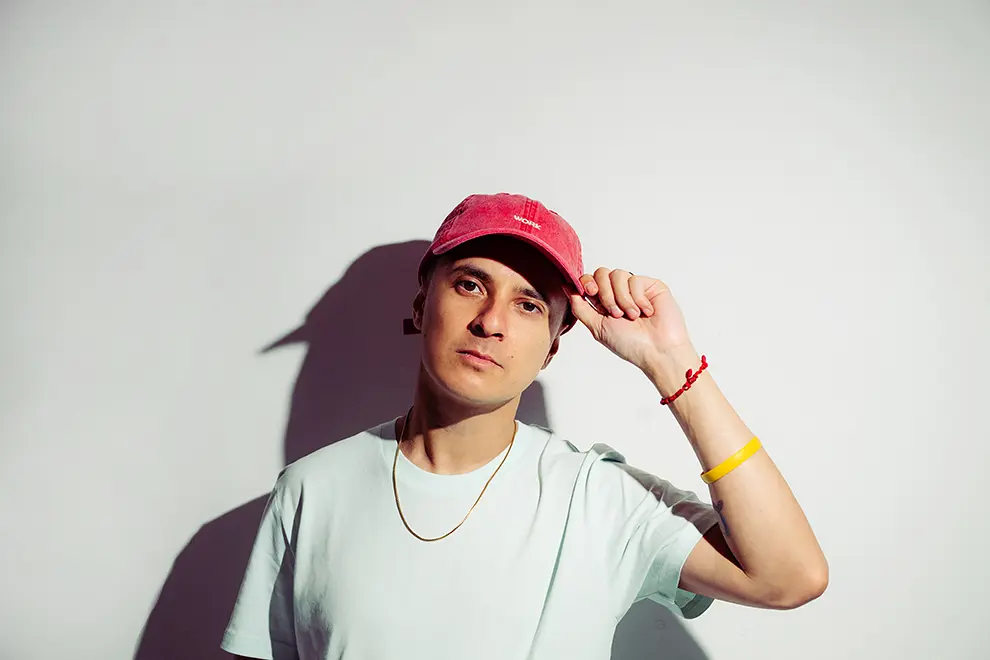
 DOBBY Profile
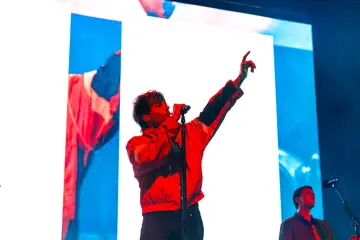
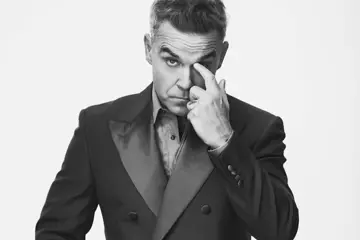
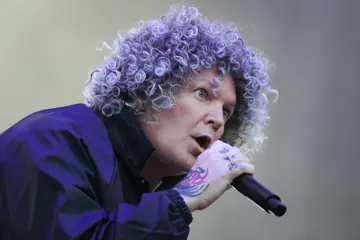
Rhyan Clapham – a proud Filipino and Murrawarri composer, rapper, producer, and drummer who releases music as DOBBY – is following up his critically acclaimed, ARIA-winning debut album WARRANGU; River Story with Marshmallow.
“It was a seven-year-long project and a lot of inward journey, for sure,” DOBBY recalls of making Marshmallow. “I actually worked on this the same time as when I started [previous album] WARRANGU. So, yeah, both albums were kind of running side by side.
“WARRANGU; River Story was this community album, there was this cultural speaking and advocating for so many Elders and Aunties and Uncles who want this story to be told. But this album [Marshmallow] is deeply personal to my story, and yet it's still so universal. And I think there's something for everyone in this album, ‘cause we all have this dream and these passions and these regrets and how we navigate that is key.
“So for me to make an album like this, it's really for my inner child, it's for my younger self, because I know that he would want this album to be out. And that's why I love how different it is from WARRANGU.”
The Experiment That Inspired The Title
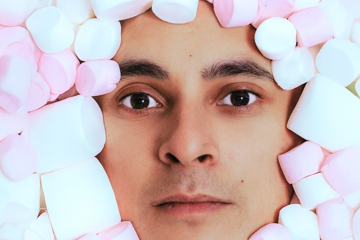
The title of DOBBY’s latest album references a Stanford University study on delayed gratification, which was conducted by psychologist Walter Mischel in 1972.
Each child subject was left in a room with a single marshmallow for about 15 minutes. The researchers let the children know they could eat the treat, but if they waited 15 minutes without giving in to the temptation, they would be rewarded with a second sweet treat.
Decades of follow-up studies on these participants found that the children who exercised self-control and waited it out tended to have better overall life outcomes. However, the predictive power of this marshmallow test has since been challenged in various studies.
“The marshmallow experiment – waiting 15 minutes for a second marshmallow – is the equivalent of an adult waiting an extra hour for their coffee, you know?” DOBBY points out, laughing. “It's hard… Whether it be going to the gym when you don't want to, avoiding that chocolate muffin, resisting temptation or whatever it is, it is a universal struggle. And that is what this album speaks to.”
Although DOBBY himself never participated in this study, he reveals, “I've talked to my nieces and nephews about doing it when they were young, and you hear all of their voices at the start of the album.”
Straight Outta Warilla
“The first song that I put up on MySpace was Warilla, which was about Warilla, where I grew up, south of Wollongong. And, yeah, it really threw me into a very different world, you know, ‘cause I'm a musician. I'm a jazz drummer. I was very nerdy, very geeky, but writing a song about Warilla and my understandings of the area kind of put me on the outskirts of the gang scene, which was scary at times and a big lesson for me, yeah.
“Especially locally, that song went gangbusters in terms of all of these kids and adults – whoever was proud of the postcode area kinda thing. They had it on their Sony Ericsson and Motorola phones, and they were sharing it with each other before the internet became social-media swept.
“It was a really interesting time and gave me a false sense of what was happening musically, if that makes sense.”
“I Was Like A Little Entrepreneur Trying To Be Eminem”
“So I put that [Warilla] and a few other songs on MySpace. I then made a CD of 13 or so tracks, I copied it at my local CD duplication store with the money I saved up – $300 – got a box of CDs, printed out labels, put a fake barcode on the back and I started to sell them at school and the bus stop.
“I was like a little entrepreneur trying to be Eminem and selling them for $10 for the CD, and $12 for a CD and a USB. Very DIY. And that was how I cut my teeth, I guess, as a rapper. Yeah, I loved it.”
Reconnecting With “This Spirit Of An Inner Child”
“As a 15 year-old, I was definitely young and carefree and so innocent; you know, before all the parking fines and rent and taxes and all of the stuff. It was just me. My relationship with me and the music, it was very, very potent and passionate. And not to say that I'm not passionate now, but it's so much more complicated as an adult.
“So me, in this current day – this has always kind of been the longing to be able to reconnect with that time and this spirit of an inner child, you know? And that's why I did go back in time in the story of this album to save an album that I neverreleased in 2009 and bring it back to the current day.”
Divergence Point: “Don't Fuck It All Up Again, Like 2009”
“In the track 2009, you hear this little skit of young me performing at a school assembly and completely forgetting the lyrics and messing up. This is based on a true story – it really happened – and I tried to get the footage of it happening in 2009, but I couldn't get it.
“But it was a regret that stuck with me. And if this album is talking about regrets and, you know, what conditions us to be the people we are today, this is definitely formative – it was a moment, for me, that still keeps me up at night from time to time.
“And this is the thing, I say, ‘Don't fuck it all up again, like 2009’ – as a 32-year-old, in 2026, I'm still thinking about this. And so that is the whole point in time that hinges upon me travelling back in time to sort of right the wrongs. But what I learn is that I can't change the past and that, really, it's just about accepting and embracing the growth.
“Keep that relationship with your younger self alive, because I believe that is where all your passions lie.”
Stream: “Very Much A Nod To” The Neptunes And N.E.R.D.
“I'm a massive fan of Pharrell [Williams] and Chad Hugo. I think they are just such powerful – remember when they pretty much monopolised, like, 40% of the radio at any one point in 2009?
“Probably with all of the artists they worked with. I was so into their sound. So yeah, Stream is very much a nod to their sound and also the type of music I was listening to at that time, 2009.”
A Sonic Bridge Between WARRANGU And Marshmallow
While listening to Marshmallow, you just might recognise a pretty, recurring piano melody that first appears in 2009 before resurfacing in a couple more album tracks. Did this motif – childlike, like the soundtrack to a dream – also appear in WARRANGU; River Story?
“That's so great that you acknowledge that, because I have sampled myself,” DOBBY confirms, looking delighted. “That is the same melody from the previous album – same key and everything. So in Language Is In The Land and the first track of WARRANGU [River], you hear this motif.
“That's the riff, it’s bom, bom-boh, bom, bom, boom [he traces shapes in the air to visualise this melody], as I'm walking through this dry river bed with Brad Steadman [Ngemba knowledge holder and WARRANGU’s key cultural advisor].
“And the reason I wanted to bring it back is because I wanted to bridge the worlds together, but also to speak in particular to the last track of Marshmallow, which is 80,000 Storeys – speaking to just how incredible our history is on this land, you know? Challenging the notion of time going from left to right, especially because this album is a time travel story.
“Time really goes up and we are just the latest people to be on this land. And this is a building 80,000 storeys tall. And I bring in the – [repeats motif] duh-Dah-DUH Duh-duh-duh – which, you know, going back in time, you hear that across the album in Lessons, in 2009 – so, yeah! That's great. I'm glad that you heard that.”
“Once I Discovered The Drums, It Was Game Over”
When asked whether his relationship with the piano has changed over the years, DOBBY admits, “Oh, yeah, ‘cause I started off young. I started off at the age of seven, and I loved it, but it was hard to keep practising. There's no shortcuts. You've gotta practice your scales and your shape and all of this stuff – that was fun.
“But what was really life-changing for me was the drums, because once I discovered the drums, it was game over. I loved it. I played every day. It was, yeah, my bread and butter at the time.
“And thank God I still tried to keep up the piano, because obviously they go hand in hand with each other: melody and rhythm and percussion. And so that has made me the musician I am today. And it's opened up so many more doors than I ever would have thought. Being a composer, writing for everything: theatre, dance, screen, light installations, drones – it's all because of the keys and the drums.”
We can’t help but wonder whether drapper (drummer/rapper), a term DOBBY coined, took off.
Has he heard it used outside his circle? DOBBY chuckles, before contemplating, “I think I'm the only person that says it. But, yeah, I definitely take inspiration from drappers like Anderson .Paak. I mean, he's the biggest example of people who would just have so much pocket that they can rap and they can sing freely, almost completely independently of what their limbs are doing, which is just incredible.
“Questlove is another amazing example of this. Even though he doesn't rap, he commands from the drum kit and leads the band, The Roots.”
“In Artists Like Black Eyed Peas, I Felt Seen”
“I definitely use the creative expression of music to figure out how I navigate myself in the world. Very early on, I couldn't see myself as a Filipino-Aboriginal person in the world. But in artists like Black Eyed Peas, I felt seen.
“There's an artist by the name of Apl.de.ap, he's the Filipino rapper in the Black Eyed Peas, and I just remember how excited my mum was when I showed her his music. She even took it to the local radio station with her friend, who ran a program at the time, and she said, ‘I've got my son's CD,’ and they played the Apl song about Filipino diaspora.
“And that was the first time I went, ‘Oh, my God, music is powerful,’ you know? Community and representation in music is so powerful. And that's one of the biggest inspirations for why I became a musician.”
“I Rap And Sample My 12-Year-Old Self”
“A lot of people contributed to the [Marshmallow] sound. I play drums for three or four of the tracks, which was so much fun. And I've also got one of my favourite drummers in the country, Tully Ryan – he's across five of the tracks.
“I've got some amazing string players, led by Freya Shack-Arnott. I've got Jonathan Zwartz on the double bass, Tony Buchen on the flute, Zeppelin Hamilton on the guitar. Mindy Kwanten, DYAGULAR, on vocals across four of the tracks, Josh Pyke, Beckah Amani – even my younger self, I rap and sample my 12-year-old self [≠ (Free Your Mind) – it’s cuteness overload]. So it's as real as it could be, conceptually as well.
“My teachers are in it. I sample my jazz teachers from 2009, where I go back in time, too.
“So I have a Foley person [Daniell Johnston] who does the Foley work, yeah – all of the sound effects that you hear.”
When asked whether any unlikely objects were used to create sound effects, DOBBY offers, “Oh my God, there's a moment – it's in the title track – where I'm trying to make a distraction to get past a class and not be seen, as an adult Rhyan.
“I throw a pen at the fan and it ricochets, and we actually used one of those… [mimes flexing a wobble board back and forth]. A wobble board? “Yeah, a wobble board – that was the best. So, yeah, that type of stuff. It's very comedic, very fun. And, yeah, the process of making this was really fun.”
Good For Nothing: “A Spoonful Of Hatred Every Day Leads You To Feel Self-Critical”
“In my song Good For Nothing, I've just sort of chronicled all of these things that made me feel like I was good for nothing: the bullying, the racism, witnessing my mum's racism as a Filipino woman that came to this country in 1985, you know, the type of stuff that she was subjected to to assimilate into white culture and how that rubs off on you.
“And it's, like, a spoonful of hatred every day that leads you to feel self-critical and doubt yourself, and not speak up in the room or whatever it may be.
“In Good For Nothing, and then the third single, Sabotage! – and throughout the album – I'm picking that apart; I'm trying to sorta dismantle that and really challenge those notions of self-doubt and embrace my growth.”
My friend thought it was funny during Kevin Rudd’s apology to Sorry me ironically – it’s good for nothing/My friend likes to brag about his parents’ annual tax and that he’s paying for my kind of people – good for nothing.
When asked whether these lyrics were based on his lived experience, DOBBY confirms, “Absolutely. The fake apologies during the national apology, the petrol-sniffing jokes, the shaming of – you know, ‘My taxes pay for your blah-blah-blah’.
“The type of things that mum went through – she was forced to eat lamb; a type of food that she's not used to from her country. It all adds up. And it speaks to a national narrative of what the Australian identity is.
“And you know what? It's ever more relevant, because now we're hearing a call for the monoculture of Australia. It's like this hangover of white Australia that is rearing its ugly head again. And so these stories matter even more, probably more than ever before.”
Immortalising Kim Dalton In Song
“[Kim Dalton] was my taekwondo teacher when I was a kid – one of the strongest people I knew. She was Australian champion and she was set to compete at the 2004 Olympics in Athens, but was diagnosed with cancer of the adrenal cortex the same year. And only three people a year are diagnosed with this in Australia – it's very rare: ACC, adrenocortical carcinoma – and she passed away in 2005.
“I released Kim's Song on the 20th anniversary of her passing as, I guess, the introduction to this album. The reason I made this song in the first place is because she left such an imprint on me as a young fighter, too.
“She was the person that called me DOBBY – that nickname came from her – and it just stuck with me. So this fighting spirit that she gave me, and left me with as a legacy, is still the fighting spirit that I use to perform as DOBBY today. She's such a role model and an inspiration to so many people. And I can't talk about the story of Marshmallow and my younger self without bringing her into it.”
When asked whether he initially took up taekwondo to build confidence and help him stand up to bullies, DOBBY replies, “100%, yeah. Taekwondo and hip hop definitely saved my life. I used it to get out of being mugged a couple of times – I just kicked my way out – and it's because of the self-defense that I learned, 100%.
“I've gotten out of some sticky situations because of that in Warilla. But also on a symbolic level, it's helped me connect with the music as a fighter and bring in this discipline as well. There's so many different rewards that come from it, so many blessings.
“One of the things that Kim did after she was diagnosed is she wanted to jump out of a plane and skydive in Wollongong, and I did that to honour her ambition and her courage. I was like, ‘If she jumps out of a plane, I'm jumping out of a plane, too.’
“So, yeah, I had that as part of the music video: we put Kim jumping out of a plane side by side with me jumping out of a plane, at the same place in Wollongong. And it was euphoric, actually.”
“Success Doesn’t Equal Self-Worth”
DOBBY says the ‘≠’ in his song title ≠ (Free Your Mind) “speaks to a core truth: success doesn’t equal self-worth”.
“If we keep relying on the accolades and the pressures of external validation, then it's not fulfilling within,” he elaborates. “I'm definitely speaking to myself, as well – because I'm a victim to that – and I definitely haven't mastered this yet, ‘cause I am still learning how to master my people-pleasing tendencies and upholding my boundaries.
“And this is why this album is so important to me. There are so many lessons throughout, but it's not like I've learned them; it's a dynamic relationship. It's something that we have to remind ourselves, day by day. So, yeah, there's a lot to it. There's layers to it.
“It's really about speaking to my own experiences – that's probably the only place I could feel comfortable speaking from – and if that resonates with people, then it resonates with people, you know? Anything I say is really something I am, and should be, practicing: practice what you preach.
“Because, again, it's a universal thing. We can only be ourselves, you know?
And that's a lesson definitely learned from WARRANGU; River Story. In the track Ancestor, I say, ‘Learn your past, at least that's the truth/ ‘Cause all of these rivers, they lead back to you.’ And that was about knowing yourself, yeah.
“Just like WARRANGU, I'm trying to build this world that hopefully means as much to the listener as it does to me. Songs like BOUNDARIES and Sabotage! are ever-important for me in this adult life. So it's definitely a gift that keeps on giving.”
“Funding Bodies, I Hope You're Reading This…”
We would love to see the entirety of Marshmallow turned into an animated film. Would that be to DOBBY’s liking? “Yeah,” he beams. “Funding bodies, I hope you're reading this, because that would be amazing. 100%.”
DOBBY’s Marshmallow is out now.
This piece of content has been assisted by the Australian Government through Music Australia and Creative Australia, its arts funding and advisory body