If you want to become a teacher, carpenter, plumber, or electrician in Australia, the pathway is crystal clear. You enrol in an accredited VET qualification, get government-subsidised training, work under structured national standards, and enter the workforce with a recognised trade ticket.
If you want to run a live venue, manage an artist, curate showcases, or build a music business, you are expected to figure it out in dark rooms by trial and error. It is an absurd double standard.
Recent federal government data reveals that Australia's cultural and creative activity contributed a massive $70.3 billion to our national economy in 2024 to 2025. Within that, music alone generates $10.76 billion in revenue.
Music education itself is an economic powerhouse, generating $1.79 billion annually while delivering an 84% direct GVA return, which is the highest of any music subsector. Yet, despite this massive economic weight, we still treat music workforce entry like a sink-or-swim hobby.
After 20 years of digital disruption, a global pandemic, lockout laws, and a cost-of-living crisis, we can't expect the next gen of young music professionals to "learn on the job" without a safety net or formal framework. The legacy model of throwing emerging artists and managers into the deep end without structural support has resulted in widespread industry attrition, mental health burnout, and severe financial instability.
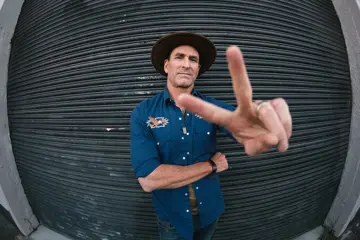
My career bridges both sides of the coin: pairing creative direction with business acumen, all powered by an entrepreneurial mindset.
Ask anyone running a venue, an independent label, or a touring agency, and they will tell you the same thing: Australia has endless talent, but a critical shortage of workforce business skills. Higher education keeps churning out graduates with theoretical knowledge, but very few leave with the commercial acumen needed to run a sustainable creative enterprise. Without practical training in copyright monetisation, live operations, and digital rights, we are setting young music professionals up to fail before they even start.
That self-taught, hands-on approach kept me afloat through decades of market shifts, but expecting the next generation to survive on trial and error alone is a recipe for lost potential.
The modern music landscape is also far more complex than it was decades ago. Streaming algorithms, global royalty structures, live production technologies, and digital marketing require sophisticated, multi-disciplinary expertise.
Meanwhile, senior secondary music enrolments dropped 21% nationally between 2015 and 2023 due to systemic ATAR scaling penalties, while more than 40 creative arts university courses have been shut down since 2018. Expecting a young artist or manager to master these complex commercial systems while surviving a cost-of-living crisis without formalised training is unrealistic.
To build a sustainable creative economy, we must treat music education with the same rigour as any recognised trade. That starts by standardising the entry point into the music business through the national VET framework. Just as a carpenter needs a recognised Certificate to step onto a commercial site, aspiring music professionals need a standardised benchmark across all five industry sectors before they take on real-world financial risk.
Crucially, this requires flipping the traditional classroom completely on its head. We don't need tertiary institutions delivering academic theory from outdated textbook modules. We need industry providing education.
Students shouldn't sit in lecture halls writing theoretical essays about how record labels used to operate in 1995. They need to step into an active incubator. Under an accredited Certificate IV or Diploma framework, vocational training must be delivered through real industry operations.
Emerging music leaders should be running front-of-house live sound at commercial venues, producing tracks in active studios, handling digital distribution via independent labels, and managing commercial releases before they even graduate.
When you equip young creators with business acumen alongside their craft, you give them a flexible portfolio career that can withstand continuous market disruption. We have seen firsthand how students who are trained in real-world, commercial environments step directly into running their own booking agencies, launching independent labels, managing touring acts, and taking on venue operations because they were taught how the industry actually works on the ground.
It’s time for policy makers and tertiary institutions to recognise that creative workforce development requires the same structural support, subsidised funding, and accredited standards as Australia's traditional technical trades. Without dedicated vocational pathways, we risk pricing out diverse talent and losing an entire generation of creative leaders.
Until we standardise a practical entry point through education and align creative and business training with recognised trade frameworks, our industry will remain a hot mess of financial instability and lost talent.
Songs are the lifeblood and heart of this business, but business skills are what keep the lights on. It’s time government policy and tertiary education treated Australia’s music workforce like the skilled trade it truly is.
Matt O’Connor is the Founder of the Sydney-based educational institute, the Oxford Creative Academy.
Sources:
Department of Infrastructure, Transport, Regional Development, Communications and the Arts / Office for the Arts. Australia’s cultural and creative sector continues to grow (Media Release, 21 September 2026). Data sourced from the Bureau of Communications, Arts and Regional Research (BCARR) Cultural and Creative Activity Satellite Accounts, tracking $70.3 billion in direct economic contribution for FY2024–25.
Music Australia & Creative Australia. The Music Education Ecosystem in Australia: More than notes on a page (2025/2026). Sourced from Table 1 (Economic analysis of Australian music education), identifying $1.79B revenue and $1.495B direct GVA (84% GVA-to-revenue ratio).
Australian Curriculum, Assessment and Reporting Authority (ACARA). National Year 12 Enrolment Datasets (2015–2023). As documented in The Music Education Ecosystem in Australia (Spotlight 4), identifying a 21% decline in senior secondary ATAR arts/music enrolments.
National Advocates for Arts Education (NAAE). Creative Arts and Arts Education: A National Tertiary Snapshot (2018–2025). Audit documenting the closure, merger, or discontinuation of over 40 creative arts university degree programs across Australian public institutions since 2018.