I keep hearing this term "AI music", but I think it should be acknowledged that what they're really talking about is just the recording.
Recorded music has been around for about a hundred years now, and that collision of music and technology over the past century has spawned some truly glorious works of art, but music has been around forever. We are now rediscovering what we mean by the word "music" and whether music matters to us.
In The Hunchback of Notre Dame, Victor Hugo says in his description of Paris that, before the invention of the printing press, the realm of the poets was architecture. This idea of poetry having a realm at all had never occurred to me. Then again, the word "genius", as it was originally intended, was never used to describe a person.
You wouldn't say, "She is a genius!"; rather, it was something floating about in the ether, and would occasionally drift down into a person, or a song, or a ceramic bowl. In this way the words, music, poetry, and genius are all the same, and all alive at once.
When I read the more electrifying passages of Henry Miller's prose, I can hear music. It's a kind of pulsating cacophony I can't quite put my finger on, but it's there.
One of the greatest musical experiences of my life was in a tiny apartment in Glasgow. After a wonderful weekend and a bottle of Buckfast, it came out that our friend, as a young girl, was taught old Celtic hymns by her Father. Immediately we asked, "Can you sing us one?" She resisted, but we persisted.
She steeled herself and, in the silence, sang this haunting melody, unaccompanied, in a language that I don't understand. It was thrilling! She is not a singer or a musician in any sense, but in that moment, she had music! It was hers, and that is what we are trying to reach for.
My generation has seen the end of so much. My time making music has seen the end of so many live music venues, the end of so many scenes, the end of people buying music, the end of so much incidental recording work for musicians in TV and film, the end of a music industry which invests in musicians, and the beginning of an industry which wants the business of people like me (because there are so many of us) who want to give some air to the things we create.
I wasn't thinking of these things when I wrote The End of Time all those years ago. In fact, I was full of hope, sipping Armagnac on a train hurtling from Madrid to Barcelona during Deep Sea Arcade's first European tour. It was just a cute little poem, and it wasn't until weeks later, back at home, that the words began to want to be sung.
I didn't have a band when the name The Tambourine Girls popped into my head, but I liked the imagery those words created. It reminded me of Bob Dylan's John Wesley Harding, an album which makes no sense to me, but is full of imagery. I see mythical, mystical creatures dancing on the plane of existence where universes expire and are reborn.
We lost everything when we lost Nick Weaver. We were never a successful band, but we didn't mind because we had each other. It meant so much to me that he loved my music, and when someone knows you and sees in you the things that you want to see in yourself, that's all you need.
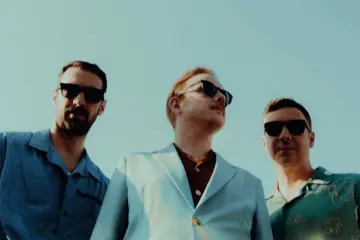
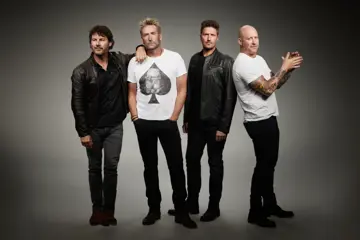
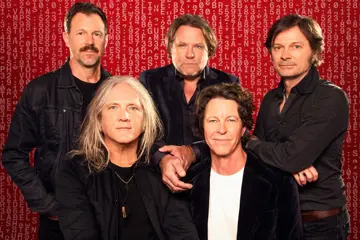
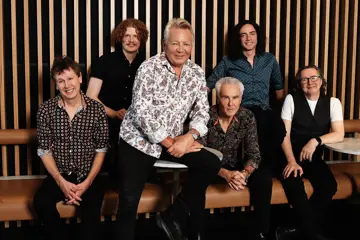
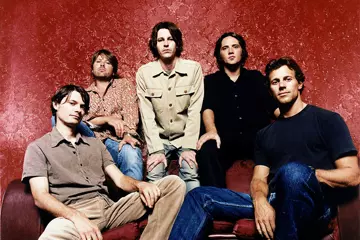
When he left, it was as if he took those things with him. Eventually I realised that what Pat, Carlos, and I share is something truly rare, and so now we have a new album. It might be the best we've ever made, and it was pure joy to make it.
At the age of 43, I sometimes wish I could quit music. There's no need for what we do, and there's no money for what we do... but life keeps on happening, and ideas keep on coming. Ideas that won't take no for an answer. They pester you and fill up your brain until you put them down or record them in some way.
Do the people who make "AI music" outsource their lovemaking, too? All the people that music has brought into my life, and all the times we've shared together! The way music speaks to everything we know, and everything we don't know. These things are hard to give away to the machine.
In my early twenties, I happened to read On the Road by Jack Kerouac, followed directly by Cormac McCarthy's The Road (they were both on loan to me, so I wanted to give them back to their owners). In Kerouac's novel, everything seems infinite. Egad! Be wild! Let yourself go, and everything is waiting for you.
In contrast, McCarthy's story is bleak. Everything feels finite, and already gone. To read them back to back, you couldn't help but wonder: "If On The Road is the book of that generation, is The Road the story of ours?" The years that have ensued seem to have gone that way, especially when it comes to music, but there's this line from McCarthy, who seems to enjoy creating landscapes so bleak that the only beauty which can exist is his own writing:
"When you've nothing else, create ceremonies out of the air and breathe upon them".
This is what we do.
Song Meaning & Context: The End Of Time
The essay delves into the reflective, poetic nature behind The End Of Time, framing it as a poem originally drafted on a train in Europe that eventually demanded to be set to music. The text touches on themes of human connection, grief over lost companions like bandmate Nick Weaver, and making art out of air in the face of an uncertain, rapidly changing world.
Here is an excerpt from the lyrics written by Simon Relf:
"So beside you in the morning sun/ I rest my weary mind/ And wait until the evening's light brings back the end of time"
You can find the full, licensed lyrics for The End Of Time by searching for the song on Google.
The Tambourine Girls’ new album, Hold Your Horses, is out now.