“Wholesale theft and disregard.” “Formidable enemy.” “We have a lot of power.”
These were just some of the strong words from the industry heads of APRA AMCOS and ARIA towards the explosion of artificial intelligence and the battle to save the music industry from the technology frontier.
The early morning panel on the topic of AI and ‘Artistic Intelligence’ couldn’t have had a stronger line-up. Moderated by Kristy Lee Peters, the stage included ARIA/PPCA CEO Annabelle Herd, APRA AMCOS CEO Dean Ormston, and artist, label owner, and active industry advocate Holly Rankin (aka Jack River).
All members of the panel have been involved in taking the case for protection of human-made music and art to the federal government, pleading a case that AI companies should not be given exemptions for paying royalties to artists for the content they have ‘scraped’ and used to train Large Language Models that are learning how to create music.
They argue that the AI companies such as OpenAI and Anthropic are ignoring and trying to bypass established licensing pathways which exist to protect the ownership of music, not only in Australia, but around the world.
Rankin offered a simple top line to the argument particularly referring to the recent investigation by The Atlantic confirming that songs by Australian and New Zealand musicians are among the millions which have been stolen for use in AI datasets.
“What it means is that your stuff's being stolen and you didn't get paid for it,” she explains. “And these companies don't want to ask for your permission or pay you at any point soon.”
And by soon, she means ever. As she went further to detail the pressure that the government is facing from the massive AI companies, “these companies have been pressuring like, like insane, insane pressure on our government.”
She attested that over a dozen lobby groups have been spending millions of dollars to pressure the government to give exemptions to AI companies so they do not have to ask for permission to access artist’s works to train their tools.
Rankin continued, “if that happens, then if a company doesn't have to ask your permission to train with your content, then your content isn't valuable anymore.”
It’s a scary proposition for an industry that has already battled through multiple threats from technology over the last thirty years, especially since the proliferation of the Internet.
Rankin went on to note that the rise of Napster and Limewire in the late ‘90s was a significant – and in a lot of ways, similar – call to action for the recording industry, but that technology companies managed to transition from illegal downloads to the streaming model that exists today.
So “why can’t AI companies do the same?”, she asked. “We can do national security, we can cure cancer, AI is going to save the entire world and do absolutely everything except we can't figure out how to licence music content!”
Ormston elaborated on what an exemption from the government could mean and how it has always been a battle with every new technology introduced to the country, including Facebook and TikTok.
“With every platform that has come to Australia, even if there's licences in place in other parts of the world when those platforms have arrived here, there has normally been an argument or debate about what they should pay here and in some instances, it's taken us years and then we're back charged them and made them pay from day one.”
Ormston went on to say that if the government backs down to the AI companies and weakens copyright laws in Australia, then the industry bodies are restricted from bargaining. “We've then got both arms tied behind our back,” he noted. “There's nothing to negotiate”
With technology evolving at a rapid rate, not only have we seen Australian artists' music ‘stolen’, but AI generated music has been played regularly on commercial radio and reached our charts.
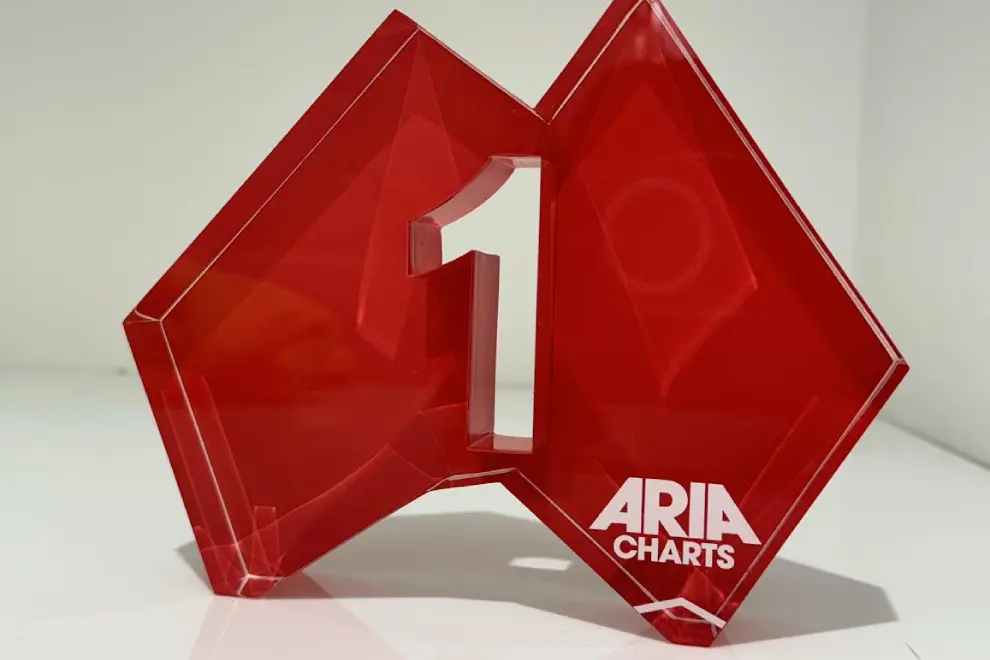
ARIA, meanwhile, has only just confirmed that tracks that are wholly generated with artificial intelligence will not be eligible for their charts. Herd explained that the reaction to the decision has made headlines around the world.
“I knew it would get quite a bit of local attention because of that particular song that I'm not going to name that has been in the charts through gritted teeth,” she began, “but I did not realise how crazy viral globally this was going to go.
“I think it shows that when you push back a bit the public really responds and not just in Australia, but this story has been everywhere.
“It's gone to the UK, Canada, US, Latin America, Europe, Africa, Asia and the overwhelming commentary is positive,” she added. “But the negativity is that we didn't go far enough!”
The panel were careful not to be completely ‘anti’ Artificial Intelligence, with Ormston indicating that he hopes to use AI in the APRA AMCOS business to help with the arduous task of identifying music in film.
Herd added that AI is helping smaller labels, indicating that it is helping to “level the playing field” for them with regards to PR and marketing. There was also acknowledgement that AI is a popular tool within music-production itself and should not negate a track where it is partially used in creation.
The panel were also sure to highlight that whilst AI generated music may be inevitable, it is up to industry to label how a song is made. As Rankin articulated, “it’s like when you buy something off the shelf in a supermarket, it has the ingredients on the back.
“Generally as a consumer, you want to know if there's artificial ingredients or a shit tonne of preservatives in that food and maybe you decide it's not good for me – that maybe I don't want to consume it. And I think that's what is incumbent upon us, right now, as artists and industries, to put the ingredients on the label, and let the consumers decide.”
The panel attempted to look towards positives in the AI space, not just in its use but in the world coming to an agreement on how AI, licensing and human creativity can all live side by side.
In June, the Paris Commitment was signed by global rights organisations to “send a united message from creators around the world that human creativity must continue to be valued, respected and protected."
As members of the panel continue to take the fight to the government in an attempt to protect artists' works, the industry will be watching closely in a hope that any attempts to water down copyright laws or offer exemptions to royalties will be avoided for the sake of music, art and humanity.
Rankin rounded out the discussion, asking the important question in response to an audience question about students who are using AI to help create music.
“What world do you want?” she asked. “What are they being inspired to do? Sit in front of a computer? Or do you want those kids to be inspired by real humans and have the ability to go out and play and tour? What kind of society do we want to be inspired to create at the end of the day?”
“We can be philosophical,” she concluded, “but we also have to remember humanity.”
This piece of content has been assisted by the Australian Government through Music Australia and Creative Australia, its arts funding and advisory body