It's probably fair to say that one of the biggest issues facing Australian music – and frankly, music in general – of late is the topic of AI.
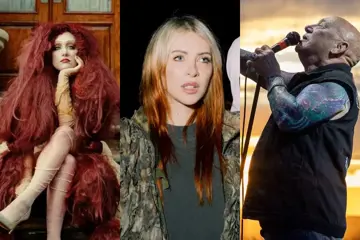
This past month has seen plenty of discussion surrounding the removal of the human from the music-making process, with Josh Fawaz heading to the top of the radio airplay charts with his version of Madonna's Like A Prayer.
Notably, the track attracted plenty of criticism for its apparently AI-adjacent characteristics, and while Fawaz himself had admitted to only utilising artificial technology as a "tool", requests for clarity on the topic went largely unanswered until AI credits were added to the song on streaming platforms such as Spotify last week.
For Spotify, the topic of AI has been one they've been facing for some time now, and one that Sam Duboff – Spotify’s Global Head of Artists, Marketing & Policy – was eager to address while in the country last week.
For Duboff – whose day-to-day is spent liaising with numerous individuals including artists and their teams – he explains that the topic of AI is one that is never far from the lips of artists, songwriters, producers, and other individuals within the industry.
"You hear amounts of optimism," he admits. Duboff notes that “most professional artists, songwriters, and producers” he deals with are “experimenting with AI in some capacity, whether that's as a creative tool in their creative process or something they're doing in their marketing or analytics”.
"You definitely hear people trying to figure out how to use it, and wanting us to build products to help them unlock that opportunity."
He also admits that there is a level of fear being shared in equal measure, with the likes of impersonation, spam, and deception being at the top of the list of worries.
"We kind of have been recognising that split between artists wanting the control and decision to decide if and how they use AI themselves," he continues. "That should be left up to them.
"But how can we create opportunities for them if they want to do that? And then how do we step up as a platform and protect against those downsides so artists can be free to think about the opportunities?
"We've been investing a tonne in how we protect against spam, impersonation, and deception in the age of AI. And then once we do that first, how can we build products and empower artists to kind of make sure the AI future is an artist-friendly one?"
Indeed, Spotify have been making efforts to protect artists against deception in the world of AI. Notably, last year saw the platform point out that in the preceding 12 months, more than 75 million "spammy" tracks had been removed from the service.
Other measures included the likes of a new impersonation policy and the investing of more resources into their content mismatch process. Duboff notes that the goal is for AI to be used in an ethical way on the platform, with Spotify themselves only stepping in where absolutely necessary.
"Fundamentally we think it should be up to artists, songwriters, and producers to decide if and how they want to use AI," he notes. "So we never police the creative tools they use. But also, we can't let spam, impersonation, deception, and the unsanctioned use of AI run rampant."
Another of the measures announced by Spotify last year was that of AI credits.
Noting that the current system ignores the spectrum-based utilisation of AI and simply distills it into a binary system of whether a creation does or does not contain AI, the new industry standard which was proposed would give greater information as how and where AI has played a role in the creative process.
At the time of the announcement in September, the disclosure process had not been implemented, and as of April, the platform had launched a beta feature which allowed artists to share how they used AI in their music.
However, while credits for "specific contributions like vocals, lyrics, or production in Song Credits on mobile" were offered to the consumer, this was only made available "where artists have chosen to disclose through their label or distributor".
Effectively, if an artist does not want to disclose the fact that they had utilised AI in the creation of their work, it is not yet mandatory for them to do so.
"Because we depend on artist disclosure, the absence of a credit doesn’t mean AI wasn’t used," Spotify wrote. "Not all distributors enable artists to disclose yet, but we intend to expand this more broadly over time."
Duboff's time in Australia also coincided with the IFPI's announcement of a new global music industry standard for AI labelling in musical recordings.
Labeling AI transparency as both "really important and really complicated," Duboff also hinted towards penalties for those who did not disclose AI credits in their work.
"When we launched AI credits in partnership with distributors, we weren't really sure if artists were willing to share [this information]," Duboff explained. "We're seeing really significant uptake. We're getting tens of thousands of AI credits every day already.
"The real goal is to have an easy way for artists in good faith to share how they're using AI, and then it might mean something like where if an artist isn't sharing that they're using AI in a significant way, maybe that's when you can add different incentives and penalties."
While Duboff did not outline the sort of incentives and penalties that could be introduced, it remains to be seen how the platform may treat songs and artists who – like Josh Fawaz – only added AI credits after widespread backlash.
Prompted Playlists
Earlier this year, Spotify also faced criticism for the launch of their Prompted Playlist feature within Australia.
The way these Prompted Playlists work is that users are asked to describe an idea, a mood, or a moment in simple, everyday language, which Spotify will then turn into a playlist. Utilising the user’s own listening history and current musical and cultural trends, the result is a collection of songs that meets the prompt and satisfies the listener’s own tastes.
For those reading between the lines, the feature effectively uses AI to take out the apparently laborious task of personally curating one's own playlist, letting technology tackle it instead.
As one may expect, the implementation of this feature was met with disdain from many creatives who questioned why more and more humanity was being removed from the musical discovery process.
When pushed about the backlash to its rollout, Duboff admitted to understanding the "fear and trepidation about AI features," noting that the majority of "startup AI tools" have seemingly "positioned themselves as a replacement, or competition, for artistry".
"That's never been our approach," he explained. "We're really trying to bet big on human artistry and double down on supporting human artists. But I can see why – when you see what AI can do in some parts of the creative world – you just would want to be extra careful as an artist to understand how AI would come onto a platform like Spotify that's so important to artists.
"I think Prompted Playlists is an example of where we hope AI can really power existing artists' careers," he adds. "It has nothing to do with prompting music or the music itself.
"We see it as this next evolution of our algorithms, where instead of personalised recommendations from Spotify just coming from our algorithms learning from what you're engaging with, let's just let users tell us."
In theory, this sounds like a good idea; effectively skipping the algorithm in favour of utilising direct feedback from users to curate these playlists. But, like the algorithm itself, these requests are still being fuelled by technology outside the hands of users.
Duboff also points toward the recent rollout of Taste Profiles in New Zealand as an example of how humans are using this technology to craft their own listening habits.
Effectively, it boils down to a bit of trial and error on the side of technology, utilising constant feedback to curate a representation of the listener's own taste.
In an example provided by Duboff, he notes how a user could go into their Taste Profile and – in plain English – say "I want to get into classical music."
The idea then is that Spotify would serve more classical compositions to the listener, while requests for a reduction of certain artists, or for this genre of music to be played at certain times, would be used to offer – as the name suggests – a profile for the listener's taste.
"I think there's a lot of understandable fear about AI," Duboff notes. "That's why we're trying to talk about what we're doing in this space more openly.
"I'd hope a feature like Prompted Playlists, if an artist understands it, [they] could be really excited where, instead of the Spotify algorithms – which can sometimes feel opaque – being the thing that's recommending music, users get this new level of control.
"And it helps us deliver human-created music recommendations."
Of course, it's this removal of the human that has been a major sticking point for those opposed to features like Prompted Playlists.
After all, if humans are the ones creating the music with passion, desire, and a lifetime of lived experiences, why aren't humans the ones also creating playlists which contain this music? Why then should technology be brought into the mix to soullessly serve it up when the discovery process is half of the fun?
As Duboff notes, the idea isn't for features like Prompted Playlists to replace human interaction and musical curation, but rather to provide a "different mindset" which will coexist alongside human music-lovers.
"We're investing even more in our big editorial playlists and we're trying to do really cool new algorithmic experiences," he explains. "On the editorial side – I'm sure you've seen this in Australia and all different countries – we're putting our editors on camera now; we're trying to give them even more voice.
"In the age of AI and kind of algorithmic overload, we think it means more than ever to have a human editorial viewpoint."
He points to new features which are still to come, including Editor Notes and Annotations, wherein music editors are given more of a voice to share their own thoughts and opinions on the music they've curated into playlists.
"I think a lot of listeners, especially in those active discovery moments, are going to love that – especially in the age of AI," Duboff muses. "And then separately, I think there's a great role for personalised recommendations where you want to be able to tell us in a way that we can't scale with editors.
"You want to say, 'Give me a great playlist for my 45-minute run. I like the first 15 minutes to be a slower build, the middle 15 to be the highest energy, and the last 15 minutes to be a wind down, and do it only based on songs I love.'
"That's the sort of thing a human editor can't do for every single user, and our algorithms and Prompted Playlist can," he adds. "So we're trying to do both. We think it's a different mindset for a listener. So editorial playlists are going to be as prominent as ever and there's going to be new algorithmic experiences."
Royalties
Arguably, one of the biggest criticisms that is directed towards Spotify comes by way of the payments its artists receive. In fact, it's been a hot-button topic for many years now.
In 2020, a feature from Rolling Stone saw the publication pointing out that the streamer's goal "to unlock the potential of human creativity by giving a million creative artists the opportunity to live off their art" – as outlined in a 2018 address to shareholders – "probably won't come true".
In 2022, figures published within Spotify's own Loud And Clear report pointed out that USD $7 billion was paid to artists in the previous year. 56,200 musicians globally received more than USD $10,000, with 130 of them paid more than $5 million.
For comparison, in 2021, the annual US minimum wage was USD $15,080 based on USD $7.25 per hour for a 40-hour work week. A report found that in North America, artists would be required to achieve between 300,000 and 400,000 streams per month to surpass the national minimum wage.
Since then, the platform has garnered plenty of criticism in regards to the payouts it offers the creatives who provide the content that brings in listeners. By Duboff's own admission, the topic is one which Spotify "probably" should have been communicating "more proactively" for years.
"Fundamentally, the biggest misconception is the idea of a fixed per-stream rate," he explains. "It is logical that artists think about it because it comes from the data they get.
"They know their stream count, and they know the size of their cheque. One of the counterintuitive parts of a calculated per-stream rate is that it actually has really no correlation to the size of the overall pay-cheque you're getting."
He continues:
Every streaming service pays the exact same way. You pay out two-thirds of music revenue to the royalty pool, and it's proportioned by stream share. So if you get one percent of streams, you get one percent of the royalty pool. Every streaming service charges a similar amount per month.
So the number one driving factor of the per-stream rate is how much music listeners stream. On average, the average Spotify user listens to three to four times more music every month than the average listener of another service.
As Duboff points out, Spotify listeners "listen to three or four times more music every month" than other services, which results in the platform's royalty pool growing faster than others.
As a result, this is apparently the reason why their calculated per stream rate is lower: "because you're spreading out the same money over more streams".
Duboff notes that if the platform wanted the calculated per stream rate to increase, revenue would go down, ultimately resulting in a situation in which they would have to try to attempt to get people to listen to less music.
"Well, you don't want to kick off the most passionate music fans," he explains. "We would try to make the service less engaging. Maybe we'd cut you off after a certain number of streams each month, right? All the things that we would do to increase that per stream rate are things that would decrease pay-cheque size.
"Royalties on Spotify grew 10% last year when other recorded revenue sources grew closer to 4%. That gap, the reason we've been able to grow it, is because of how engaging Spotify is."
"Low per stream rate is actually just a sign of high engagement," he adds. "Our belief is, fundamentally, when the royalty pool of Spotify is growing faster than anyone else, we're paying out more than anyone else.
"On average for indie artists, the majority of their revenue comes from Spotify. Over time, the size of the pay-cheque is what's going to matter to an artist versus a made-up metric that you calculate after the fact."
The question remains then, is it possible for artists to still achieve sustainable careers in the streaming era?
As Duboff points out, the platform has been doing their best to contend with the feedback that the current era is equally the best and hardest time to be an artist. "Both things are empirically true," he notes.
One thing Duboff points toward is a statistic in the 2026 Loud & Clear report which notes that Spotify's 100,000th-ranked artist in 2025 made more than USD $7,300 in royalties alone. A decade ago, the artist in that same position made just USD $350 – a 20x increase in ten years.
"If you think back 20 years ago, maybe there were 10,000 or 20,000 commercially-releasing artists who could sell albums on record stores," Duboff notes. "Now the 100,000th is making that much.
"So just empirically, there's no argument that it isn't the best time in history to be an artist in the sense that more artists are making meaningful, sustainable revenue than ever before. The challenge – the other thing that's true – is way more people are trying to make music than ever before."
He points to the low cost-to-entry for artists in the modern era. No longer is the releasing of music predicated on expensive studio time, signing to a label who will manufacture and ship physical releases, and other cost-intensive measures.
As a result, the playing ground is far more level in regard to artists creating music, but it does lead to far greater competition, and a vastly higher number of musicians attempting to leverage that creativity into a sustainable, liveable income.
Though Duboff doesn't offer any methods in regard to how Spotify is attempting to facilitate such a dream for these artists, he does point out that – for almost two decades now – the platform has shared a focus on ensuring these artists are "making more and more revenue".