 Shock Corridor Profile
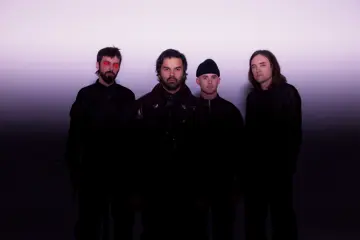
Are Shock Corridor post punk or trip hop? A bit of both, actually. That unlikely collision of worlds is exactly what makes the Melbourne six-piece so engaging – and often downright surprising – on their self-titled debut album.
So how do the band describe themselves? “It’s a difficult question to answer for us,” admits bassist Henry Rawling over Zoom. “I like to say trip hop because that’s the music I listen to most, but I know we’re not a trip hop band.
“We have those elements, but I usually say ‘post punk-y, but not really’.”
There’s definitely some post punk in the band’s starker, more brooding moments, but also the more orchestral side of post rock when Saskia Permezel’s raspy violin leads the way from shadowy simmer to crashing crescendo.
Yet there are also programmed beats and other electronic elements, which echo the lopsided, atmospheric vibes of trip hop. Shock Corridor even released a spacious, deconstructed remix of their recent single Ambulance! by London producer Raisa K.
“When we were first putting our original songs together, there was definitely a broadness to the music we were writing,” Rawling recounts. “There was a lot of rocky, punky inspiration coming in, but also electronic ideas.”
Origin, Interrupted
The band sprang forth from some fruitful jam sessions towards the end of high school, courtesy of singer/guitarist George Miller’s mother’s basement in Kew.
This was in 2019, so Shock Corridor’s origin story suffered a major pause due to Melbourne’s long lockdowns. The members largely hail from the city’s south side, so it’s fitting that their first gig (outside of a few house parties) was at historic St. Kilda venue George Lane.
“That whole space we knew though stories of bands from the past, especially The Bad Seeds,” says Rawling. “All our parents spoke about hanging out there when they were younger.”
Even better, that 2022 live debut was supporting Hunters & Collectors trumpet player Jack Howard, who had taught Rawling and keyboardist Joe Nossal that instrument in high school. (Both of them add trumpet on the album, on top of their main instruments.)
As for their band name, it comes from Samuel Fuller’s cult 1963 movie, an unflinching psychological thriller about a journalist who gets himself committed to a psych ward to write an exposé and then can’t get out.
While not everyone might get that reference, the phrase does accurately signal a real intensity in the band’s lyrics and music alike.
Plus, it’s a more obscure movie to pick than another choice they had considered, the landmark 1971 Australian film Wake in Fright. “We thought that was a little on the nose with the spooky, freaky, outback kind of vibe,” Rawling concedes. “We always wanted to play dark music, but it probably wasn’t that dark.”
For what it’s worth, attempts to name themselves Wake In Fright may have proven fruitless anyway, given that Adelaide’s Any Young Mechanic were forced to adopt their nascent moniker after issues with the film’s producers.
Layers And Space
Shock Corridor’s sound is still plenty dark, though, between those cathartic builds, cycling electronics, moody orchestration and Miller’s tremulous vocals.
In Shining Armour opens the album with slow, raga-like repetition, before growing more volatile. Alarm Bell pairs dark programming with ominous bass lines, while Spit Take’s dubby drumming borders on dusty, sampled breaks.
Permezel joins Miller on vocals for the creeping centrepiece Sheet Metal, landing on the evocative refrain “the soul retaliates”. By comparison, Signs Of Stopping features a steadier build and stormy Dirty Three parallels, thanks to Permezel’s mournful fiddle.
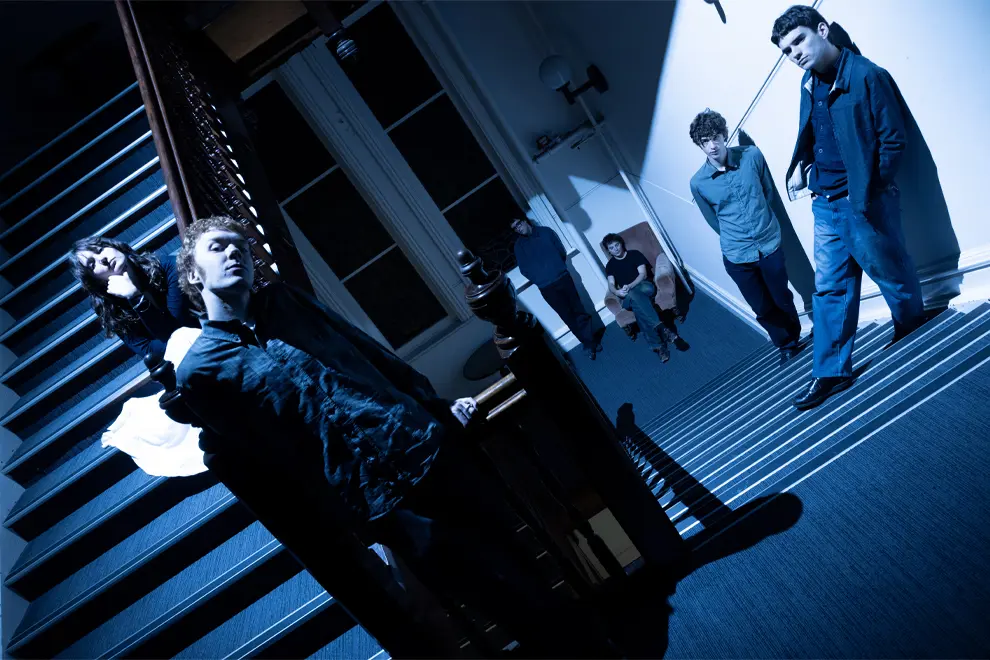
Rounded out by guitarist Ari Guthrie and drummer Paddy Walter, the band cover an impressive amount of sonic territory for a debut record.
“We wanted to have the album speak as a whole piece: 45 minutes of music that works,” Rawling says. “And it is very different, but it was definitely important to think about [that balance] while we were writing.
“We’ve got one track over here that’s super beats-y and quite loud and heavy, and then another track that’s softer and more ballad-y.”
The album was intentionally sequenced to have those ballad-y songs in the middle, before working toward a larger emotional climax. Along the way, you can hear all the individual creative shades that each member is bringing to these songs.
“We get to explore different elements in the writing,” Rawling agrees. “Paddy’s studying jazz, so he brings a lot of jazzier elements that no one else would provide. That’s one example of the diversity that happens there.”
And with so much intensity manifesting at various points across the album, the band knew they had to include swathes of open space and relief as well.
“There are definitely moments in the album where we wanted to have that space,” he says. “Tracks like Off-Season are a lot quieter: the whole opening minute is just guitar and vocals, and some sparse elements of violin or synth. We’re trying to not force it on everyone the whole time.
“You need a bit of respite occasionally.”
Studio Life
After recording their 2023 debut EP I’m Afraid I’ve Lost My Way during weekly sessions across an entire semester for a friend’s diploma of production at RMIT University, Shock Corridor cut some standalone singles at The Aviary Recording Studio in Abbotsford.
They graduated from those single-day sessions when it came time to record the album with Dan Luscombe, the much-loved Melbourne musician who has produced Amyl And The Sniffers, Courtney Barnett, and Bad//Dreems.
The six members joined Luscombe at Soundpark for seven straight days of recording. Rawling praises Luscombe’s continual guidance throughout the process, which was so crucial for a band still learning the ropes in a professional studio setting.
“Working with him was amazing,” he says. “He’s very knowledgeable and understands our music, and gave us all the space we needed. Because there are six of us and we’re all involved in the creative process, there’s not just one voice.
“He gave us time in the studio to flesh out ideas that might have changed in the space while we were recording. And also provided his own ideas and recommendations that helped us.”
While singer/guitarist Miller is responsible for Shock Corridor’s lyrics (in addition to some extra bass and piano on the album), the words only arrive after the music has come together first. If his lyrics sometimes feel like another instrument in a band with so much going on at once, there’s a real emotional hit when his singing breaks out more.
Take the way he delivers “It’s been a long time comin’” with delicious foreboding on Buster, a song that strongly evokes Luscombe’s widely venerated band, The Drones.
That part of Luscombe’s CV was particularly appealing to certain band members – and their parents. “When I first met Dan, I hadn’t listened to The Drones before,” Rawling admits.
“But I remember going home and [telling] my dad [about Dan]. My dad was like, ‘You haven’t listened to them? You have to do that.’ I’ve been on them heavy [since then], as most of us have.”
Coming Full Circle
With their first LP now greeting the world – and a six-date East Coast launch tour slated for the coming weeks – Shock Corridor are relishing a specific full-circle moment.
The album closes with Abyssal (Redux), a new version of the song that originally closed their debut EP. At seven minutes long, it also capped off their live sets for quite a while. And no wonder, since it represents a key moment in working out their intuitive integration of violin, programming and other potentially warring components.
“That was one of the first songs we ever wrote,” remembers Rawling. “I’d say that was probably the first time we introduced electronic elements. It’s definitely been a staple of where we’ve wanted to head. A lot of our inspirations are bands that have amazing live elements but also incorporate electronic beats and produced ideas.
“So we’ve tried to bring that in, but not let it be the only thing that defines the music we write.”
With its stirring refrain of “I’m changing” and deeper textural touches like synth strings, the song showcases even more liveliness in this updated version. “We were happy with how the song came out [the first time],” Rawling explains, “but we felt it needed a more live recording.
“So we were all in there recording [together] except for George[’s vocals], with the beat [unfolding] live and everything. I think we really needed that to get our energy across the way we wanted to.”
Even though Shock Corridor now try to mix it up and sometimes close their live set with the more upbeat Spit Take, Rawling acknowledges that Abyssal would have been a tough act to follow on record.
“The piece is very final,” he says. “In terms of the album, it’s hard to have anything come after it. So it feels pretty special to end with that.”
Shock Corridor’s self-titled debut album is out now.
Shock Corridor – Australian Tour Dates
Friday, August 28th – Thornbury Theatre, Melbourne, VIC
Friday, September 4th – Oxford Art Factory (Gallery), Sydney, NSW
Saturday, September 5th – Gang Gang Cafe, Canberra, ACT
Friday, September 11th – Hotel Metro, Adelaide, SA
Friday, September 18th – Bridge Hotel, Castlemaine, VIC
Saturday, 26 September 26th – Junk Bar, Brisbane, QLD
This piece of content has been assisted by the Australian Government through Music Australia and Creative Australia, its arts funding and advisory body