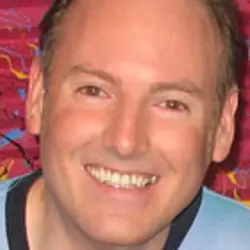

“I hear an Australian accent,” Mike Campbell says when I join the Zoom chat.
After exchanging “g’days”, we rewind to the origins of Tom Petty and the Heartbreakers, at a bar named Dub’s Steer Room in Gainesville, Florida, in the early ’70s.
Petty and Campbell’s band, then known as Mudcrutch, provided the music as Dub, the owner, directed the wet T-shirt competition.
Dub and the club had a strict rule – no originals. But when the band started writing, they would occasionally sneak one of their own songs into the set, with Petty telling the crowd, “Here’s the new hit by Creedence Clearwater Revival!”
“I’ve come a long way, baby,” Campbell laughs.
The guitarist was reluctant to commit to the band full-time – if he dropped out of college, he would become eligible for the Vietnam draft. But Petty had persuasive powers.
“It was as if Tom could bend reality with his mind, like it was a spoon.”
Campbell was struck by the singer’s determination. “Tom’s ambition was like a tornado. It could knock you sideways or lift you like you were flying.”
This year is the 50th anniversary of the first Tom Petty and the Heartbreakers album. To mark the occasion, the band is releasing the box set Origins 1971-1978, featuring 51 tracks, with 27 previously unreleased.
The box set reproduces an old flyer:
“MUDCRUTCH! At every shithole in Florida. When? Forever, Forever, Forever.”
Keyboards player Benmont Tench talked about the Heartbreakers’ origins in a 2014 piece for the record collector magazine Goldmine.
Tench called Daddy Cool’s debut album, Daddy Who? Daddy Cool!, a “holy grail record” and “one of the first records I bonded with Tom Petty and Mike Campbell over”.
“All three of us discovered that we loved this record by this band named Daddy Cool, an Australian group that was just fantastic.
“I’ve got a couple of copies of that album. It’s a great record – great band, great grooves, great songs; some of them are really goofy and unusual.”
Tench later told David Laing, “That first Daddy Cool record is a damn good record that is a lesson in how to play … there’s some grooves on that sucker”.
But 55 years after it was released, would Mike Campbell remember that Daddy Cool record?
Not only does he remember, but the guitarist starts singing Come Back Again.
“Yeah, Daddy Cool,” he smiles. “I’m just crazy about you, babe.”
Petty and Campbell were the Jagger/Richards of the Heartbreakers. As Mick and Keef were known as the Glimmer Twins, the Heartbreakers’ original drummer, Stan Lynch, dubbed Tom and Mike the “Dimmer Twins”.
“That’s a drummer for you!”
Campbell, Petty and Tench were the only constants in the Heartbreakers.
Why did the singer and guitarist click?
“You know, it is magic,” Campbell replies. “I don’t really know. It was destiny. We both grew up in Florida in different towns [Petty in Gainesville; Campbell in Jacksonville]. We just seemed to have the same instincts, the same likes and dislikes.
“Right from the first time we met, we clicked as friends and as partners.”
Initially, Campbell felt intimidated when writing with Petty. “I was just impressed that he was writing complete songs, with choruses and lyrics, and I was still just dabbling with music.
“But then it was more inspiring than intimidating.”
Campbell believes Petty was a product of his upbringing. “His mum was really sweet, and I know he loved her very much. But he had a dad who was rough on him, which gave him his fight and determination. Made him tough.”
So what sort of feelings does Campbell have when he hears these ’70s songs? Does he feel young again?
“I wish I felt young again,” he sighs.
“They kind of make me feel old, really, because it was so long ago. But I like hearing stuff I haven’t heard in decades. I can hear how young and impressionable and naïve we were. It’s exciting.”
Mudcrutch were discovered by English producer Denny Cordell, who started Shelter Records after producing Procol Harum’s A Whiter Shade Of Pale and Joe Cocker’s With A Little Help From My Friends.
When Mudcrutch’s 1975 single Depot Street stiffed, the band split. But Petty, Campbell and Tench stayed in LA and started Tom Petty and the Heartbreakers.
Cordell produced the band’s self-titled debut in 1976. Campbell co-wrote the opening track, Rockin’ Around (With You).
“The thing that Denny Cordell gave us was confidence,” Campbell explains. “He inspired us to be what we became, which was a great band. And he could see that before we did.
“He could see the chemistry. He was like a guru in a way. And personally, he always supported my writing, which meant a lot to me.”
Cordell produced the second Heartbreakers album, You’re Gonna Get It!, before the band hooked up with Jimmy Iovine for their next three albums: 1979’s Damn The Torpedoes, 1981’s Hard Promises and 1982’s Long After Dark.
When Petty played the producer one of the new songs, Refugee, which he wrote with Campbell, Iovine yelled, “We’re gonna be rich!”
Petty then played him another Campbell co-write, Here Comes My Girl. “That’s it!” the producer said. “That’s it! That’s all we need. Just gimme those two songs, and we got a hit record.”
When the singer suggested they might need more than two songs, Iovine said, nah, not really – you just need a hit single and a follow-up.
“I’ve never listened to side two of a record in my life,” the producer claimed.
“Jimmy Iovine was a New York rascal,” Campbell laughs. “He was very determined and very strong in his opinions about how the records should sound.
“We mostly got Jimmy because of the sound he was getting with his engineer Shelly Yakus. We wanted that big radio sound.”
The Heartbreakers immortalised Yakus in song at the end of What Are You Doin’ In My Life?, which is best heard in this alternate version.
“We learned a lot from Jimmy Iovine,” Campbell adds. “We learned how to sound in the studio.
“He was a taskmaster; he worked us hard. I think he got a little frustrated with us, because we would take things a little slow from time to time. And he wanted to get on with it – ‘Let’s make this record, so I can get out there!’
“And after the record was finished, he went out and promoted it. He would go to radio stations – ‘You’ve got to hear this, this is great!’
“He really pushed it for us. Not many producers carry it that far.”
Later in the ’80s, Petty and Campbell hooked up with ELO’s Jeff Lynne to make Full Moon Fever at Campbell’s house. It was released as a Tom Petty solo album.
“Well, Jeff Lynne is a musical genius,” Campbell notes. “He works really fast, which I loved, and he’s a musician, so you communicate with him on a musical level.
“It was like a college education, learning how to record. We didn’t cut live as a band with Jeff; we would build the tracks one at a time, and I would watch him and just marvel.
“We would start a song at noon and by 4 o’clock it would be totally finished. And that just blew my mind.”
The Heartbreakers reunited for 1991’s Into The Great Wide Open, which was also produced by Jeff Lynne.
Petty and Campbell then teamed up with another recording legend, Rick Rubin, to create Petty’s second solo album, 1994’s Wildflowers.
“Jimmy Iovine and Rick Rubin are not musicians, so they’re coming from a different perspective to someone like Jeff Lynne.
“Rick’s approach was to try every option and then pick the best one.
“The Heartbreakers are kind of lazy: the first time it sounds pretty good, there it is. But he was like, ‘Why don’t we try it in this key or with this rhythm?’”
“There are no shortcuts,” Rubin wrote in his book The Creative Act: A Way of Being. “The home built hastily rarely survives the first storm. The single-sentence summary of a book or news event is no substitute for the full story.”
“Sometimes, it was a bit like, ‘C’mon man, how many times do we have to play this?’” Campbell remembers. “But that was his method. Try every approach until we find one that really clicked.
“And he knew songs – he could pick a good song from a bad song, so that’s always a good thing.”
Feeling that the record needed a rock song, Campbell came up with the music for a song that Petty initially called You Rock Me. When the band cringed, he changed it to You Wreck Me.
The band played a few songs for Denny Cordell when he dropped into the studio. He beamed when he heard You Wreck Me. “Now, that’s the one, lads. That’s the one I’ve been waiting for. That’s the one I always knew you had in you.”
It would be the last time the Heartbreakers saw their mentor. After being diagnosed with lymphoma, Cordell – who also signed The Cranberries – died in Ireland the following year. He was 51.
Despite Daddy Cool being a formative influence, The Heartbreakers came to Australia only twice, for six shows in 1980, and then 13 dates with Bob Dylan in 1986.
“We had a great time on that [Dylan] tour,” Campbells recalls. “We were there for nearly a month – I stayed at the Sebel Townhouse for so long, I was almost getting mail there.”
The late-great Australian promoter Michael Gudinski suggested the tour to Elliot Roberts – who managed both Petty and Dylan – when he saw them performing together at the first Farm Aid concert in 1985.
“Sure, it’d be great,” Roberts replied. “It’d be great to have them perform anywhere, Michael, but this is a charity show.”
A few months later, Gudinski’s phone rang about 4 am. It was Elliot Roberts. “Remember that idea of putting Bob and Tom together for some shows?”
“It was,” recalled Gudinski, “a magical phone call.”
“I’m so glad we did that tour,” Campbell says. “Bob Dylan is an amazing person, very inspiring to be around. He’s an enigma. He’s funny, but he’s also kind of scary sometimes because he’s so smart.”
The artist believes playing with Dylan helped The Heartbreakers prepare for the next phase in their career.
“Playing with him was also great for Tom, because he could sit back and play guitar in the band and not have to be the guy up the front. I think that helped Tom get his bearings a little bit because the Heartbreakers were getting into a boring routine of record, tour, record, tour.
“So, Bob coming along was like a breath of fresh air.”
Every night, Campbell would stand side of stage and admire Dylan’s solo acoustic set.
“He really sang great. I used to watch him and think, ‘How does he remember all those words?’ He never missed a word, and he was so focused.
“I remember thinking that with him, a guitar, a harmonica and his voice, nobody can touch him.
“I still consider him to be one of my greatest inspirations and heroes.”
The Heartbreakers ended up doing 90 shows with Dylan over two years.
“And I think it made us a better band.”
The tour got off to a bumpy start in Wellington, New Zealand. The following morning, Dylan read the review to the assembled Heartbreakers:
“American pop star and erstwhile evangelical Bob Dylan manifested himself in the flesh last night for a poorly attended Athletic Park concert. Accompanying him were compatriots Tom Petty and the Heartbreakers.
“The 15,000-strong crowd not only testified to an abysmally promoted event … but that was nothing compared to the incompatibility of Dylan and his backing band. They floundered around like a B-grade pub group.
“During In The Garden, they played the entire song in a different key from Dylan’s nasal whine.”
Campbell and the rest of the band stared at the floor as the legendary artist kept reading.
“Dylan looked somewhat out of kilter … and looked grimmer as the evening wore on. Perhaps he was embarrassed about what he was doing to the fans … Dylan has become too much of nothing.”
As Campbell was about to confess it was he who had screwed up In The Garden, Dylan held up the paper and declared, “I love this! Let’s make ’em write this every night.”
Campbell admits he was surprised by Dylan’s approach to showbiz. “It was way different to us.
“The Heartbreakers were old-school showbiz – you have to go out and please the audience and give them what they want. Rise to a crescendo.
“Whereas Bob was kind of like, ‘I’m going to do whatever I want, and if they like it, fine, and if they don’t, I don’t give a shit.’”
Campbell chuckles. “That was hard for us at first, but once I got into his groove, I realised where he was coming from. He’d done it so long, he wanted to amuse himself – he didn’t want to be locked into a routine of showbiz.
“I learned that from him; we all did.”
Despite the success of the Dylan tour, the Heartbreakers never did return to Australia.
Many theories have been floated over the years: Petty didn’t enjoy the long flight and particularly didn’t like the fact he couldn’t smoke on the plane. Also, it was reported that he was angry about how Stevie Nicks had been treated on that 1986 tour.
The Fleetwood Mac singer tagged along with her friends for a holiday.
But after joining Dylan onstage in Sydney for Knockin’ On Heaven’s Door and Like A Rolling Stone, the Musicians Union blocked Nicks from more performances, claiming she was here on a tourist visa and didn’t have a work permit.
The threat was serious: stay off the stage or you’ll never be allowed to perform in Australia again.
“I don’t think Tom carried much anger about the Stevie Nicks story,” Campbell believes. “It’s kind of funny looking back on it.
“Every tour, it [Australia] came up, and there would be offers.
“I don’t think Tom had any specific reason not to go, like not being able to smoke on the plane. It just never seemed to be practical monetarily at the time; other offers were just stronger.
“But we always talked about wanting to go back.”
A Day On The Green promoter Mick Newton reveals, “We always wanted Tom Petty.”
Despite Australia not being a major part of the Heartbreakers story, Mike Campbell has vivid memories of his time here. In his superb 2025 autobiography, Heartbreaker, he wrote about the revelation he experienced during the band’s 1980 visit.
“I remember experiencing so much joy on that tour. We would be in the middle of a song, in Japan, in Australia, and I would look out at the crowd and think, how did I get here?
“I’d look around and try to take it all in at once. I’d think, this music is great and people love me and I get to play guitar. Is this a dream?
“I never took that for granted. It always amazed me. It didn’t seem real, but it was my life.”
Reminded of that quote, Campbell says: “I still feel that way. How did I get here, talking to you?”
To mark their 50th anniversary, the Heartbreakers – Campbell, Tench, bass player Ron Blair and drummer Stan Lynch – were awarded a Lifetime Achievement Award at the recent Americana Honors & Awards.
The band re-formed for the event, joined by country star Chris Stapleton.
A highlight of the performance is watching Stapleton watch Campbell’s soloing fingers during American Girl. It’s a magical moment, with the singer lost in the music. It’s as if he’s saying, “How the hell is this guy doing that?”
“He forgot to sing,” the guitarist laughs. “He was so distracted; he came in late because he was in the moment. It was very cool. I love Chris.”
In a poignant speech, the tears welled when Campbell remembered the band’s leader who died in 2017, aged 66.
“I miss rockin’ around with you,” he said simply.
The final Heartbreakers studio album was 2014’s Hypnotic Eye, which hit number one in the US, the band’s only chart-topper.
They went out on top.
“The Americana night was bittersweet because I wish Tom could have been there. But he was there in the room in spirit.”
Acknowledging the Lifetime Achievement, Campbell declared, “I’m not done.”
“As much as I enjoyed the Americana Awards and the box set, I don’t really like looking back,” he points out.
“Nostalgia kind of makes me sad. I’m really proud of the legacy, but I don’t want to live there.
“It’s funny how time changes your perspective,” Campbell continues. “The Heartbreakers were together more than 40 years, but looking back on it, it was the blink of an eye.
“I was in high school once, I was in the Heartbreakers, I was in Fleetwood Mac for a year, I was in this, I was in that … but I like to move forward.
“When I get nostalgic, sometimes it just makes me kind of wistful, so I try not to do that too often.”
Indeed, Campbell has just released Mission Of Mercy, the fourth album with his band, The Dirty Knobs.
Does he feel Petty’s presence when he’s making new music?
“All the time,” he says quietly. “All the time. I feel him right now as we’re talking about him.
“It’s hard to describe how close we were. We were really connected, and we were best friends. And we loved working on music together; we had an affinity for each other.”
Campbell will occasionally drop a Heartbreakers song into The Dirty Knobs’ live set, maybe Even The Losers or Runnin’ Down A Dream. And he always senses a ghost on his shoulder, saying “Go get it! You got it, go!”
“Tom was a great cheerleader.”
Campbell is hoping that The Dirty Knobs will make it to Australia.
“I want to come, but financially, we’re not the Heartbreakers. We don’t have a private plane, and to go to Australia is a long way.
“I don’t know if the finances are there for us, because we’re kinda small-time, but it’s on my plate for sure. I’d like to make it happen.”
And there’s even an Aussie reference on the new album, with the singer “jumpin’ round in circles like a crazy kangaroo” in Vicious Hangover.
So maybe those Aussie influences, which started way back with Daddy Cool, did seep in?
“Oh, they’re bound to,” Campbell says, “and I’m not just saying this because I’m talking to you.
“When I was on tour with Fleetwood Mac, my wife [Marcie] and I went down to Australia [in 2019, with Neil Finn]. We were there for a month or so. I loved that country – I love the people and the food, and I love the vibe that’s down there.
“And I like a lot of bands that came from down there, like AC/DC.”
Fun fact: Matt Laug, The Dirty Knobs’ first drummer, is now the drummer in AC/DC.
So, what advice would 2026 Mike give young Mike, the guy who was just starting out on the rock ’n’ roll road, moving from Florida to LA?
“I would say, get over your shyness and be confident.
“I was pretty introverted back then and easily intimidated by someone as strong as Tom, for instance. I tended to be quite reserved and unsure of myself, so I would tell that young dumbass to get some confidence.
“It’s all about confidence. Being a musician is 90 per cent confidence.”
The Origins box set shows a band gaining in confidence with each recording.
“There were lots of turning points,” Campbell reflects. “Every time Tom and I wrote a song it built my confidence up – and we wrote quite a few songs.
“And going to England for the first time as a band and getting such a great response from the English press gave us a lot of confidence.”
In the UK, the Heartbreakers were lumped in with the nascent punk movement. Back home, Robert Hilburn, the noted critic at the Los Angeles Times, labelled them “active rock”.
But what the Origins set shows is that they are simply a great American rock ’n’ roll band.
Looks like Mike Campbell made the right call dropping out of college.
“I think I did,” he smiles. “Even my parents thought I did … eventually.”
The guitar and a singer named Tom Petty changed his life. The singer might be gone, but Campbell picks up an acoustic guitar to illustrate that the music lives on.
“I always have a guitar nearby,” he says. “It’s my muse, it’s my religion in a lot of ways – it’s my connection to whatever spiritual power is out there.
“It’s made my life for me.
“The guitar gave me a purpose, and it turned out I was pretty good at it, so it worked out okay.”
And with that, our conversation concludes the way it started, with Aussie accents and memories of Australian stars.
“All the best to you,” Campbell signs off. “Have a shrimp.”
Origins 1971-1978 is out now via UMG.