Why aren’t dancers and choreographers treated as part of an artist’s core creative team?
When we talk about developing an artist, we tend to discuss the music first. Then come management, styling, visuals, marketing, social media, and branding.
We talk about producers, photographers, directors and designers. We build an entire world around an artist. But movement is often left out of that conversation until much later.
Sometimes, a choreographer is brought in when a music video is already being planned. Sometimes it happens when a tour is approaching, and an artist wants dancers. Sometimes movement is treated as something that sits on top of a finished creative idea rather than something that can help shape the idea itself.
I think we need to change that!
As a choreographer, dancer and creative director, I’ve experienced firsthand what happens when movement is given a seat at the creative table.
Throughout my career, I’ve worked globally alongside artists including Jordin Sparks, Shenseea, Stefflon Don, Libianca, OneFour and more, experiencing the industry from the perspective of the dancer, the choreographer and the creative director. And one thing has become increasingly clear to me: movement can be much more than choreography.
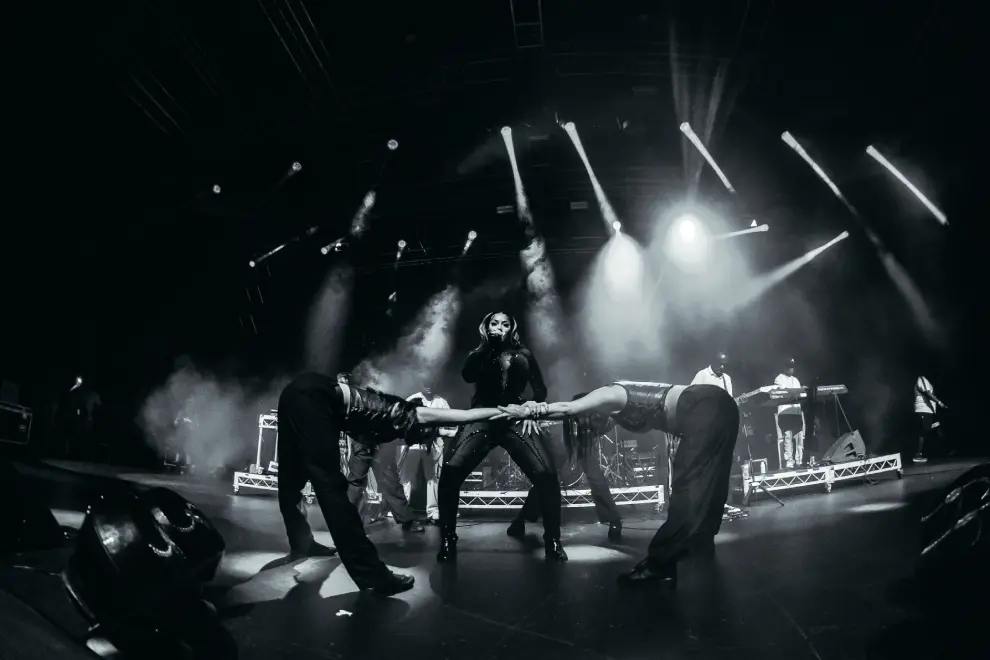
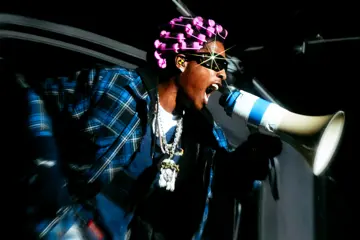
Stefflon Don. Photo credit: Georgia Kidd
A choreographer isn’t simply there to put eight-counts behind a song. We can help an artist understand how their music lives in a physical space. We can help shape how they command a stage, how they move through a music video, how they interact with dancers, how a camera captures them and how an audience experiences their performance.
Movement can become part of an artist’s identity.
Think about a performance we remember years later. Often, we don’t just remember the song. We remember the way the artist moved. We remember a particular groove, a formation, a gesture, a moment when the music and the body became inseparable.
Michael Jackson: Dance was a huge part of his identity. Decades later, people are still doing his moves. I’d bet that the majority of the world could recognise a Michael Jackson move in an instant.
Movement has the ability to turn a song into an experience. So why is it so often considered an afterthought?
Part of the problem is that we still tend to separate the different creative disciplines within the music industry. The music is created first. The visual world is developed afterwards. Then the performance is built around what has already been decided. But what if we reversed that thinking?

Libianca. Photo credit: Georgia Kidd
What if choreographers and movement directors were involved while an artist’s identity was still being developed? What if movement was considered alongside the music, styling, visual direction and branding?
For emerging artists especially, this could be powerful. An artist’s live performance is one of the most direct ways they connect with an audience and fans. It’s not enough for the music to sound good. Artists are increasingly expected to create a visual and emotional experience across festivals, tours, music videos, social media and digital platforms.
Movement sits across all of those spaces. It can help an artist discover how they want to present themselves before they step onto a major stage. It can help create visual language that audiences recognise. It can give dancers a more meaningful role within an artist’s world rather than positioning them simply as people who stand behind the artist and perform choreography.
And it can create opportunities for movement creatives to contribute at a higher level within an industry they already help bring to life.
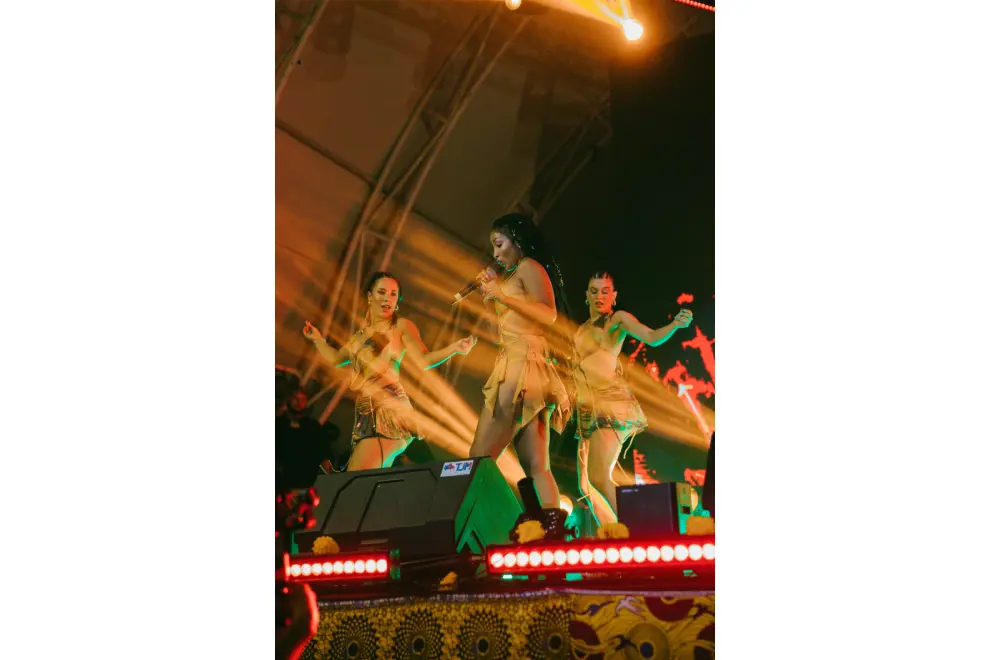
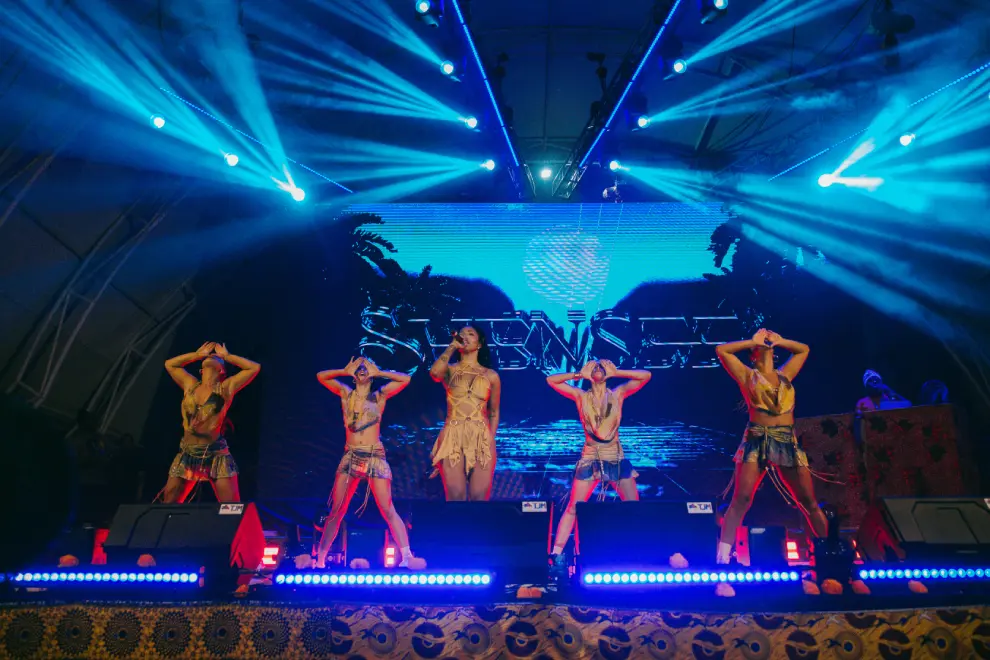
Shenseea. Photo credit: Georgia Kidd
This is one of the reasons I created The Aux, a movement-led creative company.
I wanted to create a bridge between the music industry and the movement creatives who help artists translate their ideas into physical experiences. Because there is an incredible amount of talent in the dance community. But talent alone isn’t always enough.
The industry also needs to recognise the creative value of dancers and choreographers. There is a difference between hiring someone to execute choreography and bringing someone into a room because you value their creative perspective.
The latter changes the conversation.
A choreographer can ask: What does this song feel like physically? How should this artist move? What does their presence communicate? How can we make this performance feel like them rather than simply putting choreography over a track? Those are creative questions. And they deserve to be asked early.
I’m not suggesting every artist needs a huge team from day one, or that choreography needs to become the centre of every artist's creative process. I’m suggesting that we broaden our understanding of what artist development can look like. If we are serious about building artists with longevity, identity and memorable live experiences, movement should be part of that conversation.
The next generation of artists are building worlds around their music. Those worlds need sound, image, fashion, storytelling and performance. They also need movement. So perhaps the question isn’t simply, “Where do the dancers fit?” Perhaps it’s:
What could we create if we stopped treating movement as something added to an artist’s vision and started treating it as part of the vision itself?
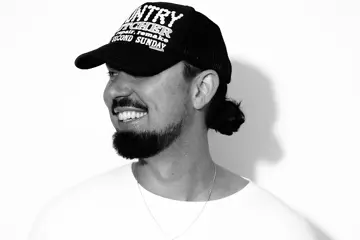
Georgia Kidd is a choreographer, creative director, dancer and founder of The Aux.