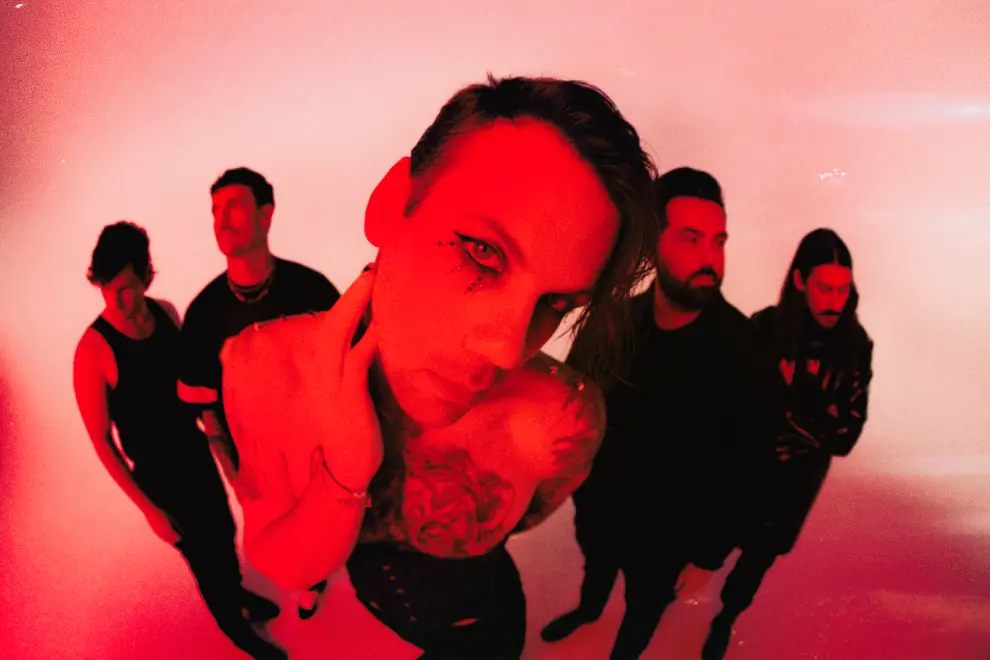
 Beartooth Profile
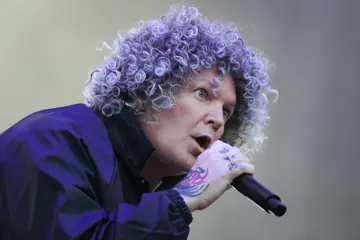
Pure Ecstasy is the album Caleb Shomo has always wanted – or needed – to make.
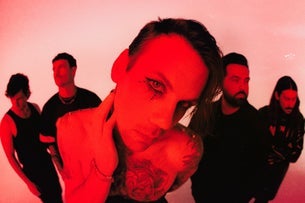
Since 2012, Beartooth has been the vocalist and multi-instrumentalist’s vehicle for self-expression. Shomo founded the rock and alt-metal outfit in Columbus, Ohio, while still a member of the metalcore band Attack! Attack!
Initially, Beartooth was Shomo’s studio project – he’d sing, scream and perform all instruments – before it expanded to a band, with four or five other members joining him. Compared to his previous output, Beartooth features more conventional songwriting, emphasising catchy choruses and melodic hooks.
When The Music last caught up with Shomo in October 2023, Beartooth were promoting their fifth album, The Surface, a record that’s confident and intelligent, different from the band’s past material, and with far more positive messaging from the vocalist.
Following an album that delivered Beartooth their first #1 on the Billboard Top Hard Rock Albums Chart and their first #1 single on the Billboard Mainstream Rock Airplay Chart – for Might Love Myself – was both empowering and put pressure on the band.
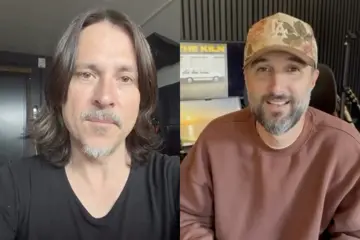
Shomo, on Zoom from his home, tells The Music that his feelings about those achievements are “complex.”
“Obviously, it’s really cool. Like, don’t get me wrong. We got a radio number one, which was the first time we’d done that, and we had two [I Was Alive was the second]. And one of them stayed at number one for two weeks, which is pretty hard to do.”
He adds, “But at the same time, I don’t know, it definitely can morph your expectations a little bit. I had to be very careful not to let that leech into how I approach the album, because I think the biggest mistake that can be made with successes like that is trying to capture that magic again.
“Therefore, you end up just completely missing because you’re trying to do something that’s already been done. The reason Might Love Myself worked, or I Was Alive worked on the charts, is because that’s where I was, and that was the fucking truth.”
Shomo was manifesting those positive moments in his life, chasing them wholeheartedly. “You could see it on stage; you could see it in the way I was carrying myself,” he says. “I had this desperate hunger for empowerment and self-love.
“But I can’t write those songs right now, because that’s just not where I’m at at all. Do I think there are number ones on this record? I have no idea. The truth is, there’s not that raw optimism right now. This is a much darker record, and it was a much more emotionally challenging record.
“At the end of the day, I’m glad that I didn’t let those successes influence me to make anything inauthentic on this record. I chose that this thing has to be as authentic as it could possibly be for this exact moment in my life. And for that, I’m grateful.”
If The Surface was “one of the most important records ever made” in Shomo’s life, then album number six, Pure Ecstasy, continues the mission.
In February of this year, Beartooth released the first single from the album, Free. The pop-metal track is one of the most moving tracks in the band’s entire career and marks a major life change for Shomo: just a few months before writing Free, he came out as a proudly gay man.
“[Free] completely changed my entire life,” Shomo says. “You know, that’s the first song that I’ve ever written addressing my sexuality and what I was dealing with at the time, and I wrote that song about two months after, you know, the words had left my lips for the first time to anybody.”
Shomo had come out to his family, close friends, and bandmates, but embracing his sexuality and dealing with the breakdown of his marriage were experiences he was still “unpacking, trying to process and understand.”
He asked himself if he’d ever tell anyone else and if his sexuality would be mentioned in his art, and fear only grew as he wondered how his life would change.
With Free, Shomo collaborated with producer Jordan Fish (Bring Me The Horizon, Evanescence, Poppy). Together, the pair had some really good conversations and “one fucking unbelievable afternoon of catching lightning in a bottle in a recording studio.”
“That’s the song that we wrote, and, you know, at the time, I was really fucking scared of it,” Shomo admits. “Releasing it, I was very scared of it and performing it on that tour we did with Bad Omens.
“But I feel like it provided me an avenue to have a lot more peace in my life, a lot more peace internally, [and] a lot more understanding of myself, because there’s just something that happens, where I feel like I can communicate things so much better through music than I can through words.”
Free helped Shomo process his new reality: “There was no going back,” he recalls, “And why would you? You have so many emotions to figure out pertaining to this thing that’s going on in your life, so just fucking let it out.
“I’m really glad I chose to let it out that day, and that we chose to put it on the record and for it to be the lead single was fucking terrifying every step of the way. But at the end of the day, I am proud of it for sure.”
Pure Ecstasy, released in late August, feels cleansing and happy – mostly. A song like Beautiful Again soars, then Lose You to Find Me is a relatable anthem, even if fans have never shared the exact experiences with Shomo. Then, album closer I Made It is joyous and even downright funky.
Stadiums is a delightful track – it’s difficult to know where it’s going from the intro. The hip-hop-inspired beats in Sorry also make for a fascinating track, structurally and with Shomo’s vocals. It was essential for Beartooth to push their sound and defy expectations throughout the album.
“For this record, it was incredibly important,” Shomo says. “That was just what this process was: this process was pushing me so far out of my comfort zone and accepting help from other people in a way that I never really have before.”
The spirit of collaboration, in particular, led to some “really interesting” results. Whether it was Jordan Fish or Issues’ Skyler Acord inspiring the direction of the song, Shomo never lost the “integrity” in creating songs on Pure Ecstasy.
“[Collaboration] is kind of a new thing for Beartooth,” Shomo says. “I’ve collaborated in the past; I’ve done a song here and there on a record, but never like this. This is the first time I’ve had a real co-producer, went 50/50, or that I did this many co-writes, or influence from people in the band on a deeper level. There was no way I was making this record on my own.”
Shomo believes he “wasn’t strong enough” to approach Pure Ecstasy on his own, and he was “way too scared of it.”
“I’m really glad that I chose to bring all these other people in to find a way through for the greater good, which was that if this record doesn’t happen, there’s a good chance I live the rest of my life in fear. I just don't want to do that, and I can’t do it alone. So, let’s fucking find a way to do it.”
In case you didn’t already notice, there’s a lot of catharsis on Pure Ecstasy. “So much!” Shomo says. “I had a lot of shit to let out. I had a lot of shit to deal with, for sure, to put it lightly.”
But the title track, which opens the album, is stupid heavy. It sets the tone for what’s to come – Shomo roars through his lines, and the chugging guitars are pure excitement. Shomo knew early on that he wanted to push Beartooth’s sixth album in a heavier direction. In his own words, he “just wanted to rock.”
“A lot of the stuff I’ve been listening to and a lot of the guitar playing that I’d been doing had just really been leaning to heavier stuff,” he says. “That song specifically I wrote with Misha Mansoor from Periphery, who is just an unbelievably talented person in so many ways. I mean, if we’re going to do anything together, it’s going to just be heavy as fuck, right?
“So, that was the goal. We did a session together very early on in my kind of creative process, and that was the song that came out of it. That song really set the tone for a lot of the other stuff that I started working on, and just chasing that thrash metal, Metallica kind of thing.”
As Shomo got deeper into the album, with coming out and all his fears at the front of his mind, he realised he couldn’t write The Surface again. “That’s just not where I’m at,” he admits. “You know, I’m not at a place where I’m writing pop records. Like, I’ve got a lot of shit to process with a lot of very intense emotions. So, I think it lent itself to a really heavy record.”
He adds, “As much as it’s nice to be at those places in life where I’m in this headspace of just manifesting positivity, that was just not what was going on. And yeah, fucking kick-ass breakdowns were there to save me just like they always are.”
With the single Bullshit, the band returned to an “exploration of the original Beartooth formula”: aka, with an angry Shomo aiming at himself, his life, and “being a bullshitter.” By revisiting some familiar territory – self-deprecating themes, namely – Shomo risked repeating himself and going into a dark place.
It’s a fine line to cross, but he says it’s “just what naturally needed to happen.”
“I was at a place where I was going through those exact feelings,” Shomo notes. “I was going through that anger at myself, that self-hatred and that self-deprecation that so many Beartooth records have been written about, and that the entire first Beartooth record was written about. But the little things really helped me process all that stuff.”
The singer explains that he had given himself a place to “just fucking holler” and not think about musicianship from a technical standpoint. All he wanted was to re-capture the energy of Beartooth’s first record, 2014’s Disgusting, by putting guitars in drop C tuning, “put it through a loud, ripping amp and just make fucking noise.”
He adds, “I don’t think there was really much fear of it taking me back to any dark place, because I was already there. I think if anything, it was more of an exercise to try to get myself out. Because that’s what those earlier Beartooth records helped me with: it gave me a place to process that negativity and self-hatred.
“Obviously, the results vary. But generally speaking, I always feel better, at least that day, or for the next week or so, after I get a song like that out on a recording. Bullshit really fucking reminded me how important that specific exercise is for me.”
Being so honest and raw on another Beartooth record had to come with mixed emotions. Shomo says he faced the number of feelings “with blinders on,” understanding that putting Pure Ecstasy together is bigger than how he felt on any given day: “This is about my whole life; this is about my livelihood; this is about my future.”
“If I choose to water this down at all, I will go the rest of my life knowing that I was afraid of the truth. I was afraid of who I was at the time; I was afraid of who I am now,” he shares. “I had this yes-or-no thing. It was just two paths: ‘it was either you make the real Beartooth record, or you fucking water it down.’”
Watering it down wasn’t an option. There were so many emotions to process; so much so that Shomo is already working on another album “because there’s just so much to unpack.”
“I think the main thing that I needed to unpack was that like, whatever this is, this is you,” he recalls. “And this is the most honest version of you that has ever been brought to the surface through your creative process. So, you just have to fucking do this.
“In the middle of it, I just submitted to it; I submitted to the truth. I went back to that kind of same place that I went to making the first Beartooth record, which was like, a million people could hear this, or fucking nobody could hear this, and it doesn’t matter. I’m just going to work through what I need to work through, and we will deal with the aftermath.
“Without those blinders on and without the help of some really amazing, talented people, and without the help of the band, this record doesn't exist, and there’s a very good chance that I’m not where I’m at in my life. And then I’m still stuck in my same ways.”
In January 2027, Beartooth bring Pure Ecstasy to Australia. Last in Australia in 2023 with Pierce the Veil, Shomo can’t wait to be back—even if he’s still shocked that people on the other side of the globe love, embrace, and resonate with the music he’s written.
“That’s almost impossible to process,” he says. Shomo has been coming to Australia “for a long time.” He made his live debut Down Under in 2010 with Attack! Attack!, with Pierce the Veil as direct support. “We were both in vans touring across Australia as children! Even then, I just couldn’t believe it. And still, it hasn’t changed.”
Attack! Attack! returned to Australia in 2012 for Soundwave Festival. With Beartooth, he’s visited Australia five times—both as a support act and headliner.
“It’s so far away, and it just feels so huge when you tour there,” Shomo adds. “When you go over there, and it’s four or five shows on a tour, and you have all this preparation that you’ve done, it’s this whirlwind.
“You’re just trying to figure out how to keep your voice and stay afloat and put on these good shows, but when all that fades away, and you get on that stage, and there’s thousands of people from the other side of the globe that have that familiar feeling—that same feeling that I have when we tour in the States or when we tour in Europe—it’s just so mind-blowing.”
The main thing about returning to Australia is that it represents something special for Shomo: the universal power and understanding of music. “It’s a language that doesn’t have a specific dialect or any specific words; it can be understood whether you speak the language or not, whether you’re from that culture or not,” Shomo says.
“To go somewhere that is so far away and feel that familiarity is something that is just completely mind-blowing every time, very humbling, and just re-aligns my understanding of why I do this and why I want to be an entertainer, and why I love to tour because it reminds me of the community that I have and the strength that I have within that community.
“To know that that community is all over the fucking world is just beautiful. I’m so honoured anytime we get a chance to play in Australia, do our thing, and feel supported by those people in that community and that music scene. It’s unreal.”
Pure Ecstasy is out now via Fearless Records. Tickets to Beartooth’s Australian tour are available here.
BEARTOOTH
PURE ECSTASY WORLD TOUR AUSTRALIA 2027
WITH SPECIAL GUESTS FIT FOR A KING AND VOLUMES
Tuesday 26 January - Thebarton Theatre, Adelaide
Thursday 28 January - Festival Hall, Melbourne
Saturday 30 January - Hordern Pavilion, Sydney
Sunday 31 January - Fortitude Music Hall, Brisbane