 Tupac Profile
Conspiracy theories surrounding the lives and deaths of contemporary music stars were around long before social media took it to a new level.
Often it was convenient for their business associates to brush off their deaths or surround it with silence to hamper police investigation.
With the recent news that the murder of Tupac Shakur has finally been solved – 30 years after the fact – here are 15 examples which balanced proper investigations and gleeful conspiracy theories.
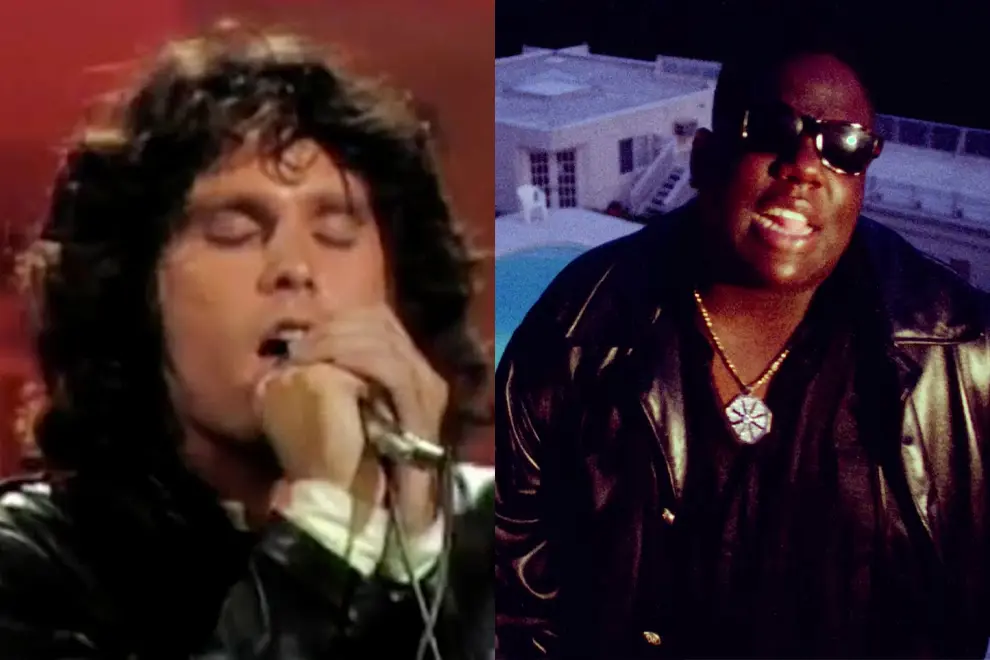
The Notorious B.I.G
It is inevitable that with the Tupac Shakur verdict, questions are being asked about the murder of The Notorious B.I.G.
The two were once friends but turned rivals due to rap’s deadly East Coast-West Coast feud. Both were cultural icons whose deaths – both in drive-by shootings – had huge repercussions.
On March 9, 1997, New York-born B.I.G. (aka Biggie Smalls, born Christopher Wallace) had just left the Soul Train Music Awards after-party.
At the red lights, a Chevrolet drew level at the red lights and opened fire. It was six months after Tupac’s death.
Ironically, Duane "Keffe D" Davis, found responsible for Pac’s murder, had also been questioned over Biggie’s shooting as he’d been at the party.
No one was charged or prosecuted. In 2002, his family filed a lawsuit against the Los Angeles Police Department claiming two cops with links to Shakur’s label, Death Row Records, had been responsible for the assassination and the LAPD had covered it up.
A task force was duly set up but a judge called a mistrial when a critical transcript alleging the involvement of an LAPD officer had been hidden in the lead detective’s desk.
Sam Cooke
Sam Cooke was a foremost US soul singer and music executive in the ‘60s.
Best known of his 29 hits were Twistin’ The Night Away, What A Wonderful World, Chain Gang, You Send Me, Bring It On Home To Me, and the civil rights anthem A Change Is Gonna Come.
On December 10, 1964, he was in a high class Los Angeles restaurant Martinos, throwing his money around. He picked up Elisa Boyer and drove her in his red Ferrari to the Hacienda Motel, a sleazy $3-an-hour room rate.
The official story was that things got rough in the room, and Boyer fled with her clothes (and “accidentally” his) and called the cops on a street telephone.
When they arrived, they found Cooke dead on the floor of the motel office, wearing only one shoe and a sports coat.
The elderly motel manager, Bertha Franklin, told them he’d broken into her office demanding to know where Boyer was. She shot him in the heart and then, as he lay dying, thrashed him with a broomstick.
Police called the case in a few days. Both the women were found innocent, a coroner’s jury ruling it justifiable homicide. But Boyer was, in a later case, accused of being a prostitute and a scam artist, who had a habit of stealing her marks’ clothes and money.
At Cooke’s funeral, no one believed the story. Singer Etta James saw the body in his coffin, and was traumatised by how his neck had been almost severed from his body.
The theory was that the whole motel scenario thing had been a frame up, master minded by Mafia-associated music executives resentful of how he successfully controlled his own career and rejected their plans.
His standing in the growing civil rights management, including a close relationship with activist leader Malcolm X, also supplied a reason.
Cathy Wayne
19-year old Australian singer and drummer Cathy Wayne was fatally shot in the heart while performing for troops in Vietnam in July 1969 with the band Sweethearts On Parade.
It happened on a US military base, in Da Nang. The Sydney Morning Herald reported, “Wayne was shot by a .22 pistol with a silencer attached. The gun, under lock and key at the base had been stolen.”
She became the first Australian woman to be killed in the Vietnam war. US Marine Sgt. James Wayne Killen was sentenced to 20 years hard labour but insisted he was innocent. After a retrial, he was released two years later.
Drummer Don Morrison of the band Xanadu wrote a book Murder On Stage, published in 2015. He found that many of the soldiers at the show were drunk. Morrison had a murder suspect but didn’t have enough proof to name him.
He told the SMH: “Were they aiming at Cathy? Well, they may have been in the general direction and pulled the trigger because that was the only real noise in the camp that night, a band playing, and that’s where the lights were.”
Kirsty MacColl
English singer songwriter Kirsty MacColl had a run of hits in the 1980s and 1990s (There’s A Guy Works Down The Chip Shop Swears He’s Elvis, The Pogues’ seasonal Fairytale Of New York), some with her producer husband Steve Lillywhite.
In December 2000, MacColl and her two teen sons went holidaying in Cozumel, Mexico. On the 18th, they went diving at the Chankanaab reef, an area which banned watercraft.
But as the family surfaced from a dive, a large powerboat beared down on them, fatally striking MacColl. The boat was occupied by one of Mexico’s richest men who ran a chain of supermarkets.
Despite witness accounts, he denied he was piloting. A young employee took the blame, and was sentenced to two years and 10 months. He was allowed to pay a fine of 1,034 pesos (AU$126) in lieu of jail time. The millionaire was never charged.
A campaign with Bono and Billy Bragg tried to reverse the decision but Mexican authorities refused to budge.
Jim Morrison
Taking off to Paris for a holiday before being sentenced for exposing himself on stage in Miami, The Doors’ singer Jim Morrison missed his court appearance by being found dead in his hotel bathtub. It was July 3, 1971, and he was part of the 27 Club.
The official cause of death was ticked as a heart attack. No autopsy was performed as it was not required by French law. The Doors’ manager kept the news secret for another week.
Morrison’s wife Pam claimed he’d been coughing up blood although she had not been there when he drew his last breath.
A story was he actually perished in the toilets of a club, and its owners quickly shipped him back to his room to avoid any police questions.
In 2014, singer-songwriter Marianne Faithfull told The Telegraph late drug dealer and ex-boyfriend Jean de Breiteuil had administered a dose of heroin that proved too powerful.
Christina ‘Licorice’ McKechnie
Christina ‘Licorice’ McKechnie (also ‘Likky’) was born in Edinburgh, Scotland.
In the ‘60s she read poetry in folk clubs and, in her mid-teens, left home to find and marry folk legend Bert Jansch.
She did find him, and a wedding was planned. But Jansch soon tired of her and took off to Morocco instead.
She then took up with musician Robin Williamson who encouraged her to join his psychedelic folk outfit The Incredible String Band.
From 1968 to 1972, she wrote songs with them, did backup and percussion, and appeared at the legendary Woodstock festival with them.
After she and Williamson parted, she had ties to the Church of Scientology and then moved to California where she played in bands.
In 1987 she disappeared from sight, hitch hiking across the Arizona desert. Her ex-husband said she loved the idea of being homeless and developed schizophrenia.
Her family hired a private investigator to find her, but with no success. It appeared she shelled out a new life and was living anonymously in a small town in California.
Mike Furber
Mike Furber was a singer from Brisbane, fronting The Bowery Boys (1965-66) before going solo in Sydney. Cute as a button, his live shows drew a hysterical female audience.
But they failed to buy his records, even if penned by Barry Gibb, Vanda & Young, and Ted Mulry. The problem was his vocal range was limited.
His record company Sunshine collapsed, a stint doing National Service in the army left him traumatised, and a role in the musical Nuclear was cut short.
On May 10, 1973, he died aged 25. The official story was that he hung himself in his garage in Sydney. But friends insist that he was murdered by mobsters with ties to the music industry.
Brian Jones
The founder of The Rolling Stones and its most musically accomplished player, Brian Jones was edged out of the centre. It was partly because of his prodigious appetite for drugs and alcohol. The other was that Mick Jagger and Keith Richards wrote the songs.
By 1969, his drug convictions meant The Stones couldn’t tour the US. In June he got the heave-ho. Less than a month later he was dead.
The official narrative was that he was having a midnight swim after a drinking session with friends at his East Sussex property Cotchford Farm.
With him were Jones’ Swedish girlfriend Anna Wohlin; builder Frank Thorogood, who was renovating Brian’s house; and The Stones’ driver and minder Tom Keylock’s friend Janet Lawson, who was a nurse.
Even then Lawson accused Thorogood of accidentally killing the musician after hefty horseplay in the pool. In 1993, Thorogood confessed on his deathbed to Keylock, apparently saying, “It was me that did Brian. I just finally snapped.”
In a 2019 Netflix documentary, Keylock revealed, “Very strong hash cakes were made (on the night of the death). That’s why they were all stoned and they didn’t know what day it was.”
Jones’ daughter Barbara Marion believes her father was murdered. She told Sky News, “I don’t think his death was investigated as it should have been.”
Magnolia Shorty
New Orleans “bounce” legend Magnolia Shorty (real name: Renetta Lowe) was the first to be signed to Birdman’s Cash Money Record. Tracks like Monkey On A Stick and Smoking Gun continue to be an inspiration to female rappers.
On December 20, 2010, the 28-year-old was giving a lift to the store to childhood friend Jerome Hampton, aged 24.
A car, possibly two, blocked their exit and a barrage of gunfire followed. Magnolia was hit 26 times. Police found 50 bullet casing at the scene.
Police contended the attack, by five members of the 3NG gang, had been after Hampton, and the rapper got in the way.
One of the gang, Gregory Stewart, later took the heat for a number of gang related murders, including Lowe and Hampton’s, done as part of controlling the city’s heroin distribution.
Ineka Hinkley
20-year old Melbourne musician Ineka Hinkley vanished in the spring of 1996 while hitchhiking on the NSW coast. Her remains were found near a Pacific Highway truck stop in Pine Creek, 16 kms south of Coffs Harbour.
A coroner’s inquest in 2004 found there was not enough evidence to charge anyone.
Bobby Fuller
1960s singer Bobby Fuller, frontperson of The Bobby Fuller Four, had a hit with I Fought The Law (And The Law Won) in March 1966. It would later be covered by Bruce Springsteen, Tom Petty, and The Clash.
But on the hot afternoon of July 18, 1966, the 23-year old swinging rocker from El Paso, Texas, was found dead in his mother’s car outside his Hollywood apartment.
He was covered in gasoline. He was holding a tube that ran into a can inside the car, all the windows were up. Police quickly ruled it as suicide and did no more investigation. After criticism of their lame efforts, the verdict became “accidental.”
His mother said her son had a late night phone call that night before, and he’d gone to meet someone. That’s the last time she saw him. The car was returned to the car park, but rigor mortis had started to set in. Which meant he’d been beaten and killed elsewhere.
It was clear Fuller had been dead longer than the time the car was returned. He had blood on his face and chest. The finger was pointed at the Mafia, which owned his record company. Fuller had been expressing dissatisfaction with the way the company was pushing his music.
It was said he was also having a relationship with the girlfriend of a mob-connected nightclub owner. That certainly didn’t help.
Robert Johnson
In the 1930s, Robert Johnson was the king of Mississippi’s delta blues. He was the one whose legend had it he walked the crossroads of Highway 61.
One midnight in 1929 at the crossroad near Dockery Plantation (there are ten different sites where the encounter is said to have taken place), he made a pact with the devil: you can steal my soul if you let me become the best blues man of all time.
The devil took his guitar and tuned it, played some songs, and returned it. He instantly became the best.
In the 1960s, British guitarists as Eric Clapton (who dubbed him “the most important bluesman that ever lived”), Jimmy Page, and Keith Richards idolised him, absorbing his 29-strong catalogue including Cross Road Blues, Sweet Home Chicago, Dust My Broom, Terraplane Blues, and Hellbound On My Trail.
Johnson was an itinerant, jumping freight trains, playing for tips on street corners, and a serial womaniser.
The end came when he started a dalliance with the wife of the man who ran the Three Forks club in the town of Itta Benna. Johnson was playing a residency at the club.
The owner, who tended the bar, sent over to Johnson’s table an open bottle of whisky which he’d poisoned with dissolved mothballs (another version of the story suggests rat poison).
Bluesman Sonny Boy Williamson, also at the table, knocked the bottle out of hands, warning, “Don’t drink from a bottle with a broken seal.”
Johnson snapped back, “Don’t ever knock a bottle out of my hand again.”
A second poisoned bottle was sent over. This time he polished the whole thing over. When he went back onstage, he felt ill mid-set and had to be helped out. He died over the next three days in serious pain, aged 27.
He was buried in a home made coffin, and three graveyards claim he’s buried there.
In those days, cops didn’t rate a black vagrant with any importance, and there was no autopsy or investigation. Johnson’s killer was never questioned and punished.
Philip Taylor Kramer
Philip Taylor Kramer was singer and bassist with US prog rockers Iron Butterfly between 1971 and 1975. The band already had a global hit in 1968 with the 30-million selling In-A-Gadda-Da-Vida, an edited version of the original 17 minute epic. The title is a slurred version of the phrase ‘In The Garden Of Eden’.
Post-music, he proved himself to be a tech whiz. The son of an electronic science professor, he gained a degree in electronic engineering. He set up a computer company which did secret projects for the US Government, including the guiding system for a nuclear-tipped missile.
The company bought pioneering video compression technology for CD-ROMs and he was working on a computer system to find missing children.
On May 29, 1999, stressed out and not sleeping for days, he rang 911, gave his name and announced he was going to kill himself.
Four years later his body was found in a van at the bottom of a Malibu canyon. It was generally thought he’d had a nervous breakdown. But his family and some military analysts thought he’d been killed for his secret work.
Johnny Thunders
The epitome of heroin chic nihilism in The New York Dolls, Johnny Thunders arrived in New Orleans in the early ‘90s for a new start. He was also suffering from advanced leukemia at the time. He was 38.
He booked into Room 7 of St. Peter House in the French Quarter. There he was found on April 23, 1991. He was found under a coffee table, twisted into a U-shape – “bent like a pretzel”, said one witness – as rigor mortis set in.
His room had been ransacked, and his passport, methadone, and clothes stolen.
His neighbour Willy DeVille stated that when the body bag came out, it was in a U shape.
Dee Dee Ramone in his 2000 autobiography Lobotomy: Surviving The Ramones, stated "Johnny had gotten mixed up with some bastards … who ripped him off for his methadone supply. They had given him LSD and then murdered him."
Glenn Miller
Glenn Miller was a popular US bandleader in the 1930s and 1940s, putting out hits as Moonlight Serenade, In The Mood, Tuxedo Junction, and Chattanooga Choo Choo.
When World War II came, he joined the Army, made the head of US Air Force Army Band and entertained US troops throughout Europe. In 1944, he was stationed in Bedfordshire, England.
On December 15, Major Glenn Miller’s single-engine Moorduyn UC-644 Norseman plane set off for Paris where he was giving a show It vanished over the English Channel in heavy fog and bad weather. Neither the plane nor the pilot and two passengers were recovered.
Conspiracy theories suggested Allied bombers accidentally hit the plane while dropping unused ordnance into the sea, but flight schedules disproved that.
Another was that Miller was on a secret espionage mission, and was shot down by Nazi planes.
In the end, modern day technology concluded the freezing weather affected the plane’s fuel intake to ice up. It took eight seconds to plunge into the Channel.
The plane, made of lightweight material, probably disintegrated when it hit the water.