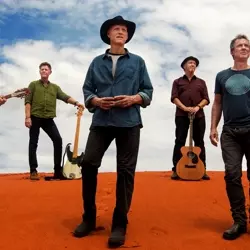
 Midnight Oil Profile
"Yeah, my blood's so mad, feels like coagulatin'/I'm sittin' here just contemplatin'"
Wars. Climate change. Killer robots. End of the world predictions from very rich men who then go and build bunkers. Yeesh. It looks bad out there.
Many young artists that I come across are probably the most politically engaged generation I have ever encountered. They have views on housing, climate, AI, inequality, their local member, etc. And I love them for it.
And yet they are not really writing songs about it.
They are mostly writing about the person who didn't text back.
I find that strange. Stranger still that nobody seems to have noticed.
Eve Of Destruction
"And you tell me over and over and over again, my friend/Ah, you don't believe we're on the eve of destruction"
In 1965 a session singer called Barry McGuire recorded a song written by a 19-year-old and it went to number one in America.
It went after everything: Vietnam, the bomb, the civil rights marches, the hypocrisy of a country that would draft you before it would let you vote. Radio stations banned it. That helped, for sure.
It's not a great song. But it was a song about the thing everyone was actually afraid of, and people sang it back.
The mid-'60s were not a calm time. Nuclear war wasn't a fear so much as an event people were waiting on.
Bob Dylan wrote A Hard Rain's A-Gonna Fall amid that wider Cold War dread, and first performed it weeks before the Cuban Missile Crisis. It remains his best song, in my opinion: quasi-political, poetic, and rousing all at once.
Bless you, Bob.
It's The End Of The World As We Know It (And I Feel Fine)
"Eye of a hurricane, listen to yourself churn…"
R.E.M.'s very fun song could have been written and released this year without changing a word. Which is either a compliment to Michael Stipe or an indictment of the last four decades.
Maybe both.
Here is what I keep coming up against.
Most young people I know really believe the world is going to end, and soon. They even have a rough date in mind. They have made decisions about children and mortgages accordingly. It comes up at dinner the way the footy used to.
And I'm the weirdo at the party because I am strangely optimistic about the future. I promise you. It does not make me popular.
This world? This beautiful world?
Maybe having kids did it to me, and I simply refuse to believe it now. Or maybe I'm just not cool enough. Because the end of the world has a whiff of fashion about it. It's the new smoking: something to do with your hands at a party that signals you're serious.
Which brings me to the question I can't shake.
If we really believed it, wouldn't we write some fucking songs about it?
You Never Know
"Come on, children, you're acting like children/Every generation thinks it's the end of the world"
Jeff Tweedy's answer, more or less, is that every generation thinks it's the end of the world, so calm down.
He might be right.
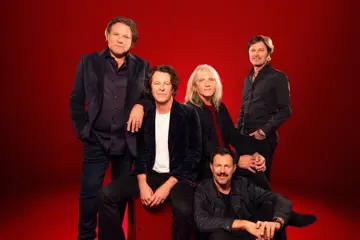
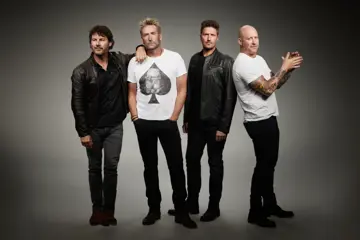
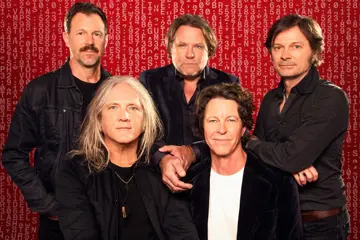
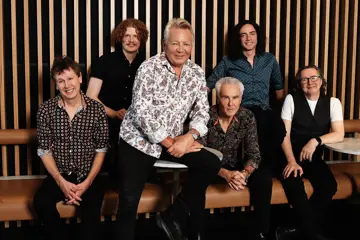
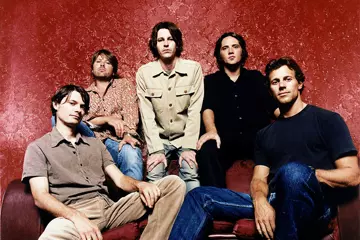
He's also from a generation that had Midnight Oil, and I'm not sure we get another one of those.
Consider the current field.
Goanna's Shane Howard is Australia's greatest living political songwriter (apologies to Paul Kelly), and Solid Rock is 44 years old.
Emma Donovan, who I manage, wrote Blak Nation and it's as direct a piece of political writing as this country has produced in a decade. And many of the most potent political songs being made in Australia right now are coming from First Nations artists.
A.B. Original's January 26 is about as close as we've come this century to a song people chant back. Briggs, Barkaa, Kobie Dee, JK-47, Birdz.
That tells you something about what a political song needs.
Urgency.
Every one of those songs has it. Deaths in custody. The date on the calendar. The Voice. A specific injustice, a specific target, a specific community with something at stake.
The rest of us have the mood without the address.
Wars, generally. Climate, generally. Robot apocalypse… 2030 maybe? It's an atmosphere, and you can’t write a chorus about an atmosphere.
The young artists I interact with are politically literate in a way I absolutely was not at their age. They can talk you through housing policy, the ethics of large language models and the voting record of their local member.
But something happens between having the opinion and walking into the studio.
The politics stays outside.
Why?
Jesse Welles is the internet's favourite protest singer and I'm happy every time he pops up on my feed. He's sharp and funny AF.
And I could not sing one of his songs back to you.
Not one.
That's not a knock on him. It might actually be the answer.
Because I consume Jesse Welles differently. I watch. I nod. I often DM the clip to someone. Then another piece of content arrives.
Maybe the protest song hasn't disappeared. It was just turned into content that you can swipe away before it has a chance to get inside you and change something.
A protest song used to have to survive. You bought it. You learnt it. You heard it on the radio until it became annoying. You played it to someone else. People sang it in pubs, cars, bedrooms, protests, etc.
Now the political thought can travel further and faster without ever becoming a song people know together.
Watch. Agree. Share. Scroll.
How depressing.
Writing It Is Hard Here
"People, wasting away in paradise/Going backwards, once in a while"
There are other explanations.
Part of it is that being political can cost you now, and sometimes spectacularly.
Last week Macklemore was removed from Ed Sheeran's American stadium tour after making pro-Palestinian comments on stage. The promoter said venues had made it clear they would not host the shows with him on the bill. Sheeran has said the decision wasn't his. True, maybe. Ed knows which side his bread is buttered on. [Robert] Kraft, as it turns out.
Macklemore, to his credit, said straight up that he's not a victim, and he isn't. He'll be fine. So will I for saying this. The people in Gaza are not, which was rather his point.
Back home, the ones who wear it are further down the chain. The players, the crew, the support acts. The people whose rent depends on the show going ahead. And every young artist watching takes note.
Then, almost immediately, the story complicated itself. The remaining support acts pulled out of Sheeran's tour in solidarity with Macklemore.
So perhaps artists aren't as scared as I thought.
Or perhaps courage is contagious too.
Kneecap spent much of last year fighting a terrorism charge against member Liam Óg Ó hAnnaidh over the alleged display of a Hezbollah flag at a London show. The case was eventually thrown out because of the way the charge had been brought, and an attempt by prosecutors to reinstate it failed earlier this year.
That is an extraordinary amount of legal jeopardy to emerge from something that happened on a stage.
A colleague put it to me recently: there aren't many political songs because artists are scared.
Looking at the last few years, who could blame them?
Feelings have rarely got anyone thrown off a stadium tour.
Part of it is that political songwriting is also brutally hard to do well, and I say that as someone who tried.
I was on a major label in my 20s with a guitar and a conscience and I wrote political songs.
They were terrible.
I retreated to writing about my shadow like everyone else.
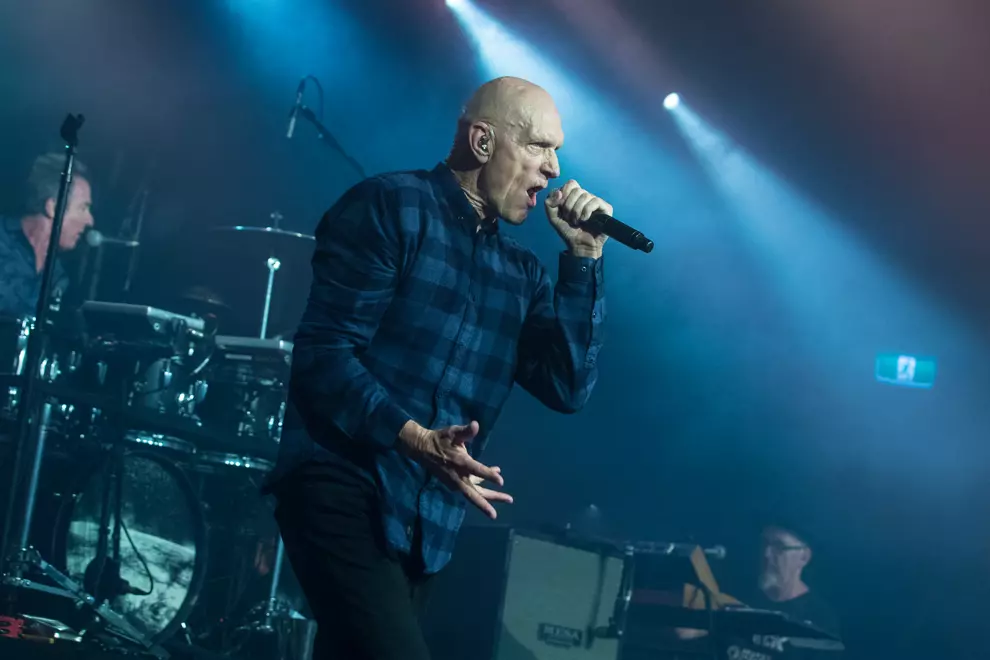
Anger is easy to feel and almost impossible to sing without sounding annoying. The Oils made it look effortless because Peter Garrett was an electric frontman and the band had spent a decade getting very, very good in pubs.
Nobody gets a decade in pubs anymore, of course.
And then there is the uncomfortable explanation.
Maybe music doesn't do this anymore.
Maybe when songs stopped being scarce, they stopped being the place we went for answers.
Think about what a political songwriter competed with in 1965. Newspapers. Radio. Television. Other songs.
They didn't have an infinite stream of people in their pocket explaining the war, the economy, the government, the climate and the collapse of Western civilisation before getting ready for work.
Political expression now happens instantly.
A politician says something stupid and within six minutes there are 40,000 reactions, memes, an infographic, conspiracy theories and a man with a podcast breaking it all down for you.
By the time a songwriter has found the metaphor, written the second verse and argued with the drummer about the bridge, the internet has moved on.
Maybe the young artist writing about heartbreak has correctly clocked that nobody is coming to them for a position on nuclear proliferation.
Maybe they don't need the song to say the thing anymore.
They can just say the thing.
If that's true, it might be the strongest evidence yet that music has lost something it used to have.
A Hard Rain's A-Gonna Fall
"Then I’ll stand on the ocean until I start sinkin’/But I’ll know my song well before I start singin’"
I don't think it's gone, for what it's worth.
I think the songs are just late.
When billionaires are digging bunkers you know a reset is coming, and resets have always arrived with a soundtrack.
It was bad in 1965.
It was bad in 1962 when Dylan was writing Hard Rain. The Cuban Missile Crisis was still weeks away when he first performed it.
Imagine the terror.
And generations who believed they might not see thirty wrote the songs anyway, precisely because they believed it.
You don't write about the end of the world because you feel fine.
You write about it because you're terrified and you'd rather be terrified together.
So to anyone who has told me over a drink that the end is nigh: I'll believe you when I hear the song.
Until then I'll keep hoping that you don't quite believe it either.
Matt Walters is an Artist Manager at Unified Music Group.