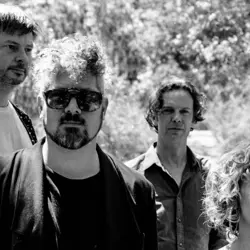
 Art Of Fighting Profile
When was the last time music moved you? Properly. Tears, heartbeat, brain on fire, the same song eleven times in a row. That chord change. That turn of phrase. The way the drums came in.
Hold your answer. We'll come back to it.
My first job was at McDonald's. The day I turned 14 and nine months, I signed up for $7 an hour and eight-hour shifts on the fry station.
I laboured over your processed food so I could buy CDs. At $30 a pop I could afford two a week, plus hot chips with chicken salt and a 600ml Coke on the way home from school. Strange that I wasn't off fried potato by then, but I digress.
I was a music tragic. I nerded out on liner notes. Who played on what, and in which studio. I knew all the big Australian managers by name, and to me they were another league of rock star entirely. Sony's Murmur was my favourite label. Silverchair, Something For Kate, Jebediah, Blueline Medic. Anything they touched was an elixir.
When I was about 15 I would lie in a hidden part of the garden and dream of a machine that would let me play any song I wanted, any time I wanted.
How's that for a teenage fantasy?
I could never have imagined streaming then. And I could not have imagined what it would cost me.
So that's the question for this column. Has the destruction of scarcity in music destroyed its value? Or is that just a millennial yelling at a cloud? I'm genuinely not sure, so bear with me.
Here's a story. Some weeks I'd get to JB Hi-Fi with no idea what to buy, and I'd pick a CD on the album art alone. That gamble produced some of the most important records of my life. One of them was Art Of Fighting's Wires, in 2002. I was in year 11.
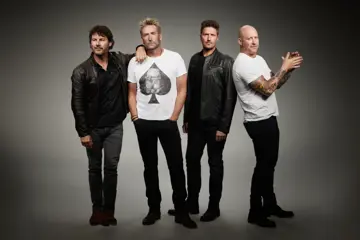
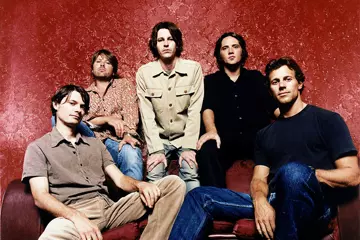
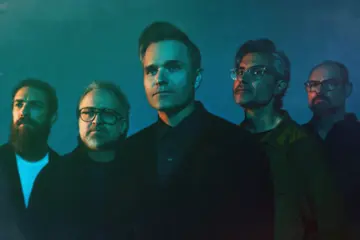
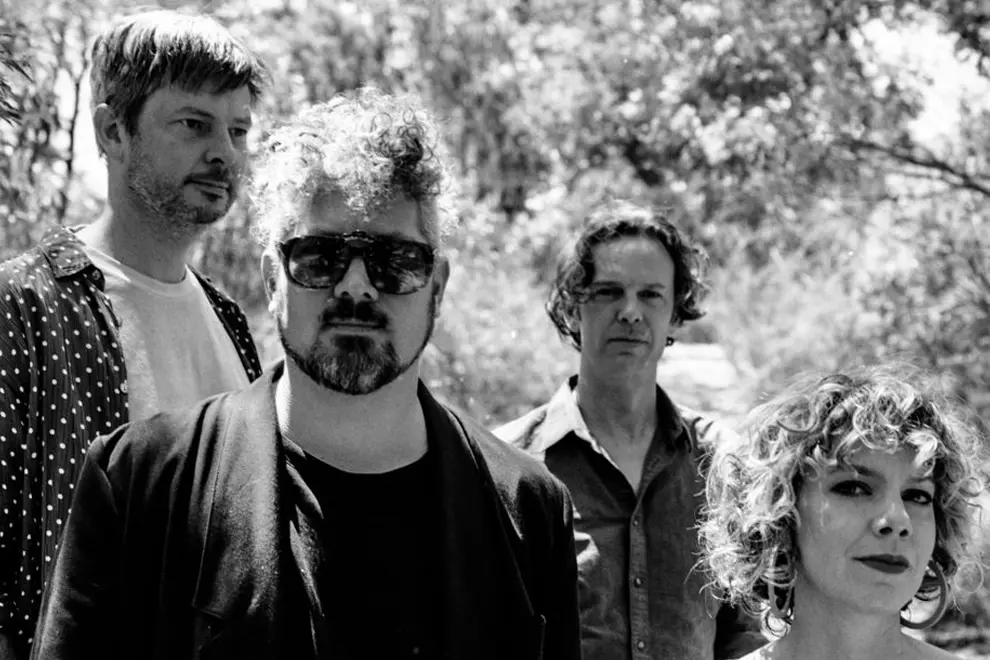
Art Of Fighting were, and are, a weird band. The music is absolutely beautiful, particularly on that debut. They didn't play often, and when they did it was small rooms and hard tickets.
I saw them once at the Evelyn Hotel in Melbourne with Youth Group opening. Man, that was a show.
Years later I bounded up to lead singer, Ollie Brown at a bar in Melbourne and told him what Wires had meant to me.
I wanted to know how he made the guitars sound like that. That perfect washed-out thing, like a lost summer swimming around at the back of your brain. He looked at me with panicked eyes and headed for the exit. Too turbo, perhaps.
For a long time I told myself I loved that band because they were scarce. I'm not sure that's right. There's nothing scarce about a CD. JB had a whole shelf of them. What was scarce was me. My $30. My eight hours over the fryer. My one shot a week at getting it right.
Scarcity of supply and cost of access are different things, and I think I've been confusing them for 20 years.
What streaming removed wasn't the music. Every record is still there, more of them than ever. What it removed was the cost of choosing. The commitment. The gamble on the album art.
The fact that if Wires had been rubbish I'd have been stuck with it for a week and would have had to find something to love in it anyway.
I did find something to love in it. I'm not sure I would have if it had been free.
So is vinyl the answer? I love vinyl. I can't quite see that it is.
Vinyl doesn't bring back scarcity. Discogs has close to every record ever pressed, and in 2025 Australians bought 1.2 million new ones, worth $46 million to the labels. Streaming was worth $517 million.
The vinyl comeback is real, it's just small, and it's also, quietly, being outsold by the CD again, which shipped 1.5 million units last year. What vinyl brings back is cost. It's a scarcity costume. A ritual for making music expensive and slow again, which I'd argue is exactly why people love it and exactly why it's a niche rather than a future.
It's not a cheap costume either. The industry's own study puts a 140g record at about 1.15kg of CO₂ before it leaves the factory, half of that from the PVC, and flying it from a European plant to Australia adds another 3.46kg. Your 180g coloured splatter gatefold is doing more damage than the black one.
I say this as a man who has never once, standing at the counter with exactly that record under his arm, thought about the flight it took to get there.
It's easier to get worked up about data centres. They're somebody else's. And the one time the format met actual scarcity, when the Apollo Masters fire in 2020 took out 80% of the world's lacquer supply overnight, nobody found it romantic.
Forget the sound. The best thing about vinyl is that it invites the lost art of deep listening. You put it on, you sit down, you don't skip. Any ritual that did that would do. Vinyl just happens to be the one we kept.
Which brings me to what's actually scarce now. The artist's time. The room. The ticket. Art Of Fighting are only ever going to be in one place at once, and the thing I remember most vividly from that whole obsession is a Thursday night at the Evelyn.
Now, your answer. When was the last time music moved you?
Here’s mine. 6.20am. Last Monday. Driving to work on a rainy morning and Paul Simon’s Graceland comes on the radio unexpectedly.
“She comes back to tell me she’s gone/as if I didn’t know that/as if I didn’t know my own bed/as if I'd never noticed/the way she brushed her hair from her forehead.”
Tears I tell you. I think it may be the best song ever written. And yes, I had Graceland on CD.
If that's true for you too, then the machine in the garden didn't destroy the thing I loved. It just stopped charging me for it, and it turns out I miss the bill.
Matt Walters is an Artist Manager at Unified Music Group.