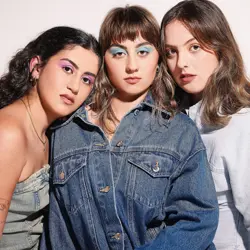
 The Stamps Profile
The moment I knew my music career was over was an unremarkable Tuesday at the Universal Music building in Sydney. I was in a waiting room, about to go into a marketing meeting for my new album, when a young intern bounded over.
"Are you new here?"
"No, I'm an artist actually. Matt..."
"Matt Corby! Oh my god, I love Brother."
"Matt Walters."
She turned deep red and left the room.
In her defence, we were both signed to Mercury at the time, and we had similar hair. Matt was a much better singer than me. Still is. I maintain I had the better hair. Still do, in fact.
The meeting that followed was worse. The A&R who signed me had gone to Sony. The record was finished and sitting on the table, and the marketing person's big idea was a campaign built around my hair. No joke. I had made a passable indie folk album that was not going to set the world on fire, but somebody had backed me, and backed me early, and I'm still grateful for it.
What stayed with me from that room was that nobody in it seemed to have listened to the songs. They were looking for a hook, and the hook they found was, apparently, on my head. I told you I wasn’t wrong about the hair.
The other Matt went nuclear. I went back to uni. C'est la vie.
Stamp It
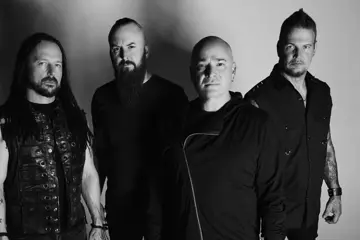
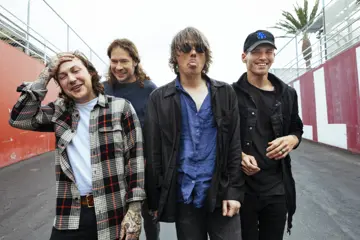
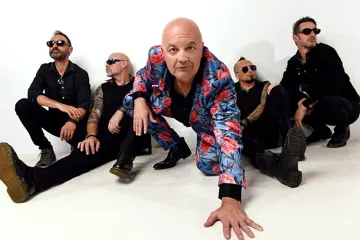
A decade or so later I'm standing under the stars at Kidogo Arthouse in Fremantle, the beach a few steps behind me, watching a band called The Stamps. I was there in my official capacity as a promoter, my old job.
I'm awash in three-part harmony heaven. Intricate and divine. Open-tuned guitars. It's Laurel Canyon and it's modern all at once. And songs! My lord, the songs. I'm not a manager yet, but I'm about to become one, precisely because of this band.
Their numbers were not great. Nothing on a dashboard was telling me to do anything. But I'd heard the songs, I'd seen the room, and I made a call. I started managing them.
That is, I'm told, an old-fashioned way to do this job.
Spike And Chase
Most of the industry doesn't work that way anymore. The model now is to wait. Wait for a song to move on TikTok. Wait for a reel to catch. Wait for the monthly listeners to bend upward without anyone having spent a dollar. Then – and only then – sign it.
This isn't a hunch. Back in 2020, TikTok itself boasted that more than 70 artists who broke on the platform that year went on to sign major label deals, and that was before the machinery got serious.
The A&R tools labels now pay for weight of a song's TikTok velocity over a seven to fourteen day window above almost everything else. One of them sells a "Predict" feature that promises to flag artists 30 to 60 days ahead of what it calls "viral inflection".
The pitch is to get to the artist before the other labels do, and deals now close in days. A head of A&R at a major distributor described the last five years of signing decisions as "the data, the data, the data". Nobody in that sentence is listening to a record.
A colleague of mine described it as a horse race. The industry used to back all ten horses knowing one would come home and pay for the other nine. Now it waits until the final furlong, watches which two are neck and neck, and puts its money on then.
The odds are shorter, so the deals are poorer. You pay more for less of the upside, but on paper the risk is gone. Except it isn't gone. It's been moved onto the artist, who ran the first nine furlongs alone and unpaid. And if you only ever back horses that are already winning, you will be wrong less often. You will also never discover anything. You will only ever confirm it.
Why has it gone this way? I suspect it's because the major labels are now publicly listed companies with shareholders and quarterly reports, and a quarterly report has no column for "we heard something".
Being wrong used to be part of the process. It was the cost of being in the business of taste. Island kept putting out Nick Drake records that sold in the low thousands. Ardent released two Big Star albums that barely got into shops. Beggars Banquet stuck with The Go-Betweens through their best records without a hit to show for it.
Artistically right, commercially wrong, and every one of those labels would tell you it was the right call. Nobody is going to say that in an earnings call.
Somewhere in the last ten years we stopped asking "is this great?" and started asking "is this growing?" and quietly decided those were the same question.
They aren't. Data is useful. I use it every day. It tells you where an audience is, what they're listening to, when to tour. But it only ever describes the past. It can tell you what's growing. It cannot tell you what's good. It has no opinion about the songs, and neither, increasingly, do we.
Which came first? Did the industry lose faith in songs because artists stopped writing great ones, too busy feeding a content schedule to sit with a bridge for a week?
Or did artists stop sitting with the bridge because the industry made it clear that nobody was going to listen until the clip went off?
I suspect it's a loop, and I suspect I've been on both ends of it. I've asked an artist for more content in a week where what they needed was a piano and a closed door. I'm not proud of it.
When The Signal Is Cheap
Here's the part that makes this a 2026 problem rather than a 2019 one…
The numbers can now be bought. Followers, plays, engagement, all of it, for less than the cost of a decent support slot. Trial reels let you test a hook on strangers before you've written the second verse. And AI can now generate a catalogue overnight, complete with the streaming figures to match.
Last year a band called The Velvet Sundown released three albums in the space of a few weeks and hit somewhere near 1.4 million monthly listeners on Spotify. It was AI, some Redditor figured out.
In March this year a man in North Carolina pleaded guilty to using hundreds of thousands of AI-generated songs and thousands of bot accounts to rack up billions of streams and more than US$10 million in royalties. You almost have to admire it. Almost!
So the signal that the whole chase-the-spike model runs on is getting cheaper every month. When anyone can manufacture growth, growth alone stops being convincing. What's left is the thing that can't be faked: a band in a room, playing songs, to people who came on purpose and stayed.
If the data can't be trusted to tell you what's real, someone has to go and listen. Taste, the thing the industry spent a decade trying to engineer out of the process, is suddenly the only instrument that still works.
The Room
Since that night in Fremantle, we've taken The Stamps around Australia a handful of times and over to the UK, Europe, and Canada.
People who saw them on a support tour are now buying tickets to their headline shows. Motel Chelsea in Quebec has sold out. Toronto isn't far behind. Their streaming numbers are still small, but the touring is working. I don’t think I’m wrong about the songs.
What I might be wrong about is whether the industry ever agrees with me, whether we can turn those rooms into a lasting career. That's the honest truth. If we can't, it will have cost me a few years of my life, and I wouldn't trade them for anything.
But that's the job. That has always been the job. Somebody at Mercury heard my innocent folk songs and made a call before there was any evidence, and they were wrong, and I'm still grateful.
Being willing to be wrong is the whole thing. It's what discovering something feels like from the inside.
I'd rather be wrong about the songs than right about the numbers.
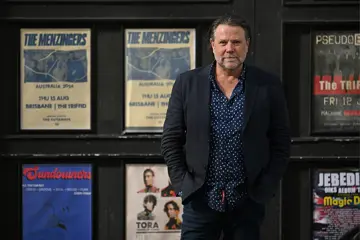
Matt Walters is an Artist Manager at Unified Music Group.