 Joan Jett Profile
The sheer competitive nature of the music industry and the ever-changing tastes of music fans are just two reasons why one-hit-wonders are a fact of life.
But some capture lightning in a bottle and their appeal and impact have lasted for decades after.
Here are ten one-offs which remain slow-smoking with Australian fans.
Tubthumping – Chumbawamba (1997)
British anarcho-political band Chumbawamba emerged from the squatting community of Leeds.
They involved themselves in issues such as workers' rights, anti capitalism and consumerism, anti-fascism, homophobia, and poll taxes which favoured the rich.
Tubthumping was inspired by a scene at a pub called the Fforde Grene in Leeds. People struggling in their lives “were finding solidarity with other people who had also had a bad week,” according to singer Dunstan Bruce.
The hook “I get knocked down but I get up again/You’re never gonna keep me down” was about being proudly working class, resilient and fighting back against the system.
But the line, along with its singalong element and percussive drive, became their only global hit. In 1997 it went to No. 1 in seven countries including Australia.
In 2026, Tubthumping remains relevant in these times of tight household budgets. “I’m pleased to see it's stood the test of time,” says Bruce.
But the mass appeal of the chorus has also seen it a buzz at sports events and dancefloors.
It found its way into ads in Australia as Elastoplast (2018) encouraged sportspersons to bounce back from injuries and the National Rugby League in 1998 as its theme song as part of a $5 million campaign.
In 2012 it was used in the UK’s National Accident Helpline's 'Knocked Down' drive.
In the late ‘90s, Nike offered Chumbawamba $1.5 million to use it in a World Cup ad. The band gleefully revealed it took 30 seconds to turn it down.
In 2024, they told New Zealand’s conservative Government to stop playing it at its rallies.
In The Summertime – Mungo Jerry/The Mixtures (both 1970)
Nothing still conveys the carefree joy of the Australian summer than In The Summertime.
It has a skiffle-jugband simplicity, lines like “We’re always happy/life’s for living. Yeah that’s our philosophy” and the “dee dee dee” singalong refrain that blasts out on beaches and Kombi vans everywhere.
It was actually written in England by a lab worker Ray Dorset, possessor of one of the best sideburns in rock. He wrote the words in ten minutes about his childhood holidays in Hayling Island in Hampshire.
His band was known as Good Earth. New names tossed around before the record came out included – believe it or not – Duran Duran.
Mungo Jerry was from Mungojerrie And Rumpleteazer from T.S Eliot’s 1939 poetry collection Old Possum’s Book Of Practical Cats. Trivia fact: The collection inspired Andrew Lloyd Webber’s 1981 Cats musical.
In The Summertime sold 30 million copies in 1970, and went to No. 1 in the UK for seven weeks, and in Australia.
A cash-in cover by Melbourne’s The Mixtures replaced it at No. 1 in Australia. Another rendition, by Brit band Idle Race, reached No. 58 in Australia.
The Mixtures then dug up a song written a few years before called The Pushbike Song, and gave it the same treatment. It was a massive hit in the UK but it was the only time they sniffed the Brit charts.
The Mixtures’ Mick Flinn recalls that Dorset was initially hostile to them when they went to England to promote their single. But they became friends, and Mungo Jerry even did a version of The Pushbike Song.
In The Summertime lives on as soundtrack to hundreds of thousand TikTok clips for holiday and beach posts. It appeared on TV shows as The Simpsons, New Girl, Life On Mars, Malcolm In The Middle, and Despicable Me 2.
Shaggy featuring Rayvon did a Caribbean-ised rendition in 1995. He later said its success helped push Jamaican dancehall into the mainstream charts in the 1990s.
Black Betty – Ram Jam (1977)/Spiderbait (2004)
When Ram Jam’s Black Betty emerged in 1977, African-American activists, feminists and college students called for a boycott citing its disrespect for an African-American woman by a group of white men.
Its meaning is shrouded in the mists. “Black Betty” is southern US slang for a bottle of whisky. When someone got drunk, they were said to have “kissed Black Betty”.
It was also jargon for black vans that took inmates to prison, and the bullwhip used to beat them, denoted by the line Bam-ba-lam.
The prison connection is most likely. It started as a chain gang chant. The two bluesmen most associated with its recorded origin served time.
The first, in 1933, was a field recording made with music historians John and Alan Lomax in a Texas state prison by James ‘Iron Head’ Baker. The 63-year-old was one of the meanest men on the streets of Dallas. His descendants have unsuccessfully tried to claim he owned the song.
In 1939, Huddie Ledbetter (aka Lead Belly), released from the slammer for killing someone in a drunken brawl, did the first commercial recording for Musicraft Records. It ran for 59 seconds.
By the 1960s, the song’s meaning was changing, to being about a woman. These included in folk singer Odetta’s 1964 adaption, and British band Manfred Mann’s first rock account in 1968, released as Big Betty.
In the ‘70s, guitarist Bill Bartlett got inspired by the Lead Belly version to do a badass screaming guitar 4 minute 45 second version for his band Starstruck.
Bartlett first made the Australian charts in 1967 in The Lemon Pipers, a psychedelic-pop outfit remembered for the hit Green Tambourine.
Barlett added two extra verses to Black Betty, which he said were inspired by 1950s white pinup Bettie Page (“she was the tops!”).
After the Starstruck version became a minor regional hit, New York producers Jerry Kasenetz and Jeffrey Katz came into the picture.
They created fictional “bands” and had hits with Ohio Express’ Yumm Yummy Yummy (I Got Love In My Tummy) and the 1910 Fruitgum Company’s Simon Says. Both were hits in Australia.
With Bartlett’s involvement, they used the Starstruck version, deleting parts of it and adding things as a gong with phasing effect, and releasing it under the name Ram Jam Big Band.
“Whoa, Black Betty! (Bam-ba-lam)/Whoa, Black Betty! (Bam-ba-lam)/Black Betty had a child! (Bam-ba-lam)/Damn thing gone wild! (Bam-ba-lam)”
It was utterly irresistible, streaking to No. 3 in Australia, No. 18 in the US, and No. 7 in the UK. It became an instant fixture at sports events as well.
By this stage, Black Betty was also being seen by some fans as a song referring to a fast black car or powerful motorbike.
Ram Jam never had a hit again. In the ‘90s Bartlett made a name for himself as a really good boogie-woogie piano player.
Spiderbait’s drummer Kram remembered seeing it on Countdown as a kid, and being knocked out by its total high energy.
In 2004, Spiderbait cut a double platinum version that became their only chart topper although it crossed them into danceclubs.
Kram’s original plan to include three drum solos was unfortunately nixed by the other members.
Kram earlier told The Music that it’s as much fun to play as it is to listen to, and that it's being adopted by ever-young audiences as a “beautiful thing”.
Black Betty has been adopted by AFL/AFLW teams (or individual players) Sydney Swans, Adelaide Football Club, West Coast Eagles, and Fremantle Football Club.
The song was used in ads by Toyota, Foxtel, Volkswagen, Smiths Chips, and the Pac-Man World 2 game.
Mickey – Tony Basil (1982)
One of the great hits from the MTV generation, choreographer, actor and singer Tony Basil used the signature cheerleader chant (“Oh Mickey you’re so fine/ you’re so fine you blow my mind”) and sported her own high school cheerleader uniform in the music video which she choreographed and directed.
It went to No. 1 in Australia and hit double platinum, and used in sporting and school pep rallies.
It still resonates with Australians in ‘80s playlists, TikTok and Instagram Reels, as well as in aerobic/dance classes.
But in a wider context, Basil who co-founded The Go-Go’s – one of the first all-female rock bands to break through – saw herself as a feminist provocateur, and identified as a bisexual.
Mickey was about female desires and a wink to the queer community. That aspect of the song is also part of its endearing appeal in Australia.
Basil remains an inspiration to new generations of female singer songwriters, in the way she was cited as a role model by Fiona Apple and Phoebe Bridgers.
As bsc-testnet expounds: “As streaming reshapes the music industry, Toni Basil’s influence is being rediscovered by new generations. Mickey has been remixed by artists like Lady Gaga and Dua Lipa, proving its enduring appeal.
“Meanwhile, her approach to multimedia storytelling—blending music, dance, and visuals—is more relevant than ever in the age of TikTok and short-form video.”
A Thousand Miles – Vanessa Carlton (2002)
A global hit including in Australia where it reached No. 1, A Thousand Miles had a knock-out piano hook which saw it used in movies as Legally Blonde and White Chicks.
US singer/songwriter Vanessa Carlton explained the song was inspired by a secret crush of a co-student at the School of American Ballet and “now a very famous actor”. Too shy to make herself known to him, she said she had a “better chance of falling up than ever having a relationship with this person.”
It was this element that struck a chord with equally awkward fans, and continues to do so. Its orchestral grace sees it a constant on Australian adult contemporary format radio, and sampled or referenced on pop and hip hop tracks. One was Yungeen Ace’s controversial Who I Smoke, which Carlton defended.
Shaddap You Face – Joe Dolce Music Theatre (1981)
US-born Melbourne satirist Joe Dolce wrote the novelty ditty Shaddap You Face after visiting his grandparents in Italy, taking note of the way they spoke.
He was nervous about how the Italian community in Australia would react but he says he got free cappuccinos for a year.
Shaddap You Face has a built-in cringe factor and still makes lists of Worst Songs Ever.
But it sold 6 million worldwide and was translated into 15 different languages. He did a duet with Australian Vietnamese comic Hing Le to protest the rise of Pauline Hanson.
It is also acknowledged for paving the way for so-called “wog humour” movies. Ultimately, it resonates with every kid growing up in a migrant household trying to fit into two cultures.
Dolce told A Current Affair in 2024 that Shaddap You Face is “more of a phenomenon than a hit because it resonates through time…This one, for some odd reason, is passed from generation to generation.”
I’m Gonna Be (500 Miles) – The Proclaimers (1988)
When Scottish twins Craig and Charles Reid wrote I’m Gonna Be (500 Miles) in 45 minutes in their Edinburgh flat before they went off to a gig, they knew it was catchy.
But when they played it live, the crowd response was phenomenal.
It has been streamed millions of times (500 million on Spotify alone), reached No. 1 and went multi platinum in Australia, sold 1.2 million in the UK, had a surge in the US after being used in the movie Benny & Joon and reached No. 3. They say it earned them five more times than their entire catalogue
Scotland used it as a goal song during the 2026 World Cup Final. In Australia, it got an extra surge when used in ads for the NRMA Insurance for its roadside assistance and Hungry Jack Breakfast, and continues as a singalong at sports events.
Craig Reid told The Guardian in 2015: “People make all sorts of interpretations of the lyrics – especially the supposed religious significance of 500 miles – but it’s just a love song… I’ve never actually walked 500 miles. I like walking, but that’s a bit much.”
He also made the point in the interview: “People say they love the song for lots of reasons: its marching beat, the stop-start rhythm, that call and response bit. I think it’s a bit of everything. The band is nowhere near as famous as the song and we never will be.”
The wide appeal of the song is reflected in the brands that use the song in their ads. They include Budweiser beer, a Nature Valley park trail restoration, cars including the Ford Edge and Volkswagen Golf, and Viagra Connect UK on how it helps couples reconnect.
Last year it was used by Starbucks to arrest its sales declines. A focus on Gen Z and Millennials saw a five-year high in people intending to buy their coffee. This year in the second quarter, sales jumped by 8% from the previous year to reach US$9.5 billion.
It was adopted in 2026 by Ronald McDonald House in the UK and Ireland with the blessing of the Reids. It featured Pixie Lott re-recording it as 79 Miles to denote how far families travel to visit their sick children in hospital.
Ice Ice Baby – Vanilla Ice (1990)
Earlier this year, Vanilla Ice’s Ice Ice Baby was back in the US rap charts 36 years after it was first released. “I really had no idea,” he told a TV interviewer.
He revealed the song does spike in sales during the cold winter months, and helped by the interest in the Winter Olympics.
Ice Ice Baby further got another shot as both supporters and detractors of the activities of the Immigration and Customs Enforcement (ICE) were posting on social media using it as a soundtrack.
“Use it all you want but leave me out of it,” he said, clueless and photogenic as ever. “I’m not going to comment on how to run a country.”
In Australia, he’s been lucky with the ‘90s nostalgia (he played here in 2017 as part of the I Love ‘90s Tour), kept his name alive with reality series such as The Vanilla Ice Project and The Surreal Life.
The sampled bass intro from Queen & David Bowie’s Under Pressure keeps it alive in dance clubs, karaoke bars, and TikTok postings.
Alas the sample had not been cleared. After their respective publishers called in the lawyers, they grabbed 85% of the song’s royalties.
Take On Me – A-ha (1985)
The synth-popsters from Norway tried four versions of Take On Me before it went on to become a generation-defining hit.
What stood out was Morten Harket’s high voice and the infectious keyboard hook, helping it reach top spot in 27 countries.
It blitzed on Countdown, and their 1986 Aussie tour saw teenage girls mob them at the airport and at hotels, and all 14 shows sold out.
The song was never allowed to fade away. If A-ha were not pressing the reboot button themselves with acoustic and orchestral versions, then Trevor Horn, Weezer, Reel Big Fish, and A1 were doing their own takes.
The song was used by Optus for its Live More Yes and Volkswagen’s Feeling Carefree, and A-ha also received kudos for inspiring later epic acts as U2, Coldplay, and Keane.
By 2020, the stand-out pencil sketch animation music video hit 1 billion YouTube views as new generations discovered them.
I Love Rock ’n’ Roll – Joan Jett & The Blackhearts (1981)
Joan Jett & The Blackhearts’ I Love Rock ’n’ Roll reached No. 1 on the Australian charts (Kent Music Report) on May 3, 1982, selling 100,000 copies before the streaming era found her new generations of fans.
It also topped the charts in seven other countries, including the US where it was No. 1 for seven weeks and sold 2 million.
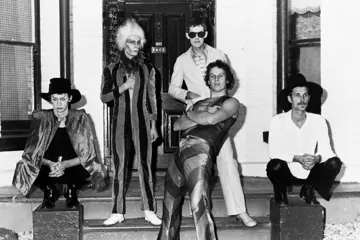
The song was written and recorded in 1975 by British band The Arrows.
Singer Alan Merrill and guitarist Jake Hooker wrote it as a response to The Stones’ It’s Only Rock ’n’ Roll (But I Like It) which at the time they thought was a put-down.
The Arrows version was a song within a song. It has a teen couple smooching in a club listening to it, while the chorus was depicted as coming out of the jukebox. It was released as a B-side.
According to American Songwriter magazine, Jett came across the song when The Runaways toured England in 1976.
She heard The Arrows do it on television and wanted The Runaways to do it. But they passed as they’d already done a cover of Velvet Underground’s Rock & Roll.
After the band broke up, Jett recorded it in 1979 with Steve Jones and Paul Cook of the Sex Pistols. It was relegated to the B-side and disappeared.
Then she tried it with her new band The Blackhearts. They were young, hungry, and touring incessantly just before they went into the recording studio, so their version was cracking hot.
What’s more, Jett turned her version into a statement of female empowerment, where it was she who was making the moves on a 17-year-old guy who was dancing by the jukebox in a club.
“He smiled, so I got up and asked for his name/’That don't matter,’ he said, ‘'cause it's all the same’/Said, ‘Can I take you home where we can be alone?’”
The track endures to this day, because its three-chord structure and fists-in-the-air message (the line “I love rock and roll” is repeated 14 times) has seen it a staple for Australian pub rock bands – especially those fronted by women.
It’s also heavy duty on Triple M network and community radio.
The album I Love Rock ’n’ Roll has sold 10 million copies to date worldwide.
There have been covers of the song by the Aussie band X (fronted by Ian Rilen and Steve Lucas), Britney Spears, L.A. Guns, and Miley Cyrus.
Alan Merrill told Jett in 2013 she was an honorary member of The Arrows’ “because she looked like one of us. I always fancied her.”
Rolling Stone (USA) summed up: “As long as there are jukeboxes, dimes, rebel grrrls in black leather, this song will be blastin’.”