 Harmony Profile
Melbourne's Harmony have had a four-year break between albums but that time has clearly been well spent, with Double Negative the strongest culmination of their soulful, ragged and cathartic sound to date.
Carpetbombing (2014) was a sprawling collection of tracks that often sounded brittle and impenetrable, the core of the songs sonically buried beneath the surface. It still impressed but the good news is that on Double Negative they've tightened their arrangements and collated an economical 40-minute record that blossoms courtesy of a warm and open production sound.
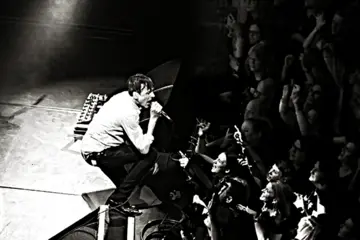
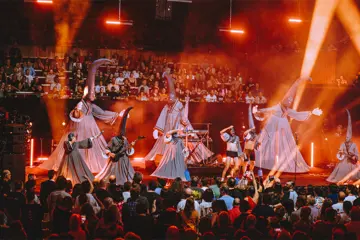
The key tenets of Harmony are the full-throated bellows and raw exaltations of singer Tom Lyngcoln and the contrasting beauty of the female-voiced avant-choir. Combined with the post-punk meets Neil Young and Dirty Three musical backdrop, it all makes for a constantly fascinating and emotionally visceral album.
Stripping the extraneous noise has provided a focal point for Lyngcoln's songs and lyrics, where his words are carried aloft on his delivery, not relegated to just sounds and vowels. Opener I Love You sets a high, almost attainable, bar but they consistently get close, right across the album. Fatal Flaw has a wonderfully infectious, maudlin quality while It Hurts is a primitive collision of astral guitar and hammering drums.
Constantly exploring the possibilities of their sound — from minimalism to angst-ridden, inner-city confessional howls — it all makes glorious sense in the hands of Lyngcoln and his existential choir.